
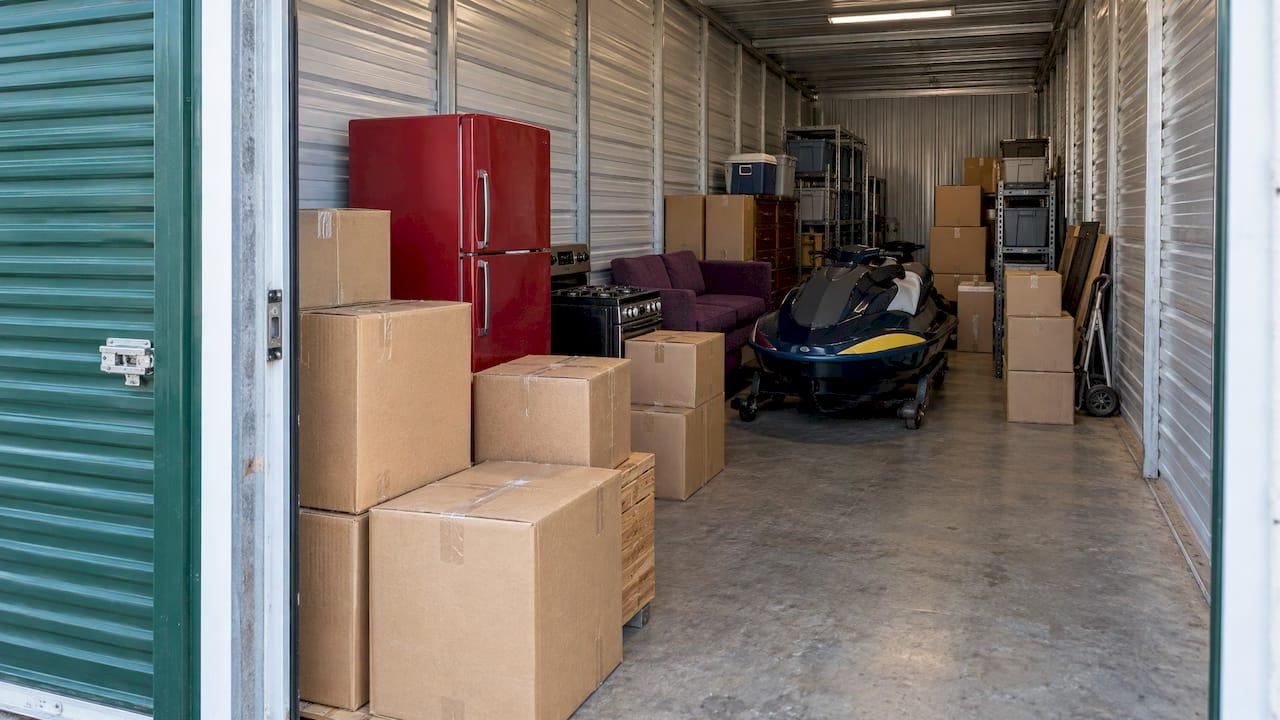
If your inventory is eating your garage, your spare room or your desk space, a storage unit is the cheapest square footage you can add to a business. At Island Park Storage, you can rent a drive-up unit seven minutes from downtown San Francisco, month to month, with no deposit and 24/7 gate access. That means you can load stock at 6 a.m. before a market, or at 11 p.m. after a long shift, and you don’t sign anything that outlasts the busy season.
Below: what small business storage actually is, what size you need, how drive-up access saves you time, and when a unit beats a bigger office.
TL;DR
- Small business storage is just a regular storage unit used for stock, supplies, equipment, files or event gear. Most small operations start with something between a 5×5 and an 8×20.
- Drive-up access matters most when you move boxes often: load from your vehicle at the door, skip the elevator and the cart.
- Storing inventory is usually cheaper than renting more office or retail space, and rent paid for business storage is generally a deductible business expense.
- Month-to-month with no deposit means you can scale up or down as sales change. Our units run from $29 to $399 a month.
- Pick by how often you open the door, not just by how much you own.
Table of Contents
- What small business storage really means
- Business inventory storage vs. office space
- How big a unit does your business need?
- Why drive-up access is a big deal for a business
- What to check before you move inventory in
- Parcel flow and the ecommerce angle
- When your business has wheels
- Perspective: why we think a unit beats a bigger lease
- Ready to get your stock out of the spare room?
- FAQ
- Sources
What small business storage really means
Nobody sells a special “business unit.” Small business storage is a normal self-storage unit that you use for work. The same 8×10 that holds a student’s furniture can hold a florist’s vases, a contractor’s tools or a seller’s online inventory.
What changes is the way you use it. A household unit gets opened a few times a year. A business unit might get opened three times a week. That is why access hours, door type and the layout of the property matter more to you than to a typical renter.
Things small businesses commonly keep in a unit:
- Inventory: online store stock, wholesale cases, seasonal products, overflow from a shop.
- Supplies and packaging: boxes, mailers, shelving, display fixtures.
- Equipment and tools: ladders, power tools, catering gear, sound equipment, booth setups for markets and fairs.
- Event and trade-show materials: banners, tables, tents, branded merchandise.
- Records and files: old paperwork you must keep but don’t need on your desk.
- Vehicles and trailers: work vans, box trucks, food trailers, which need a parking stall rather than a unit.
If your business involves clients walking in, a unit is the wrong place for it. Use it for storing and staging, and keep meetings, sales and workshops somewhere built for them. Check your rental agreement if you’re unsure what activity is allowed.
Business inventory storage vs. office space
This is the question behind a lot of searches. The short version: pay for office space when people need to work or meet there. Pay for storage when things need to sit there.
Office and retail space is priced for people: heating, restrooms, parking, a lease built around a long term. Storage is priced for boxes. Per square foot, a unit is a fraction of the cost, and you aren’t paying to keep a chair and a thermostat for cartons that never complain.
Here’s how it plays out:
| Need | Better fit |
|---|---|
| Stock for an online store that you pick and pack yourself | Storage unit |
| Meeting clients, hosting staff | Office or coworking |
| Seasonal overflow (holiday stock, summer gear) | Storage unit, month to month |
| Tools and materials a crew grabs each morning | Drive-up unit |
| Files you must keep for years | Small unit, like a 2×3 or 3×4 |
| Work trucks, vans, trailers | Vehicle parking stall |
One more reason storage wins for small teams: flexibility. A lease on office space can run for years. Our rentals are month to month, so if you land a big wholesale order, you move up a size. If sales cool off, you move down. There’s no deposit to tie up either, which keeps cash in your business.
The tax side
Rent you pay for property you use in your business is generally deductible. The IRS explains in Publication 535 that rent is an amount paid to use property you don’t own, and that you can generally deduct it as a business expense. Your accountant or tax preparer decides how it fits your return, so keep your monthly statements. Electronic billing makes that easy: every month’s invoice lands in one place.
How big a unit does your business need?
Most people guess too small, then pay for a second unit. Do this instead:
- List what’s going in. Count pallets, shelving units, bins and big items.
- Measure the stack. Think in cubic feet, not just floor space. Units are tall, and shelves let you use the height.
- Leave an aisle. If you open the unit often, you need to walk in and reach things. Plan a path along one side.
- Add 20% for growth. Businesses that do well keep adding stock.
Here are our sizes and monthly prices, as published on our units page:
| Unit | Floor area | Monthly price | Good for |
|---|---|---|---|
| 2×3 | 6 sq ft | $29 | Files, small records, samples |
| 3×4 | 12 sq ft | $55 | Document boxes, a few cases of product |
| 5×5 | 25 sq ft | $79 | A small online shop’s starter stock |
| 5×8 | 40 sq ft | $115 | Shelving plus bins, market-booth supplies |
| 8×10 | 80 sq ft | $179 | Steady inventory with an aisle for picking |
| 8×20 | 160 sq ft | $279 | Bulk stock, equipment, larger setups |
| 8×40 | 320 sq ft | $399 | Large inventory, contractor materials |
If you’re stuck between two sizes, our guides on whether a 5×10 is big enough and what really fits in a 10×20 unit walk through real examples with real measurements.
Three quick sizing examples
The online seller. You sell candles and skincare from your apartment and you’re tripping over cartons. A 5×8 holds shelving, a few dozen cartons and a packing table’s worth of supplies. At $115 a month, that’s less than a day of coworking in a lot of cities, every month.

The weekend vendor. You run a booth at farmers markets and fairs. Tent, tables, displays, a few bins of product. An 8×10 for $179 gives you room to stack gear neatly and still reach the tent you need on Saturday morning.
The contractor. Ladders, tools, tile, drop cloths. An 8×20 at $279 gives you the length to run materials along both walls, and a drive-up door means you back up, load and go.
Prices vary a lot by place, by the way. SpareFoot data reported by Commercial Observer showed rents ranging from 51 cents to $1.30 per square foot across states as of February 2026, so always look at the facility’s own price list instead of a national average.

Why drive-up access is a big deal for a business
Drive-up storage means you park right at your unit’s door. No lobby, no elevator, no hallway with a cart that has one bad wheel.
For a business, that adds up quickly:
- Time. Loading a van directly from the door can cut a restock run to minutes.
- Your back. Heavy cases, tools and equipment go from the unit to the vehicle without stairs.
- Scheduling. With 24/7 gate access, you’re not working around office hours. Early market morning? Late delivery? No problem.
- Bigger loads. A box truck or van can sit at the door while you work.
It also helps that we’re seven minutes from downtown San Francisco with no city traffic to fight. If you’ve ever circled a downtown block with a van full of inventory, you know why that matters.
Our accessible storage guide goes deeper on drive-up and round-the-clock access.

What to check before you move inventory in
A quick checklist keeps you out of trouble:
- Access hours. If you restock at odd times, you need real round-the-clock access, not “extended hours.”
- Door type. Drive-up for frequent, heavy loading. Walk-in for rarely touched items.
- Security. Look at the gate, lighting, cameras and how the lock works. Our storage unit security guide covers lock choices and what camera coverage can and can’t do.
- Insurance. Your stock is your livelihood. Read up on what storage insurance covers and what you can skip, and check your business policy.
- What you’re storing. Sensitive items like electronics, paper and some cosmetics don’t love heat and humidity. If you’re storing for a few months or longer, see our guide on when climate control pays.
- Contract terms. Month to month with no deposit keeps you flexible. Check how and when the rate can change before you sign anywhere.
- On-site help. A manager who’s actually there can sort out a gate code or a billing question in minutes.
Packing for easy picking
A unit only helps if you can find things in it. Some habits that save time:
- Label every box on two sides with contents and date.
- Put fast sellers near the door, slow stuff at the back.
- Use shelving to go up instead of out. Tall units reward you for it.
- Keep an inventory sheet taped inside the door or saved on your phone.
- Keep one clear path from the door to the back.
Need boxes, tape or packing supplies? We stock boxes and moving supplies on site, so you can pick them up when you drop off stock.
Parcel flow and the ecommerce angle
If you ship online orders, storage and shipping work as a pair: the unit holds stock, and your shipping habits decide how often you visit it. Batching outbound orders cuts trips; this piece on parcel consolidation for ecommerce looks at when holding shipments a little longer saves money. With a drive-up unit and a plan for your pickup days, you can load a whole week of shipments in one stop.
When your business has wheels
Some small businesses don’t need a unit at all, they need a place to put the vehicle. A work van, a trailer, a box truck, a food truck: those need a parking stall, not a room. We offer secure vehicle and fleet parking, including commercial vehicles, RVs and boats, with these monthly rates on our vehicle storage page:
- 11×30 stall: $299
- 11×40 stall: $399
- 11×66 stall: $599
- Indoor motorcycle storage: $115
Running more than one vehicle? We offer multi-vehicle discounts. If you need to move a big load, you can also rent a U-Haul truck here, from $19 a day.
Perspective: why we think a unit beats a bigger lease
We talk to small business owners all the time, and the story rarely changes. Things start in the spare bedroom. Then the hallway. Then the car. By the time someone calls us, they’re not looking for a “storage strategy.” They just want their living room back.
Here’s how we see it: your business should pay for space that makes money. A desk where you meet clients does. A pallet of product that sits waiting for orders doesn’t need heat, a reception area or a three-year lease.
That’s why we built things the way we did. True drive-up units, so you pull up to the door. 24/7 gate access, because your schedule isn’t nine to five. Month-to-month contracts with no deposit, because you shouldn’t need to guess where your business will be in two years. And a manager on site, so when you have a question, you talk to a person.
Start with the smallest unit that works and move up when you need to. That’s the whole point of month to month.
Mike
Ready to get your stock out of the spare room?
Pick a size from our units page, or ask the on-site manager to help you match the unit to your inventory. Everything is month to month with no deposit, and the gate is open 24/7. Reserve a unit, load the van and get back to selling.
Need boxes, tape and a truck for the move-in? We rent U-Haul trucks and sell moving supplies, so it all happens in one stop. See what’s available on our home page.
FAQ
What size storage unit does a small business need?
Most small businesses fit in something between a 5×5 and an 8×10. A 5×8 ($115 a month) suits an online shop’s shelving and bins, while an 8×10 ($179) gives you room for steady inventory with an aisle. Heavy equipment or bulk stock usually calls for an 8×20 ($279) or larger.
Can I run my business out of a storage unit?
Use the unit for storing and staging: inventory, supplies, tools and records. Customer meetings, retail sales and workshops belong in a space built for them. If you’re unsure about a particular activity, ask the on-site manager and check your rental agreement.
Is storage cheaper than renting office space?
For things that just need to sit, yes. Storage is priced per square foot of box space, not for people, so a unit usually costs far less than extra office or retail room. Rent for business use is generally deductible too, as the IRS describes for rent expenses, so ask your tax preparer how it applies to you.
Do I need a long contract or a deposit?
Not with us. Rentals are month to month and no deposit is required, so you can grow into a bigger unit or drop to a smaller one when your needs change.
Who needs drive-up storage?
Anyone who loads and unloads often or hauls heavy items: online sellers, market vendors, contractors, caterers and delivery-based businesses. Parking at the door means no carts, stairs or elevators.
Sources
- IRS Publication 535, Business Expenses
- Commercial Observer: Rental cost of self-storage units in the U.S.