Yes, storage units can be secure, but only when the facility stacks real controls and you do your part too. The two moves that matter most right away: check that your facility has layered security (gates, cameras, alarms) and lock your own unit with a quality disc lock while keeping a photo inventory of everything inside.
TL;DR:
- Choose a facility with unique tenant PINs that expire at move out, monitored cameras covering every aisle, and written policies for footage retention.
- A North Carolina case study found disc locks and better operations cut burglaries by 58% and units broken into by 69% the following year.
- Inspect the property after dark for dim areas, camera gaps, and fence weaknesses, then ask whether codes are individual and alarms reach staff.
- Standard home policies may limit or exclude stored belongings; confirm coverage and keep receipts and timestamped photos backed up outside your phone.
Table of Contents
- 1. What a Secure Facility Actually Looks Like
- 2. Protecting Your Unit: Locks, Alarms, and Smart Packing
- 3. How to Check if a Facility’s Security Claims Hold Up
- 4. Insurance, Documentation, and What to Do if Something Goes Wrong
- Island Park Storage: What a Security-Minded Facility Looks Like in Practice
- The One Upgrade That Beats the Rest
- Ready to See It for Yourself? Here’s How to Check Us Out
- FAQ
- Sources
1. What a Secure Facility Actually Looks Like
Good security isn’t one camera by the office. It’s layers working together so a gap in one spot gets caught by another.
Here’s what a well-run facility stacks up:
- Perimeter fencing and gates that are actually hard to climb, plus license-plate or gate cameras that log who comes and goes.
- Unique PINs for every tenant, deactivated the moment someone moves out, with an audit trail showing who used which code and when.
- Camera coverage on every aisle and entry point, not just the front gate, because gaps are where trouble happens.
- Monitored systems, not just recording ones. A camera that nobody watches is a security blanket with a hole in it.
- Per-unit alarms, strong lighting, and mobile patrols that work together instead of relying on any single layer.
The industry’s own guidance backs this up: layered security involving access codes, alarms, full camera coverage, and remote monitoring beats any single control by a wide margin. The same source calls out the most common failure as the “attention gap,” where cameras roll but nobody’s actually watching, which is exactly why remote video guarding matters so much for facilities that don’t staff security around the clock.
Unique, audited PINs matter more than most renters realize. Facilities that assign a separate code to every tenant and kill that code at move-out create a paper trail that discourages casual theft and helps investigators if something does go wrong. Shared gate codes, by contrast, make it impossible to know who actually opened the gate at 2 a.m.
2. Protecting Your Unit: Locks, Alarms, and Smart Packing
This is the part you control completely, and it’s where most of the real protection happens.
- Buy a disc lock, not a cheap padlock. Disc locks resist bolt cutters and prying far better than standard padlocks, and they’re a big reason burglary numbers drop at facilities that require them.
- Add a door sensor or unit alarm if your facility offers one. Some tie directly into the front office’s monitoring system, so a forced door triggers an actual response instead of just a blinking light.
- Pack smart, not just full. Keep valuables away from the door, use pallets under anything fragile, and avoid stacking your priciest items in one obvious cluster near the front.
- Photograph everything before it goes in. Serial numbers, receipts, and timestamped photos of boxes and furniture make a world of difference if you ever need to prove what was there.
- Back up your inventory somewhere other than your phone. A cloud folder or email to yourself works fine. The goal is simple: if your phone breaks or gets stolen, your records don’t disappear with it.
Pro Tip: Keep a separate photo of your lock on the unit door, and if the facility allows it, register the lock’s serial number with management. That combo makes insurance claims a lot less painful.
A Charlotte-Mecklenburg case study found that requiring disc locks alongside better operational practices cut burglaries by 58% and dropped the number of units broken into by 69% the following year. That’s not a marginal improvement. It’s the difference between a facility that gets hit regularly and one that mostly gets left alone.

3. How to Check if a Facility’s Security Claims Hold Up
Don’t just take the brochure’s word for it. Walk the property yourself, ideally after dark, since that’s when weak lighting and camera gaps actually show up.
Here’s what to look at and ask:
- Walk two aisles after sunset and note where the lighting fades and where a camera clearly isn’t pointed.
- Check the fence line for gaps, low spots, or anywhere someone could hop over without being seen.
- Watch how the gate handles tailgating. Does it close fast enough to stop a second car from sneaking through behind the first?
- Ask directly: Are PINs unique per tenant? How long is footage kept? Is tenant insurance required or offered? Are units individually alarmed?
- Request it in writing. A facility confident in its setup will hand over a written list of security features, name its monitoring provider, and explain its insurance program without hesitation.
Watch for red flags too: shared gate codes handed out to everyone, cameras that are clearly just for show, dim lighting in back corners, or a manager who gets vague when you ask specifics. Those answers tell you more than any sign out front.
| What to check | Good sign | Red flag |
|---|---|---|
| Gate codes | Unique PIN per tenant | Same code shared across renters |
| Camera coverage | Every aisle and entry monitored | Only the front gate covered |
| Lighting | Consistent across the whole property | Dark pockets in back rows |
| Footage retention | Clear policy, stated in writing | Staff unsure or evasive |
4. Insurance, Documentation, and What to Do if Something Goes Wrong
Your homeowner’s or renter’s policy might not cover what’s sitting in your storage unit, or it might cap coverage so low it barely helps. That’s why tenant insurance or a facility protection plan exists, and why skipping it is a riskier bet than it looks.
A few things worth knowing before you ever need to file a claim:
- Tenant protection plans are usually built for storage specifically, while homeowner or renter policies often treat off-site belongings as an afterthought.
- Many claims for stolen property get underpaid or denied outright because of exclusions buried in standard policies, which is exactly why dedicated coverage and good documentation both matter.
- Timestamped photos and receipts are your best friend if you ever need to prove value or ownership.
- Keep copies somewhere other than the unit itself, cloud storage, email, or a drawer at home all work.
If theft or damage does happen: contact the facility immediately, ask how to request footage from the relevant time window, file a police report, and notify your insurer the same day. The faster you move, the easier the paper trail is to follow.
Homeowners and renters insurance frequently limits or excludes off-site storage, which is one more reason a dedicated plan closes a gap most people don’t notice until it’s too late.
Island Park Storage: What a Security-Minded Facility Looks Like in Practice
We built our setup around the same checklist you just read, not as an afterthought but as the baseline.
- Drive-up container units provide direct vehicle access, reducing the time you spend moving items to and from your storage space.
- 24/7 gate access lets you retrieve your items at any time without office hour restrictions.
- On-site management provides local assistance to address questions or concerns promptly.
- Flexible, month-to-month contracts with no deposit make renting convenient and avoid long-term commitments.
- Secure vehicle parking is available with similar access convenience as storage units.
The One Upgrade That Beats the Rest
If we had to pick just one lesson from all of this: stop looking for a single “best” security feature. Layering wins every time, a good lock plus a documented inventory plus a facility that actually audits its own access codes.
The renter actions matter, but they work a lot better at a facility that’s already doing its part. Pick the right building first. Then lock up smart.
— Mike
Ready to See It for Yourself? Here’s How to Check Us Out
We’d rather you see our setup in person than just take our word for it. Swing by after dark, bring the checklist from this article, and see how our lighting, gates, and access controls actually hold up.
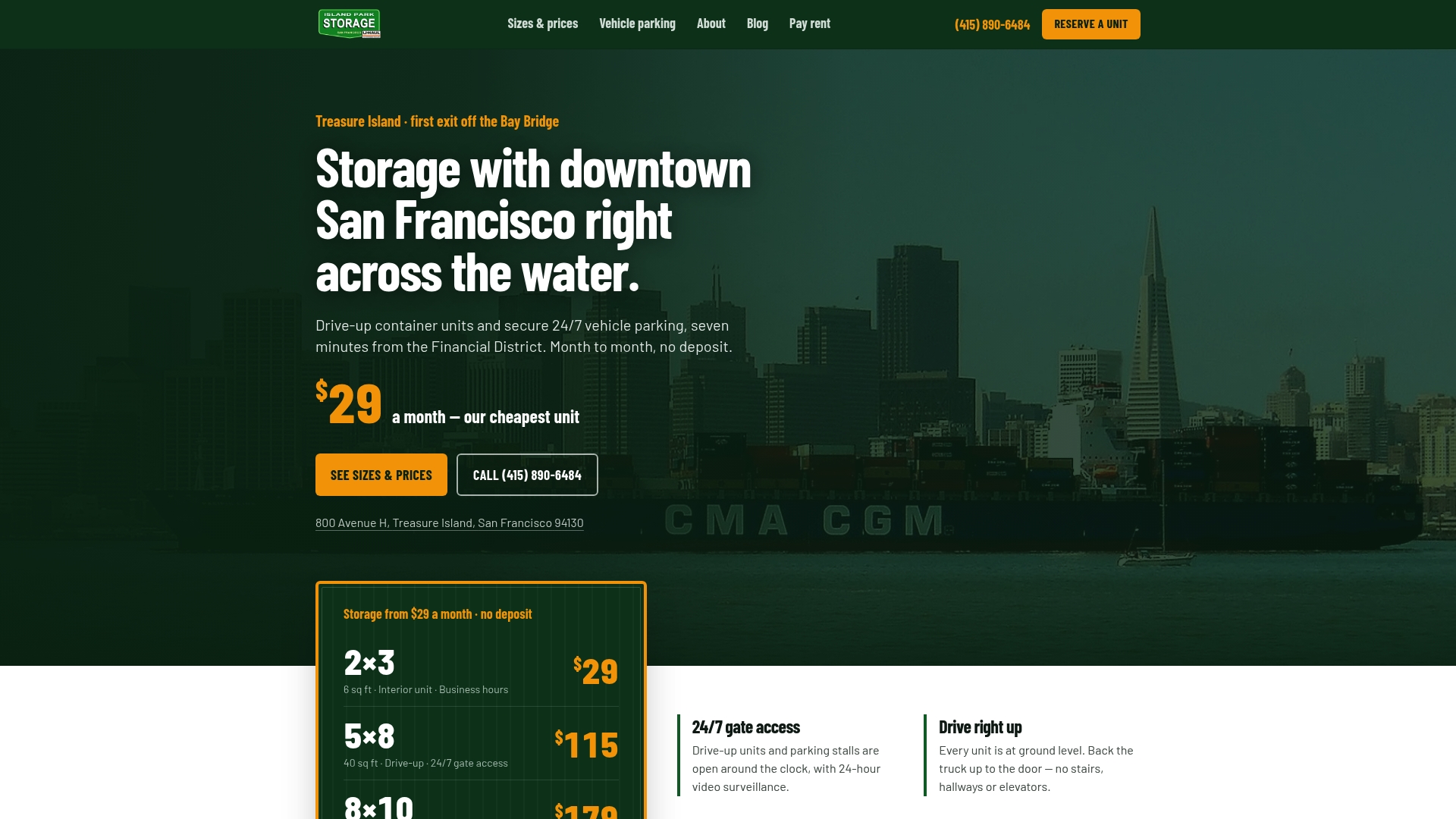
- Browse unit sizes and reserve online through our self storage units page, with options from $29 a month for a 2×3 up to larger container units.
- Storing a car, RV, or boat? Check out vehicle parking options starting at $299 a month.
- Need a truck for move-in day? U-Haul rentals and moving supplies are offered on site.
Come see the gates, the lighting, and the on-site team for yourself. We’re seven minutes from downtown San Francisco with no city traffic to fight.
FAQ
Are storage units actually safe for valuables?
Storage units can be safe when the facility uses layered controls like unique access codes, full camera coverage, and alarms, combined with a quality lock on your end. The combination of facility-level and renter-level protection is what actually reduces risk, not either one alone.
What’s the best lock for a storage unit?
A disc lock is widely recommended over a standard padlock because it resists bolt cutters and prying far better. Facilities that required disc locks alongside better operational practices saw burglaries drop by 58% in a documented case study.
Does my renters or homeowners insurance cover a storage unit?
Often not fully. Standard renter and homeowner policies frequently exclude or limit coverage for items kept off-site, which is why many facilities offer or require a separate tenant protection plan.
What should I ask a facility before renting?
Ask whether gate codes are unique per tenant and deactivated at move-out, how long camera footage is kept, whether units are individually alarmed, and whether tenant insurance is required. A facility confident in its setup will answer clearly and put it in writing.
What does Island Park Storage offer for security-minded renters?
We offer drive-up container units with 24/7 gate access, on-site management, and flexible month-to-month contracts with no deposit required. Our units come in a variety of sizes, with vehicle parking available as well.
Sources
- Self-storage security: access control, cameras & remote guarding — HireSecurityNow
- Burglary of storage units in Charlotte-Mecklenburg, North Carolina
- Self-storage gate access systems — GateSentry
- Everything operators should know about self-storage insurance — StoragePug