
A 10x10 storage unit measures 10 feet by 10 feet, or 100 square feet, and with a typical ceiling height gives you approximately 800 cubic feet to work with, usually enough for a one-bedroom apartment or the contents of multiple rooms. Depending on your market and whether you want climate control, you’re looking at a monthly rate that can swing quite a bit, so it’s worth checking local listings before you commit.
TL;DR:
- A 10x10 unit offers approximately 800 cubic feet of space, suitable for a one-bedroom apartment or several rooms of furniture and boxes.
- The average cost for a non-climate-controlled unit is around $120 per month, while climate-controlled options average about $136, with local prices varying significantly.
- Units with higher ceilings or taller dimensions can increase capacity without additional footprint, making stacking and vertical organization crucial.
- Access hours differ by facility, but at Island Park Storage, 24/7 gate access is available, offering maximum flexibility for pickup or drop-off.
- Proper packing strategies, such as labeling and disassembling furniture, help maximize space and make retrieval easier later.
Table of Contents
- Dimensions and capacity: footprint, ceilings, and usable cubic feet
- What fits: room-by-room examples for a 10x10 unit
- Packing and layout strategies to maximize space
- Cost and pricing: national averages and what drives price
- How to choose a 10x10 unit: a quick checklist
- How we approach 10x10 rentals at Island Park Storage
- Ready to reserve your 10x10 unit
- FAQ
- Sources
Dimensions and capacity: footprint, ceilings, and usable cubic feet
Here’s the simple math: 10 feet times 10 feet gives you 100 square feet of floor space. Multiply that by an 8-foot ceiling, which is standard at most facilities, and you get roughly 800 cubic feet of usable volume. Some facilities offer taller units, 10 feet or more, which bumps your cubic footage up without changing the footprint at all. That extra height matters more than you’d think once you start stacking boxes.
To make 800 cubic feet feel real, picture what it can hold:
- A queen mattress set and bed frame, stood on end along a wall
- A washer and dryer pair, stacked or side by side
- A full-size sofa or sectional piece
- Several dressers, a dining table, and dozens of boxes stacked to the ceiling
Ceiling height and layout efficiency matter just as much as the floor plan. A unit with a low ceiling and awkward support beams holds less than the math suggests, so ask about clearance before you book.
What fits: room-by-room examples for a 10x10 unit
Numbers only tell part of the story. Here’s how a 10x10 typically breaks down in real life.
- One-bedroom apartment: a queen mattress and frame, dresser, sofa, coffee table, and around 30 to 40 medium boxes usually fit with room to spare.
- Two-bedroom downsizing: expect to disassemble bed frames and tables to fit a second bedroom’s worth of furniture alongside the first, plus 50 or more boxes stacked carefully.
- Small office or business inventory: two desks, a couple of filing cabinets, and boxed inventory or supplies fit well, especially if shelving is used to keep things organized.
- What won’t fit: most cars, full-size trucks, long boats, and tall bookshelves or wardrobes are a tight squeeze or simply too big. For vehicles, a dedicated vehicle parking spot is a better call than trying to cram one into a storage unit.
If your stuff falls somewhere between a studio and a two-bedroom home, a 10x10 is probably your sweet spot. Anything bigger than that, and you’ll want to size up before you start loading the truck.
Packing and layout strategies to maximize space
Loading a 10x10 unit well is half the battle. Do it right and you’ll actually fit everything with room to spare and still find your winter coat in March.
- Use uniform box sizes so they stack cleanly without wobbling or caving in
- Put heavier boxes on the bottom and lighter ones on top
- Disassemble bed frames, tables, and shelving, then stack them flat against the back wall
- Add freestanding shelving units to use vertical space instead of just floor space
- Leave a narrow aisle down the middle so you can actually reach your things later
- Choose a climate-controlled unit for anything sensitive to temperature or humidity, like electronics, wood furniture, or photos
Pro Tip: Label every box on two sides, not just the top, so you can read it even when boxes are stacked.
A little planning up front saves you from unpacking half the unit just to find one thing later.
Cost and pricing: national averages and what drives price
A standard 10x10 non-climate-controlled unit averages around $120 per month nationally, with climate-controlled versions running closer to $136. That gap reflects the added equipment and energy cost of keeping a unit temperature-controlled, which matters for anyone storing furniture, electronics, or documents long-term.
Local pricing swings a lot from that baseline. City facilities tend to cost more than rural ones simply because land is pricier. Indoor units typically cost more than drive-up units, since drive-up access trades a little convenience of climate control for lower overhead. Seasonal demand plays a role too: moving season in late spring and summer tends to push prices up, while winter often brings promotions.
Watch for advertised “first month free” or discounted intro rates. Those deals are real, but the rate that kicks in after month one is the number that actually matters for your budget. Always ask what the ongoing monthly rate will be once the promo period ends, not just the headline price.

How to choose a 10x10 unit: a quick checklist
Picking a unit isn’t just about square footage. A few practical questions can save you a headache down the road.
- Confirm access hours: is it 24/7, or limited to certain times of day?
- Ask whether the unit is drive-up or requires navigating hallways and elevators
- Check lease terms: is it month-to-month, or does it lock you into a longer commitment?
- Find out if a deposit or insurance is required, and what the move-out notice period looks like
- Ask about climate control, pest control, lighting, and whether a manager is actually on site
Red flags worth walking away from: pricing that’s vague or only available after you call, mandatory long-term leases with no flexibility, no listed contact information, or a string of reviews complaining about broken gates or security issues. A facility that’s upfront about pricing and terms is usually one that’s confident in what it offers.
How we approach 10x10 rentals at Island Park Storage
We built our 10x10 options around flexibility because most people don’t know exactly how long they’ll need storage when they start. Our drive-up container units mean you pull up, open the door, and load directly, no carts, no elevators, no hauling boxes down a hallway. Gate access runs 24/7, so whether you’re grabbing a box at midnight or moving a whole apartment on a Sunday, the gate’s open.
We offer month-to-month rentals with no deposit required, which matters most if you’re mid-move, between leases, or storing business inventory for an unpredictable stretch. We provide on-site management so questions get answered promptly.
— Mike
Ready to reserve your 10x10 unit
If a 10x10 sounds like your size, the next step is easy. Check our unit sizes and pricing to see what’s currently available, compare features like drive-up access, and pick what fits your timeline.
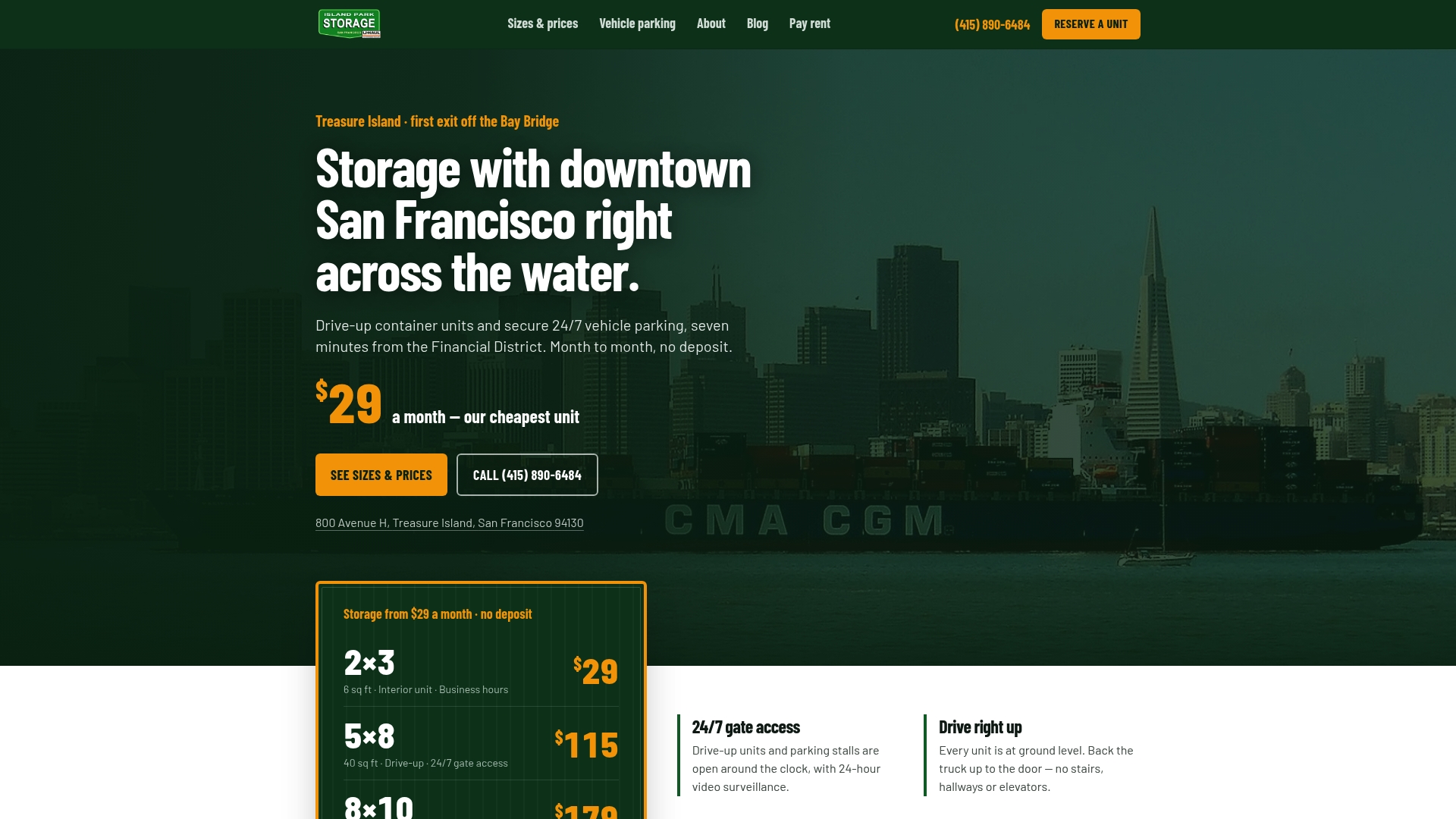
Have your ID ready when you reserve, and ask about insurance options if your homeowner’s or renter’s policy doesn’t already cover stored items. Move-in is straightforward: reserve online or by phone, show up, and start loading. If your needs run toward a vehicle instead of boxes and furniture, our vehicle parking page covers RVs, boats, and commercial fleets. And if you’re mid-move and want the place you’re leaving spotless, move-in and move-out cleaning services can take that task off your plate too.
FAQ
How much stuff will a 10x10 storage unit hold?
A 10x10 unit typically holds the contents of a one-bedroom apartment or up to three rooms of furniture and boxes. That usually works out to a mattress set, a couch, several dressers, and 30 to 50 boxes depending on how you stack them.
What is the average cost of a 10x10 storage unit?
The national average for a standard, non-climate-controlled 10x10 unit runs around $120 per month, with climate-controlled units averaging closer to $136. Local prices vary by city, demand, and whether the unit is indoor or drive-up, so it’s worth comparing listings in your area.
Can I access my storage unit at any time?
That depends entirely on the facility: some offer 24/7 gate access, while others restrict hours to daytime or set windows. At Island Park Storage, gate access runs 24/7, so you’re never locked out when you need something.
How big is a 10x10 storage unit compared to other sizes?
A 10x10 unit is roughly half the size of a standard one-car garage, giving you about 800 cubic feet of space with a typical 8-foot ceiling. It sits comfortably between smaller units meant for a studio apartment and larger units built for a full house.
Do I need insurance for my stored items?
Many facilities require some form of coverage, either through your own renter’s or homeowner’s policy or a plan offered on site. The self-storage industry has seen revenue growth and increased demand linked to life transitions such as moves and downsizing, which makes protecting stored belongings worth the extra step.
Sources
- Lessors of Mini Warehouses and Self-Storage Units Show Significant Financial Gains During COVID-19 Pandemic — U.S. Census
- Self Storage Industry Statistics — StorageCafe