
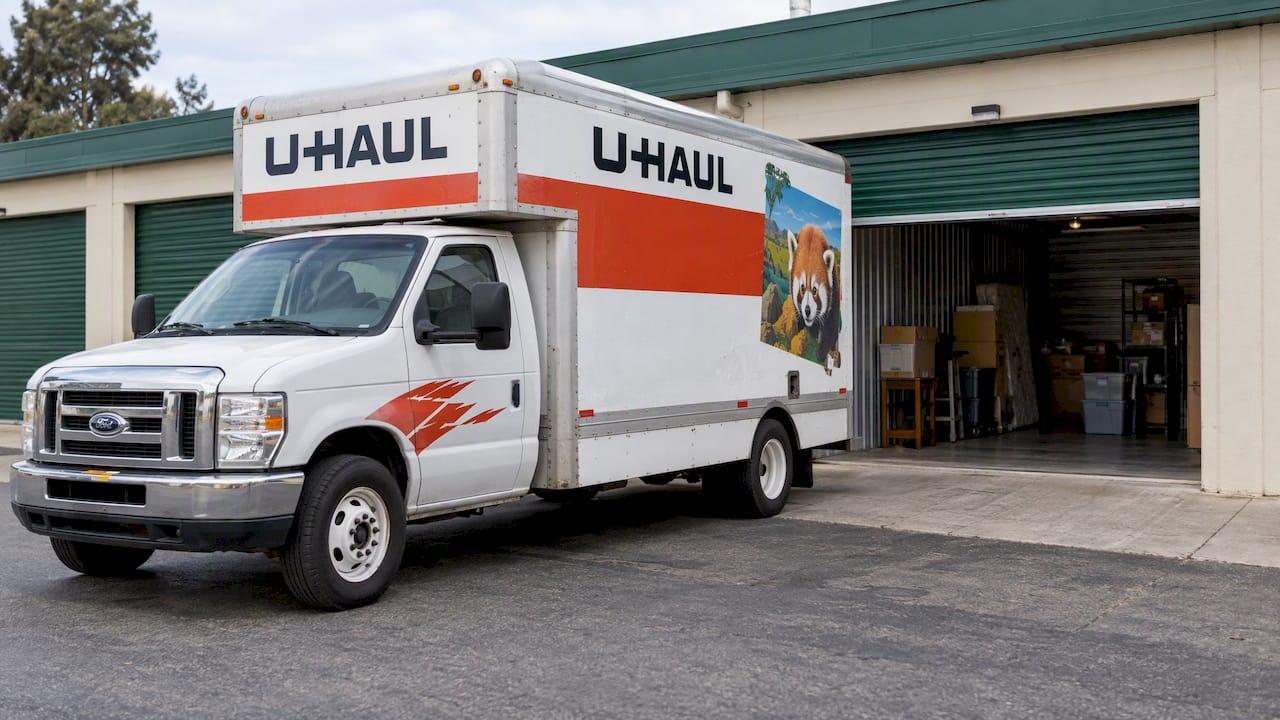
You can rent a moving truck and a storage unit from the same place, and in San Francisco that’s usually the least stressful way to do it. Pick up the truck, load it, drive a few minutes, and unload straight into your unit. At Island Park Storage, units start at $29 per month, U-Haul trucks start from $19 per day, and the gate is open 24/7. Here’s how to plan it without losing your mind.
TL;DR
- Renting a truck and storage together saves you a second trip across town. You load, drive, and unload in one go.
- The advertised daily truck rate is only the start. Mileage, fuel, taxes, fees, and coverage add up, so ask for an all-in total.
- Match the unit to the stuff: a 5×5 for boxes, an 8×10 for a one-bedroom, an 8×20 for a bigger home or business inventory.
- Drive-up access means you park next to your unit and skip the elevators and hallways.
- Our rentals are month-to-month with no deposit, so you aren’t locked in if your plans change.
Table of Contents
- Why truck rental and storage go hand in hand
- What a truck really costs
- Picking the right truck size
- Picking the right storage unit
- What drive-up storage means (and why it matters with a truck)
- Who this combo works for
- How to compare storage facilities
- Finding lower-cost storage without regrets
- Where we stand
- Ready to book the truck and the unit?
- A simple move-day plan
- FAQ
- Sources
Why truck rental and storage go hand in hand
Most moves have a gap. The old place is empty on the 30th, the new place isn’t ready until the 5th, and your couch has nowhere to be. Or you’re downsizing into a smaller apartment and half your stuff doesn’t fit. Or you’re a student heading home for the summer.
In all of these, you need two things: a way to move the stuff and a place to park it. Booking them separately means two stops, two sets of directions, and often a truck sitting in traffic while you hunt for a storage facility that has your size free.
When both are in the same spot, the day gets simple:
- Pick up the truck.
- Load at your place.
- Drive to the facility.
- Unload into your unit and return the truck.
That’s it. You’re not paying for the truck while you wait around.
What a truck really costs
Here’s the part that trips people up. The number on the sign isn’t the number on the receipt.
Our U-Haul truck rentals start from $19 per day. That’s the starting rate, and what you pay depends on the truck, how far you drive, and the options you add. One independent breakdown of U-Haul pricing points out that advertised local rates cover only the base, while mileage, fuel, taxes, and fees cost extra. Its worked example: a 10-foot truck at the base rate plus 30 miles at $1.19 per mile adds $35.70 before gas, taxes, or coverage.

That’s why comparison shoppers are told to line up equivalent, all-in quotes that include mileage, rental days, taxes and fees, equipment, coverage, fuel, and extra-day charges. Same move details, same dates, every time. Otherwise you’re comparing apples to moving boxes.
A quick checklist for your total
- Base rate: the daily price for your truck size.
- Mileage: per-mile charges for local moves, or an allowance on one-way trips.
- Fuel: you usually return the truck with the tank level you started with.
- Coverage: damage protection and insurance are typically optional add-ons. Check what your own auto or renters policy already covers.
- Equipment: dollies, blankets, and straps.
- Taxes and fees: these show up at the counter.
For a San Francisco to storage-facility hop of a few miles, mileage stays small. Your biggest cost swing is usually how many days you keep the truck.
Picking the right truck size
Too small and you make three trips. Too big and you pay for space you don’t use (and you drive a bus through the Mission).
As a rough guide, a 10 to 13-foot truck suits a studio, while 26-foot-plus trucks are for four-bedroom homes and larger. A one-bedroom or small two-bedroom usually lands in between.
Two tips that save headaches:
- Go one size up if you’re on the fence. A second trip costs more in time and gas than a slightly larger truck costs in rent.
- Think about city driving. Narrow streets, tight parking, and hills favor the smaller truck that still fits your load.
If you’re not sure you need a truck at all, we wrote a guide on moving without a truck in the city for smaller loads.
Picking the right storage unit
Once the truck question is settled, size the unit. Our current monthly prices:
| Unit size | Monthly price | Good for |
|---|---|---|
| 2×3 | $29 | Boxes, seasonal bins, a few small items |
| 3×4 | $55 | A closet’s worth of belongings |
| 5×5 | $79 | Boxes, small furniture, student summer storage |
| 5×8 | $115 | A studio’s essentials |
| 8×10 | $179 | A one-bedroom apartment’s contents |
| 8×20 | $279 | A larger home or small business inventory |
| 8×40 | $399 | Big loads, bulk inventory, equipment |
See the full list on our storage unit sizes and prices page. The “good for” column is a general guide, not a promise. If you’re between sizes, tell the manager what you’re storing and they’ll help you eyeball it.
Wondering how heavy to pack your boxes? Our moving box sizes guide covers the 40 to 50 pound rule so your back survives.
What drive-up storage means (and why it matters with a truck)
Drive-up storage means you pull your vehicle right up to your unit door. No loading dock, no cart, no elevator that’s always on another floor.
With a rental truck, that’s a big deal. You back up to the unit, roll up the door, and unload a few steps away. Every minute you save is a minute less on the truck’s clock.
It also helps long after move-in day:
- Pulling out a bike or a heavy box takes minutes.
- Small business owners can restock inventory from a van or pickup.
- Gate access runs 24/7 at our facility, so you’re not racing a closing time.
We go deeper in our post on drive-up storage and same-day move-in.
Who this combo works for
City dwellers short on space
San Francisco apartments are cozy, which is a nice word for small. A unit lets you keep the skis, the extra bed, and the holiday decorations without tripping over them. We’re about seven minutes from downtown, so the trip is short and you avoid the city traffic.
Small business owners
Inventory takes space. Pallets of product, trade show gear, tools, and paperwork all need a home. A larger unit like the 8×20 or 8×40 gives you room, and drive-up access lets you load a van or pickup directly. Month-to-month terms mean you can scale up for the busy season and back down after.

Students
Summer storage should be cheap, short, and easy. A small unit and a one-day truck cover many dorm moves. If you want to weigh your options, our student summer storage guide walks through four choices from pickup to DIY.
Vehicle owners
Need to park a camper, boat, or work truck? We offer 11×30 vehicle parking at $299 per month, 11×40 at $399, and 11×66 at $599, plus indoor motorcycle storage at $115 per month. See vehicle and RV parking for details. If you own a box truck, our box truck storage checklist covers what to look for.

How to compare storage facilities
Cheap is good. Cheap and a headache is not. When you’re shopping around, check these:
- Access: Can you get in at 9 p.m. on a Saturday? Is there drive-up access or do you carry everything through hallways?
- Security: Ask about gates, lighting, cameras, and how access codes work. Our post on storage unit security explains what to ask, including your lock and camera coverage gaps.
- Contract terms: Is it month-to-month? Is a deposit required? Are there surprise admin fees? Read the rental agreement before you sign.
- Unit condition: Walk the property. Look for clean, dry units and doors that roll smoothly.
- Insurance: Find out what’s covered and what isn’t. Our self-storage insurance guide explains what to get and what to skip.
- Management: Is someone on site who actually answers questions?
Security spending also varies by facility type. Industry guidance notes that higher-end facilities in good locations may justify more security investment, while value facilities need adequate but basic security. So visit in person and see for yourself rather than trusting a price tag alone.
Finding lower-cost storage without regrets
We get it: you want the lowest price. A few ways to get it without the gotchas.
- Right-size. Paying for an 8×10 when a 5×8 works is the quickest way to waste money. Measure or list your stuff first.
- Skip the deposit. Ours doesn’t require one, and every rental is month-to-month.
- Think vertical. Shelving and stacking boxes to the ceiling get more into a smaller unit.
- Pass on what you don’t need. Declutter before you rent. Fewer boxes, smaller unit.
- Ask about multi-vehicle discounts if you’re parking more than one vehicle.
The prices on our units page are what we publish, so what you see is what you plan around.
Where we stand
We’ve watched a lot of moves come through the gate. The ones that go smoothly have a few things in common, and none of them are fancy.
First, people book the truck and the unit for the same day. Nobody wants a truck idling while they wait on a unit. Second, they pick a unit with real drive-up access so unloading takes minutes, not an afternoon. Third, they don’t sign up for a long contract they might regret. That’s why we do month-to-month and no deposit.
And honestly, the best part of having a manager on site is the small stuff. Which size fits your couch? Where should you park the truck? Can you get in late? A person can answer that in a minute. You don’t have to pick between a truck and a place to put your things. We want it to be one easy stop.
— Mike
Ready to book the truck and the unit?
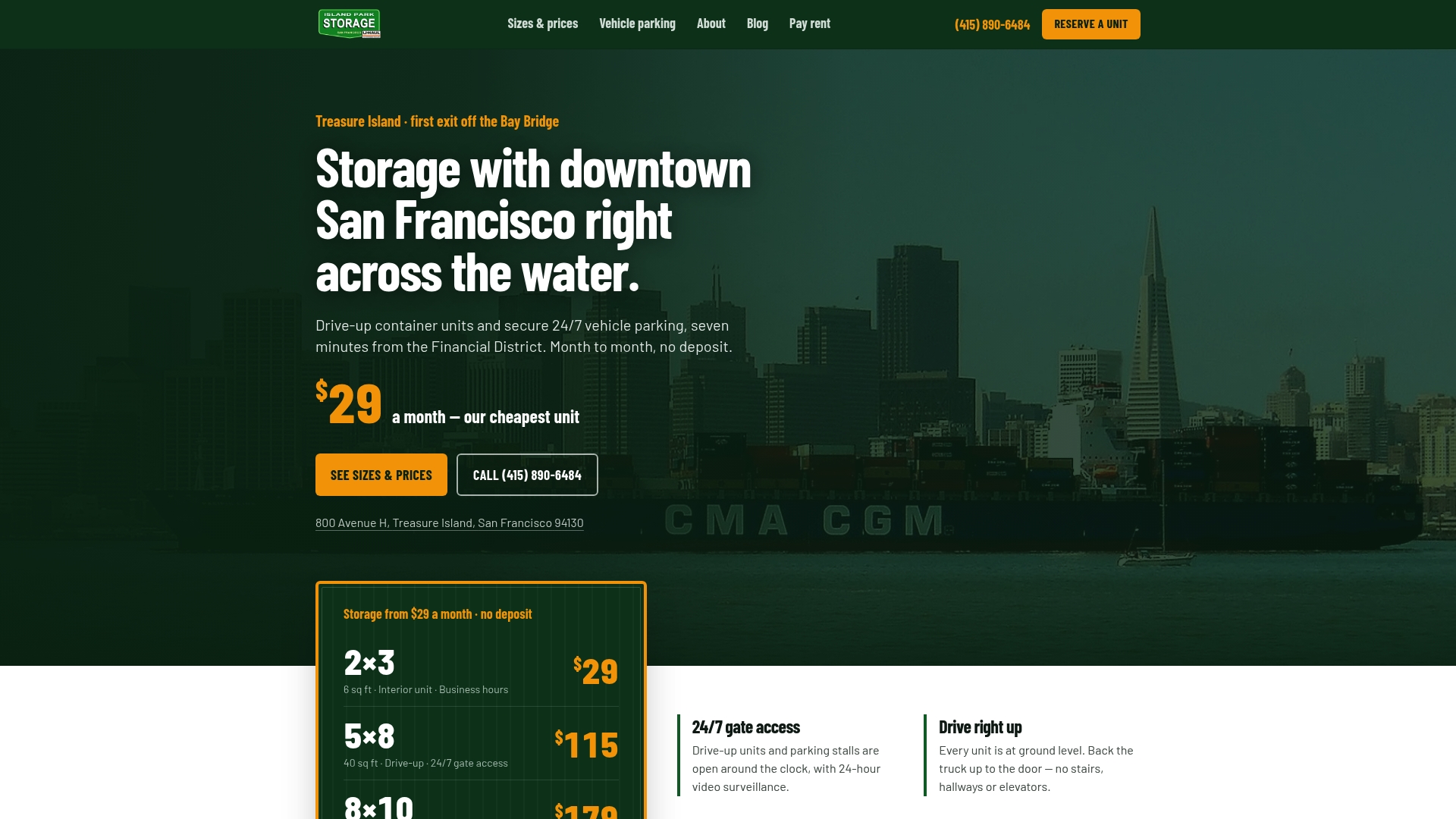
Here’s what we offer at our facility: U-Haul truck rentals from $19 per day, storage units from $29 per month, drive-up access with a 24/7 gate, month-to-month agreements with no deposit, and moving boxes and supplies. Stop by or check our storefront for the truck and supply details, then pick your size on the units page.
If you’re storing a vehicle instead, head to our vehicle parking page and reserve a stall.
A simple move-day plan
A little prep makes the day smoother. Here’s a plan that works.
- A week before: Measure your biggest items and decide your unit size. Reserve your unit and truck.
- Two days before: Pack boxes and keep each one under 40 to 50 pounds. Label them by room.
- The night before: Gather a lock, tape, blankets, and a dolly. Check what coverage you already have.
- Move day: Load heavy items first, against the front wall of the truck. Keep the walkway in your unit clear so you can reach the back.
- At the unit: Put things you’ll need often near the door. Leave a small aisle.
- Return the truck: Refill the tank if needed and return it on time to avoid extra-day charges.
If you’re moving to a camp or gear-heavy hobby, our guide on camping gear storage and contract traps is worth a skim before you sign anything, anywhere.
FAQ
Can I rent a truck and a storage unit at the same place?
Yes. At Island Park Storage you can rent a unit and a U-Haul truck from the same facility. You load, drive a short hop, and unload at drive-up access. It saves a second trip and keeps the truck’s clock short.
How much does it cost to rent a truck for a local move?
It depends on truck size, miles, and the day. Our U-Haul rentals start from $19 per day, but that’s only the base. Mileage, fuel, taxes, and fees are extra, so ask for an all-in estimate before you commit.
What size storage unit do I need?
A 5×5 fits boxes and small items, an 8×10 holds roughly a one-bedroom apartment’s contents, and an 8×20 suits a bigger home or business inventory. If you’re unsure, talk to our on-site manager. Going one size up is often cheaper than a second unit later.
Do I need a deposit or a long contract?
No. All our rentals are month-to-month with no deposit required. You can adjust or leave as your plans change.
Can I access my unit at night?
Yes. We have 24/7 gate access, so you can get to your things when it suits you.
Sources
- How Much Does a U-Haul Really Cost in 2026?
- Best Moving Truck Rental Companies: How to Compare
- How To Rent a Truck for Moving
- Self Storage Construction & Development Guide for 2026