
For small camping kits, a drive-up or indoor unit is your best bet. For trailers and bulky gear, go bigger with an 8×20 or 8×40 drive-up unit or a covered parking stall. For RVs and motorhomes, dedicated vehicle stalls or covered RV parking give you the protection and access you actually need. The right pick comes down to how often you need in, how much weather protection matters, and what you’re willing to spend.
TL;DR:
- Storage unit size should match your gear’s dimensions and your access needs; small indoor units for camping gear, drive-up containers for larger items, and vehicle stalls for RVs and boats.
- Weather protection varies from open lots for weatherproof gear to covered stalls for RVs, with climate control costing more but offering better protection against elements.
- Proper preparation, including cleaning, drying, winterizing, and documenting your gear, reduces risks of damage and disputes during long-term storage.
- Insurance is essential since most facilities limit liability; always provide proof of insurance, registration, and adhere to specific rules about hazardous materials and vehicle descriptions.
- Access features such as extended gate hours, drive-up points, security cameras, and clear space numbering are critical for convenience and safety when retrieving your stored items.
Table of Contents
- What paid storage options are you choosing between?
- How do you pick the right storage for your gear or RV?
- Getting your gear and RV ready for storage
- Insurance, contracts, and the rules that catch people off guard
- Access and security features worth checking before you sign
- What I’ve learned managing camping gear and RV storage
- How Island Park Storage fits your camping gear or RV
- Sources
- FAQ
What paid storage options are you choosing between?
Not all storage is the same, and picking blind usually means paying for more (or less) than you need.
- Indoor units keep gear shielded from sun, rain, and temperature swings, great for tents, sleeping bags, and anything fabric that hates moisture.
- Drive-up container units let you pull right up and load without hauling gear through hallways. An 8×20 or 8×40 fits kayaks, coolers, folding furniture, and even a small trailer, with practical ideas detailed at Custom Storage Solutions San Diego.
- Covered vehicle canopies protect RVs and boats from sun and rain without the cost of a fully enclosed unit.
- Uncovered lots are the cheapest option for vehicles that can handle the weather, like a truck camper you use often.
- Reserved vehicle stalls (think 11×30, 11×40, or 11×66) give RVs and trailers a dedicated, numbered spot so you’re not playing parking-lot roulette every time you visit.
If you’re storing a tent, cookware, and a few folding chairs, a small indoor unit does the job. If you’ve got a popup trailer or a stack of coolers and gear bins, a drive-up unit saves your back. RVs and boats almost always do better in a vehicle stall, covered if you can swing it, because sun damage to seals and tires adds up fast.
How do you pick the right storage for your gear or RV?
Before you sign anything, run through this.
- Measure your gear or vehicle, length, width, and height, and compare it against the facility’s unit and stall dimensions.
- Think about how often you’ll need access. Weekly campers want drive-up convenience; seasonal storage can tolerate a less convenient spot.
- Decide how much weather protection you actually need. Climate control costs more, but open-air lots work fine for weatherproof gear.
- Check the lease terms. Ask about month-to-month flexibility, deposit requirements, and posted gate hours.
- Confirm vehicle-specific rules, like fuel levels, propane tanks, and whether you’ll need to show proof of insurance and registration.
Pro Tip: Bring a tape measure and your vehicle’s registration on your site tour. Facilities often ask for both on the spot, and it saves you a second trip.
When you tour a facility, ask about gate hours, how space assignments work, and what happens if you’re late on payment. Those answers tell you more about day-to-day life there than any brochure will.
Getting your gear and RV ready for storage
A little prep now saves you a mess later.
For camping gear:
- Wash and fully dry tents, sleeping bags, and tarps before packing them away. Damp fabric grows mildew fast.
- Pack textiles with desiccant packs, and swap them out every few months during long-term storage.
- Store coolers and food containers open or propped, since sealed containers trap moisture and odor.
For RVs, winterizing matters even if you’re not dealing with freezing temperatures. Drain the water lines, add fuel stabilizer to the tank, and either disconnect the battery or put it on a trickle charger. Skipping this step is one of the fastest ways to come back to a dead battery or a fuel system full of gunk.
Pest prevention deserves its own attention. Seal any gaps where rodents could enter, vent the RV to prevent trapped moisture, and keep the area around your vehicle clear of debris that attracts pests. Practical steps like storing textiles clean and dry and running fuel stabilizer before storage cut down on post-storage repairs more than almost anything else you can do.
Before you lock up, take photos. Document the condition of your gear and your RV’s exterior, interior, and odometer. If a dispute ever comes up, those photos are your best evidence.
Insurance, contracts, and the rules that catch people off guard
Most facilities limit their own liability for your stuff, which is exactly why renter’s insurance (or a homeowner’s policy rider) matters more than people expect. Facilities often require proof of auto insurance and current registration before they’ll hand over keys to a vehicle stall, and for good reason.
Here’s something worth knowing: facilities that offer extra services like washing or fueling take on more liability for your vehicle while it’s in their care. Insurers flag this as a bigger liability exposure for the operator, which is why some facilities skip those add-ons entirely or require stricter contract terms in exchange.
Operators that add boat and RV storage face exposures that general self-storage doesn’t, which is why vehicle-specific leases, higher policy limits, and documented vehicle descriptions matter so much.
Watch for these common contract clauses:
- Limitation of value, which caps what the facility owes you if something’s damaged, typically set by a standard maximum value unless higher coverage is approved in writing.
- Hazardous material restrictions, often banning full propane tanks or leaking fluids.
- Vehicle description requirements, where the lease lists your make, model, and VIN.
- Towing and nonpayment rules, which vary by state and can move fast if rent goes unpaid.
The Self Storage Association is pushing for 2026 updates to vehicle-storage laws, including clearer towing and insurance protocols, since state rules on this topic are still a patchwork. It’s also worth knowing that zoning matters here too. One King County code interpretation found that renting out RV parking spaces on a property met the legal definition of self-storage, meaning it can run into zoning restrictions depending on the area. If you’re renting a stall from a smaller or informal lot, it’s worth asking whether the land is properly zoned for it.
Access and security features worth checking before you sign
A unit is only as good as your ability to get into it.
- Gate access with extended hours matters most if your schedule doesn’t match a typical nine-to-five, which covers a lot of weekend campers and RV owners heading out before sunrise.
- Drive-up access and wide aisles make a real difference when you’re backing a trailer or maneuvering an RV. Tight turns and narrow lanes increase the odds of a scrape.
- Gated perimeters, cameras, and on-site staff add a layer of security that an open, unmonitored lot can’t match.
- Clear space numbering sounds minor until you’re circling a lot looking for stall 47 in the dark.
Little operational details, like how fast the gate sensor responds or whether ramps are level, make the difference between a smooth in-and-out and a stressful ten minutes every time you visit.
What I’ve learned managing camping gear and RV storage
Most people underestimate how much space their gear actually takes up, especially once coolers, bins, and folding gear get stacked. Bring ID, your vehicle registration, and proof of insurance when you sign up. We check all three before handing over access.

The most common mistakes I see: skipping winterization, storing a propane tank that’s still full, and going with a unit one size too small. All three are easy to avoid with a little planning.
On-site management and month-to-month contracts matter more than people expect, especially for city dwellers who don’t want to commit to a year-long lease for a trailer they use six weekends a year.
— Mike
How Island Park Storage fits your camping gear or RV
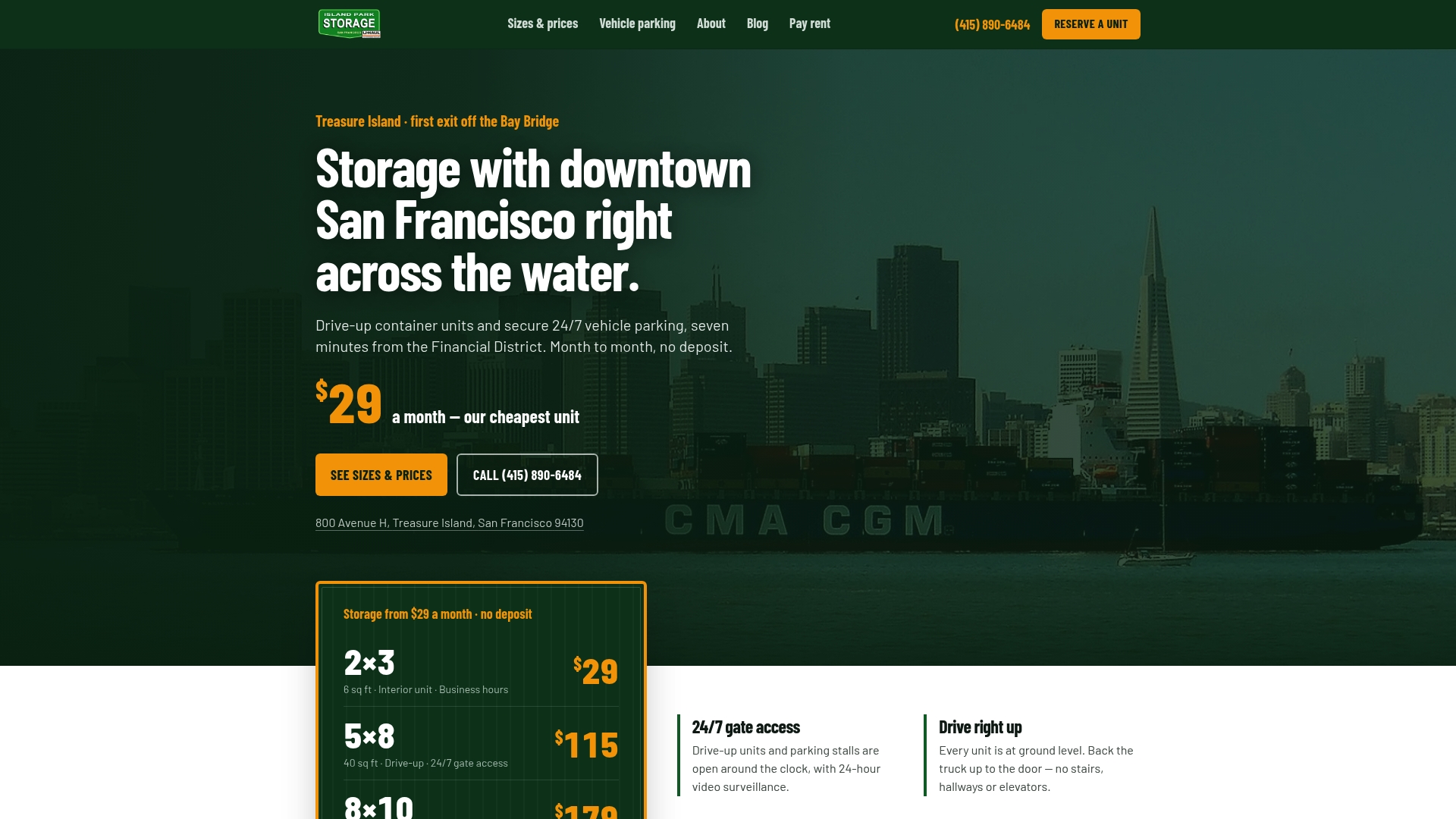
Got a tent and a few bins? An 8×10 or 8×20 self storage unit handles it easily, starting at $179 a month. Got a trailer or RV? Our vehicle parking stalls run from $299 to $599 a month depending on length, with 24/7 gate access and no deposit required. Everything’s month-to-month, so you’re never locked into something that doesn’t fit your season.
Bring your ID, registration, and proof of insurance, and our on-site team will match you to the right size. Check availability on our units page or vehicle storage page today.
Sources
- Chubb — Self storage business insurance guidance
- SSA Announces 2026 Legislative Agenda
- King County code interpretation CINT23-0001
- Avoiding liability exposure at your boat/RV-storage facility
FAQ
What size storage unit fits camping gear for a family of four?
A 5×8 or 8×10 unit usually handles a family’s camping gear, including tents, sleeping bags, coolers, and folding furniture. If you’re also storing bikes or kayaks, size up to an 8×20 for breathing room.
Should I get covered or uncovered parking for my RV?
Covered parking protects your RV’s roof seals, tires, and paint from sun and rain damage over time. Uncovered parking costs less and works fine if you use the RV often or live somewhere with mild weather.
What documents do I need to rent vehicle parking?
Most facilities ask for your ID, vehicle registration, and proof of current insurance before renting a parking stall. Some also require a vehicle description for the lease, matching details like make, model, and length.
How do I prevent pests and mildew in stored camping gear?
Wash and fully dry all fabric items before storage, then pack them with desiccant packets that you swap out every few months. For RVs, seal entry gaps and keep the surrounding area clear of debris that attracts rodents, steps that meaningfully cut down on post-storage repairs.
Is month-to-month storage better than a long-term lease for seasonal gear?
Month-to-month contracts give you the flexibility to scale up or down as your camping season changes, without being locked into a year-long commitment. This fits most seasonal campers better than a long-term lease, especially if gear use shifts throughout the year.