
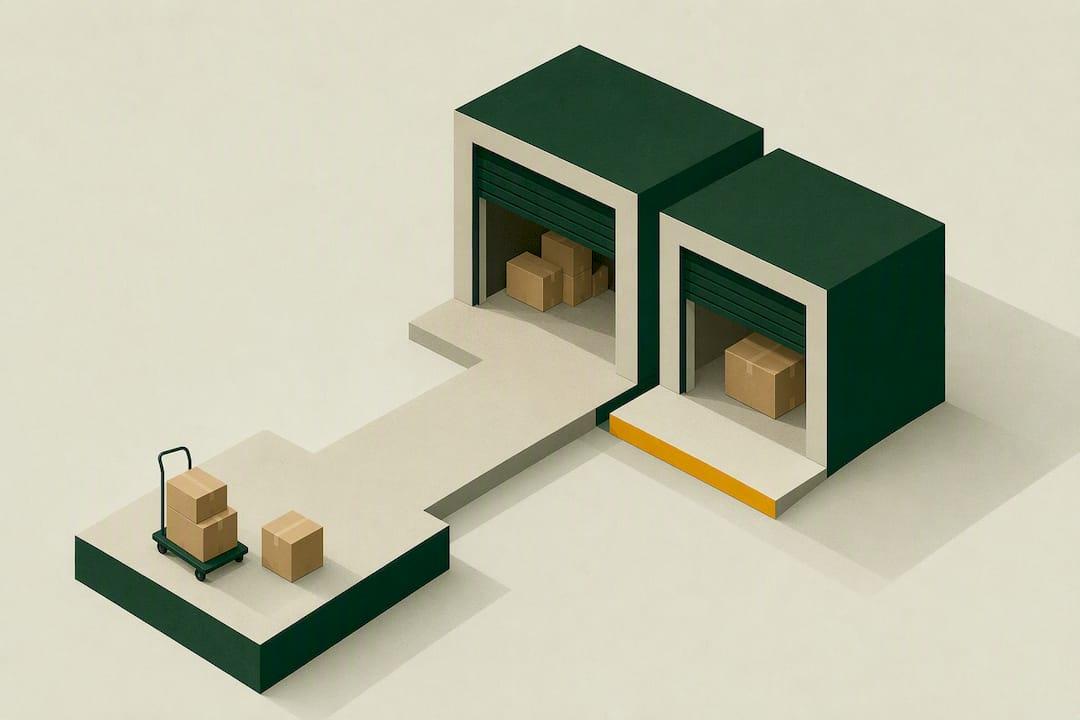
Drive-up storage is a ground-level unit with a roll-up door you pull your vehicle right up to, load or unload, and drive away. It’s the best fit if you’re storing anything heavy, bulky, or vehicle-sized, or if you need to grab your stuff often without hauling it through hallways and elevators. A facility offering this setup plus vehicle parking ensures you don’t have to choose between convenience and options.
TL;DR:
- Drive-up units are ideal for storing heavy, bulky, or vehicle-sized items, offering direct ground-level access with no elevators or hallways required.
- They are best suited for contractors, small businesses, and vehicle owners who need frequent or quick access, but are unsuitable for temperature-sensitive belongings.
- Typical unit sizes range from small closets to full warehouses, with larger units and vehicle stalls costing more, especially in high-demand or urban markets.
- Secure facilities feature gated access, cameras, ample lighting, and on-site staff, with costs generally from $15 to $30 per month for small units in low-demand areas.
- The rental process is quick and flexible, often available for same-day move-in, with month-to-month agreements and no deposits, making it easier to adapt to changing storage needs.
Table of Contents
- What Is Drive-Up Storage and How Does It Work?
- Who Actually Needs a Drive-Up Unit?
- What Size Unit Do You Actually Need?
- How Secure Are Drive-Up Storage Facilities?
- What Does Drive-Up Storage Cost?
- How to Pick the Right Drive-Up Unit
- How Long Does It Take to Move Into a Drive-Up Unit?
- What Are the Terms for Renting a Drive-Up Unit?
- Why Drive-Up Storage Beats the Alternatives for Most Renters
- Ready to Reserve Your Drive-Up Unit?
- Sources
What Is Drive-Up Storage and How Does It Work?
Picture a garage that isn’t attached to your house. That’s basically it. Drive-up storage units sit at ground level with a roll-up door facing an outdoor drive lane, so your car, truck, or trailer can park right at the entrance.
Here’s the whole process, start to finish:
- Pull your vehicle into the drive lane in front of your unit.
- Roll up the door (no stairs, no elevators, no carrying furniture down a long hallway).
- Load or unload directly from your trunk or truck bed.
- Roll the door back down and lock up.
That’s the entire routine, every single visit. No wonder people who need frequent access love this setup.
One catch: drive-up isn’t the move for anything sensitive to heat, cold, or humidity. Photos, wine, electronics, wood instruments. Those want a climate-controlled indoor unit instead.
Who Actually Needs a Drive-Up Unit?
Not everyone needs this. But if you fall into one of these groups, drive-up access solves a real, specific headache.
- Contractors and tradespeople. You’re in and out multiple times a week grabbing tools and materials. Frequent visits are where drive-up access pays off the most, since every trip saves you real time.
- Small businesses. Seasonal inventory, extra stock, pop-up shop supplies. You need to get in, grab a box, and get out.
- Vehicle, RV, and boat owners. Drive-up units and outdoor vehicle stalls both solve the “my driveway isn’t big enough” problem, though vehicles usually belong in a dedicated parking spot rather than a storage unit built for boxes.
- People mid-move or mid-renovation. You’re moving furniture in and out constantly, sometimes daily.
- Hobbyists with bulky gear. Kayaks, ATV parts, camping equipment, holiday decorations the size of a small car.
Pro Tip: Skip drive-up storage for anything that warps, molds, or degrades with temperature swings. Save the roll-up units for stuff that can handle a little weather exposure.
What Size Unit Do You Actually Need?
This is where people either overthink it or underestimate it completely. Common drive-up sizes run from small closets to small warehouses, and picking the wrong one means either wasted money or a second trip to upsize.
| Unit Size | Roughly Fits |
|---|---|
| 5-foot by small | Small furniture, boxes, a few dozen totes |
| small warehouse size | A one-bedroom apartment’s worth of stuff |
| small warehouse size | Two to three bedrooms, plus appliances |
| small warehouse size | A full three-bedroom household or a small vehicle plus household goods |
| small warehouse size | Large households, business inventory pallets, or a vehicle with room to spare |
A few things people forget to plan for:
- Pallets and shelving eat floor space fast. Measure your home organization systems shelving footprint, not just your box count.
- If you’re parking a vehicle inside a unit rather than a dedicated stall, add extra length for door swing and turning room.
- When in doubt, size up. A unit that’s slightly too big costs a little more each month. A unit that’s too small means renting a second one or renting a truck twice.
How Secure Are Drive-Up Storage Facilities?
Ground-level access is convenient, which means you’ll want to confirm the facility actually protects it. Before you sign anything, check for these:
- Gated perimeter with a unique PIN code for entry, not a shared gate code everyone uses.
- 24/7 video surveillance covering the drive lanes, not just the office.
- Solid lighting after dark, especially if you’ll be visiting early or late.
- On-site staff or management, which tends to deter the kind of trouble empty lots attract.
Bring your own quality lock. Facility insurance or your own renter’s/homeowner’s policy can also cover your stored items if something goes wrong. And if you’re the type who drops by at odd hours, confirm the actual access hours in writing. “24/7 access” sometimes means “24/7 during the office’s idea of reasonable hours.” It’s worth checking a facility’s reputation through a source like the Better Business Bureau before you commit.
What Does Drive-Up Storage Cost?
Prices swing hard depending on your city, the unit size, and whether you want covered or open-air vehicle parking. Small units in some markets start under $20 a month, while larger units and vehicle stalls in busier metro areas climb into the hundreds.
A realistic snapshot: small drive-up units nationally can run from roughly $15 to $30 a month in lower-demand markets, with larger units and vehicle parking stalls costing considerably more in cities with tight storage supply, based on public facility listings.
What actually moves the needle on price:
- Size. Bigger footprint, bigger bill. Straightforward.
- Location and demand. Storage near a dense city costs more than storage in a quiet suburb.
- Extras. Insurance add-ons, covered vs. uncovered vehicle parking, and climate control (if you upgrade) all add to the monthly rate.
How to Pick the Right Drive-Up Unit
Walking into a storage office without a plan is how people end up overpaying or stuck in a lease that doesn’t fit. Work through this before you sign:
- Confirm the size fits your actual load, including shelving footprint and vehicle length if you’re storing a car, RV, or boat.
- Check the drive lane width. Some facilities have tight lanes that make maneuvering a truck or trailer a headache.
- Verify the security setup: gate access, PIN codes, cameras, lighting.
- Ask about access hours and visitor policy if you need to get in outside of standard business hours.
- Read the contract terms. Look for month-to-month flexibility over long lease lock-ins, and ask directly about deposits, since some facilities waive them entirely.
- Ask about pest control practices and what happens if something goes wrong with your unit.
- Get the refund and cancellation policy in writing, not just verbally from a sales rep.
Pro Tip: If a facility won’t clearly answer questions about gate access, cameras, or their cancellation policy, treat that as a red flag and keep looking. Vague answers to simple questions usually mean something’s being glossed over.
Watch for warning signs: no visible cameras or gate, contracts that only offer annual terms, or fees that only show up after you’ve already signed. A portable “drop-off” storage service, where a company delivers a container to your address and hauls it away, is a real option too, but it usually costs more for short-term use than a traditional drive-up unit you visit yourself.
How Long Does It Take to Move Into a Drive-Up Unit?
Here’s the good news: this isn’t a process that drags out for weeks. Most drive-up rentals move fast, because the whole point of this storage format is convenience, and that starts before you even load your first box.
Same-day or next-day is normal. Once you find a unit that fits your size and budget, many facilities let you reserve online in minutes. From there, move-in can often happen the same day or the next, especially if the facility skips a deposit requirement and doesn’t require an in-person credit check before you get a gate code.
What actually happens between inquiry and keys-in-hand:
First, you check availability and pick a size, usually through an online booking tool or a quick phone call. Second, you review the rental agreement, ideally the month-to-month kind rather than a long lease. Third, you handle payment and any insurance decisions. Fourth, the facility issues your gate code or access credentials. Fifth, you show up, park in the drive lane, and start moving items in.
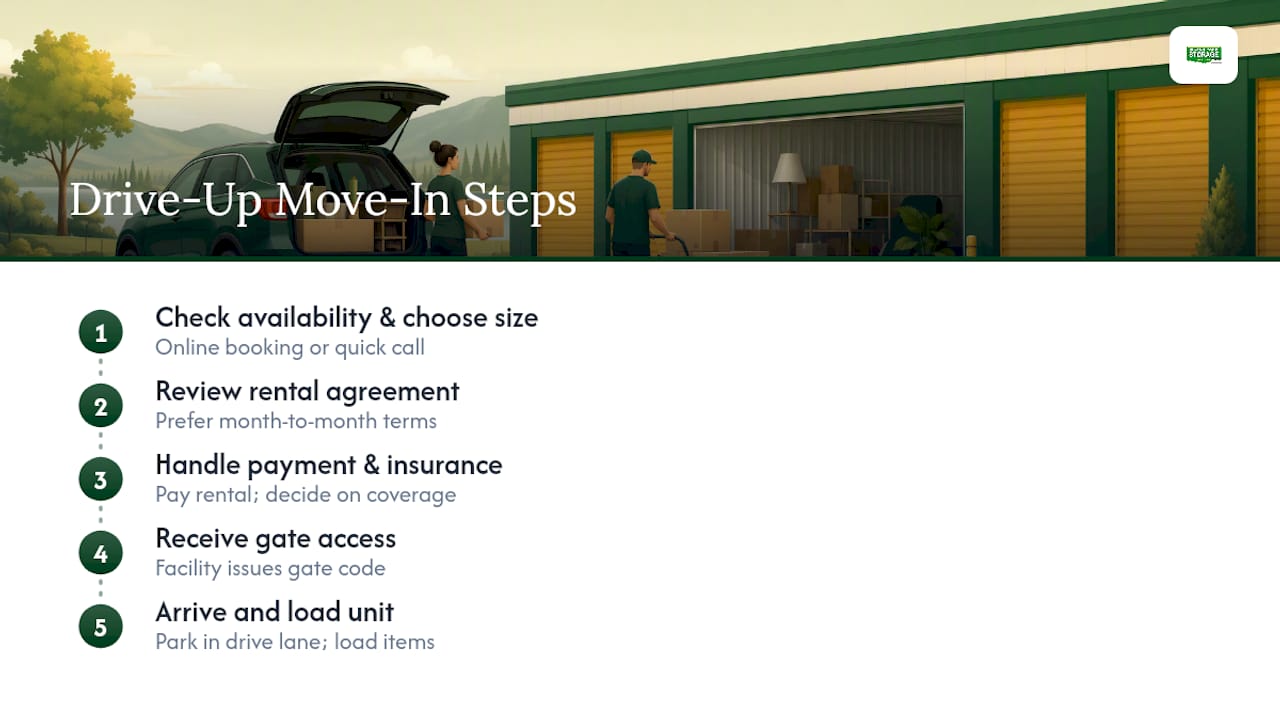
The whole sequence can take as little as a day if you’re organized and the unit is available. It stretches out only if you’re waiting on a specific size to open up, or if you’re comparing multiple facilities before deciding. Either way, drive-up storage is built for speed. There’s no elevator scheduling, no loading dock reservation, no waiting on facility staff to escort you anywhere. You show up, you load, you’re done.
What Are the Terms for Renting a Drive-Up Unit?
Contract terms matter more than most people realize until they’re stuck in one that doesn’t fit. Some providers structure their drive-up rentals around flexibility, which matters if your storage need is temporary, seasonal, or just unpredictable.
Month-to-month, not a long-term trap. Rather than locking you into a year-long lease, the rental runs month-to-month. That means if your project wraps up in six weeks or your moving timeline shifts, you’re not stuck paying for a unit you don’t need anymore.
No deposit required. A lot of storage facilities ask for a deposit upfront, which adds friction right when you’re already juggling moving costs or business expenses. That requirement doesn’t apply here.
24/7 gate access. If you’re a contractor grabbing tools at 6 AM or a small business owner restocking inventory late at night, your access isn’t limited to a front office’s hours.
On-site management. Someone’s actually there to answer questions, handle billing issues, or help if something’s not working right with your gate code or unit.
Before you sign anything, confirm the specific size, monthly rate, and any insurance requirements for your unit. Terms can vary slightly by unit size and vehicle-stall type, so ask directly rather than assuming.
Why Drive-Up Storage Beats the Alternatives for Most Renters
Here’s an opinion that might ruffle a few feathers: climate-controlled indoor storage gets recommended way too often for people who don’t actually need it. If your stuff is furniture, tools, seasonal inventory, or anything that survives a garage in winter, you’re paying extra for climate control you’ll never use.
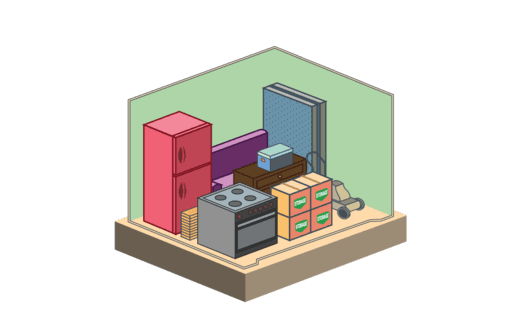
Island Park Storage’s setup makes the case for drive-up pretty clearly. Ground-level container units with roll-up doors mean no hallways, no carts, no waiting for an elevator during your lunch break. Add vehicle and fleet parking into the mix, and you’ve got one facility solving two separate headaches: your boxes and your boat.
A month-to-month, no-deposit rental structure can be significant since storage needs often change; projects end early, or moves get delayed. Flexibility combined with 24/7 gate access and on-site management may better fit actual usage patterns than a year-long lease.
— Mike
Ready to Reserve Your Drive-Up Unit?
If you have heavy furniture, contractor gear, seasonal inventory, or a vehicle that doesn’t fit in your driveway, a drive-up unit can provide a solution without requiring a long-term commitment. Month-to-month terms, no deposit, and 24/7 gate access mean you may avoid paying for space you don’t need anymore.
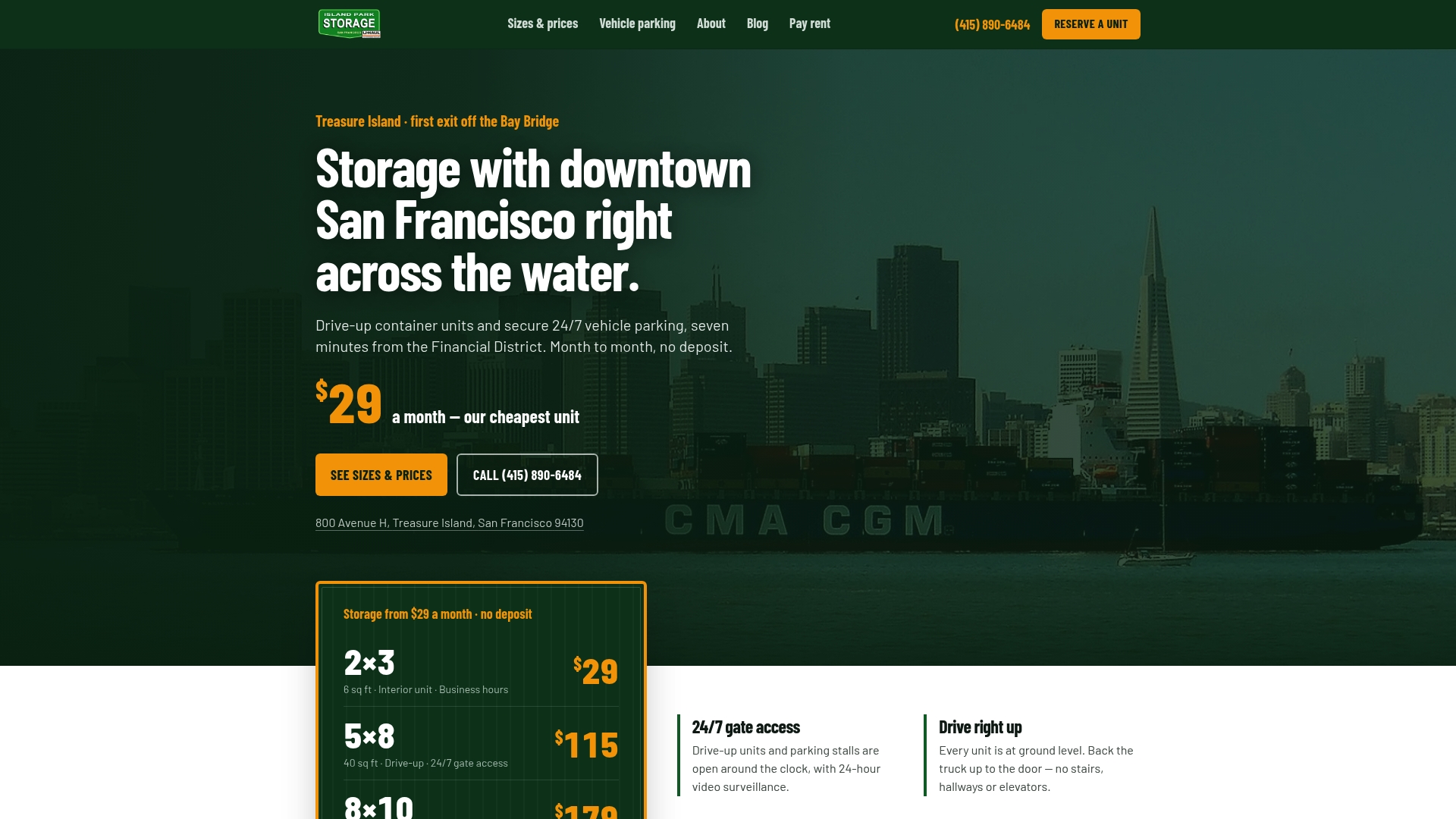
Check current unit sizes and pricing to find your fit, or explore vehicle, RV, and boat parking if your storage problem is parked in your driveway right now. Reserve online in minutes, or call the on-site team with questions about gate codes, vehicle length limits, or contract details before you commit.
Sources
- Drive-Up Storage Units in Killeen, TX | Next Storage
- Drive-Up Access Storage: What It Is and Who Needs It
- DriveUp Portable Storage | We Bring Self-Storage To You
- Drive-Up Storage in Salt Lake City, UT (from $17)