
Ground level storage units are the fastest option for anyone who needs frequent, vehicle-friendly access to bulky items, tools, or a car, RV, or boat. The trade-off is real: drive-up units sit closer to outdoor temperature swings and pests than climate-controlled interior units. For most renters who visit often or need to move heavy loads, that trade-off is worth it, and providers like Many build their whole layout around it.
TL;DR:
- Drive-up units offer quick access, large door openings, and parking close to your door, ideal for frequent, bulky, or vehicle storage needs.
- Outdoor, uncovered units are exposed to temperature swings, pests, and humidity, so they suit weather-tolerant items stored with protective habits.
- Market prices vary widely by city and features, with smaller units starting around $25 monthly and vehicle stalls costing more, especially if covered.
- Secure facilities should have gated access, surveillance cameras, adequate lighting, and transparent policies on hours and insurance requirements.
- Long-term or infrequent use may warrant climate-controlled units, but for regular heavy or large-item access, ground-level drive-up units remain the most efficient option.
Table of Contents
- What Is a Ground Level Storage Unit?
- Benefits and Trade-Offs of Drive-Up Units
- Who Actually Needs a Ground Level Unit?
- Unit Sizes, Vehicle Options, and What to Expect to Pay
- How to Choose the Right Ground Level Unit
- Security, Access, and Climate Realities
- Keeping Your Unit Clean and Pest-Free
- Do You Need Extra Insurance for a Ground Level Unit?
- Ground Level vs. Interior Unit Costs
- Protecting Your Belongings From Weather and Pests
- What I’d Actually Tell a Friend Renting Storage
- Reserve a Drive-Up Unit With No Long-Term Commitment
- Sources
What Is a Ground Level Storage Unit?
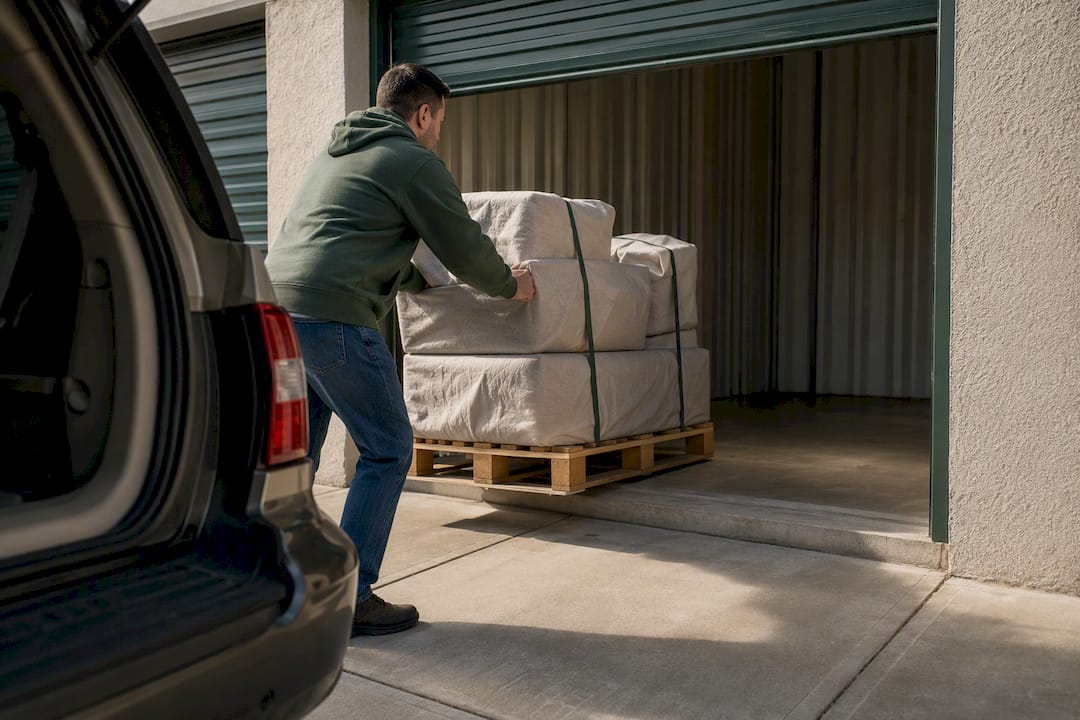
A ground level storage unit, often called a drive-up unit, sits on the ground floor of a facility with its own exterior door that opens directly to a driveway or parking lane. You pull your car, truck, or trailer right up to the door, roll it open, and start loading. No elevator, no hallway, no cart required. Storage operators frequently describe this setup as garage-like access because the experience mimics parking in your own garage.
This differs from interior units, which sit inside a hallway inside the building, often on an upper floor, and usually require walking your belongings through a corridor or freight elevator before you reach the unit. Interior units are more likely to include climate control. Ground level units trade some of that protection for direct vehicle access.
Typical layout and door design
Most drive-up units use a roll-up metal door similar to a garage door, wide enough to walk furniture through or back a truck up to the opening. Ceiling height in ground floor units tends to run higher than interior units, which matters if you’re stacking furniture or storing a kayak on its side.
What to look for at a facility
Not every “ground level” listing offers the same experience. Before you commit, check for:
- Wide drive aisles that fit a full-size pickup or box truck, not just a sedan
- Enough vehicle clearance to pull all the way up to your specific door
- A gated, secured perimeter rather than an open lot with loose access
- Paved, well-lit surfaces so loading at night or in bad weather doesn’t turn into a hazard
Facility listings commonly promote wide drive aisles, gated entry, and camera coverage as standard features of a drive-up site, and those three details are worth confirming on any tour.
Benefits and Trade-Offs of Drive-Up Units
Speed is the headline benefit. When your unit is ten feet from your parking spot, you’re not carrying a couch through three turns of a hallway. You back up, open the door, and move things directly from trunk to unit. That matters most when you’re storing large furniture, construction materials, or anything heavy enough that fewer trips saves your back.
Vehicle access is the second big win. If you own a car you don’t drive daily, a motorcycle, or gear that lives in a truck bed, drive-up units let you load and unload without hauling items through a building first. Many drive-up sites also offer dedicated parking stalls for RVs and boats right alongside the storage units, so one visit covers both.
The trade-offs show up over time rather than on day one. Ground floor units, especially uncovered outdoor ones, see more temperature swings than interior climate-controlled spaces, and they’re generally more exposed to dust, humidity, and the occasional pest looking for shelter. That’s a real consideration for anything sensitive to heat or moisture.
Pro Tip: If you’re on the fence, ask yourself how often you’ll actually visit the unit. Weekly or monthly visits favor drive-up access every time. If you’re storing something once and locking the door for two years, climate control starts to matter more than convenience.
Here’s how the decision usually breaks down:
- Choose convenience (drive-up) if you’re storing furniture, tools, seasonal inventory, or a vehicle you access regularly
- Choose climate control if you’re storing documents, wood furniture, leather, artwork, or electronics for the long haul
- Split the difference by using a ground-level unit for bulky, weather-tolerant items and a smaller climate-controlled unit for anything fragile
Neither option is universally correct. The right call depends on what you’re storing and how often you need your hands on it.
Who Actually Needs a Ground Level Unit?
Certain renters get outsized value from drive-up access, while others barely notice the difference. Here’s who tends to benefit most:
- Contractors and frequent-access renters. If you’re pulling tools, materials, or equipment multiple times a week, every extra minute spent navigating hallways adds up over a year.
- Vehicle, RV, and boat owners. Before booking, confirm stall width, vertical clearance, and whether the space is covered or open. A boat trailer with a raised hitch or a tall RV with roof vents needs real headroom, not just floor space, and confirming exact exterior dimensions before move-in avoids a wasted trip.
- Students and urban renters mid-move. Anyone moving apartments in a city with limited street parking benefits from pulling a car up to the door instead of hauling boxes across a parking lot.
- Small businesses storing inventory. Retailers and online sellers who restock frequently need loading access that doesn’t slow down a delivery schedule, especially during peak seasons.
Drive-up access is especially valuable in dense urban settings where curb space and loading zones are scarce, since it minimizes the handling and time spent getting items in and out. If your storage trips are occasional and your cargo is light, the benefit shrinks, and an interior climate-controlled unit might serve you just as well.
Unit Sizes, Vehicle Options, and What to Expect to Pay
Storage facilities generally organize ground level units into a handful of standard sizes, and knowing what fits each one saves you from renting too much or too little space.
| Size | Roughly fits | Common use |
|---|---|---|
| 5x5 | A closet’s worth of boxes, seasonal decor | Small overflow, dorm storage |
| 5x10 | A studio apartment’s furniture, mattress, boxes | Small closet replacement |
| 10x10 | A one-bedroom apartment | Full apartment move |
| 10x30 | A two-car garage’s contents | Vehicle plus household goods |
| 10x30 | A large, multi-bedroom household | Full house move, business inventory |
Drive-up facilities typically list this same range, from small closet-sized units up to 10x30 garage-sized spaces, and many of the larger sizes double as vehicle storage when a dedicated parking stall isn’t available.
Vehicle and RV parking considerations
Parking a vehicle is a different math problem than storing boxes. Facilities usually offer a mix of open-air stalls, covered stalls, and fully enclosed drive-up bays. Covered parking costs more than open stalls but protects paint and interiors from sun and rain. Enclosed bays cost the most and function like a private garage.
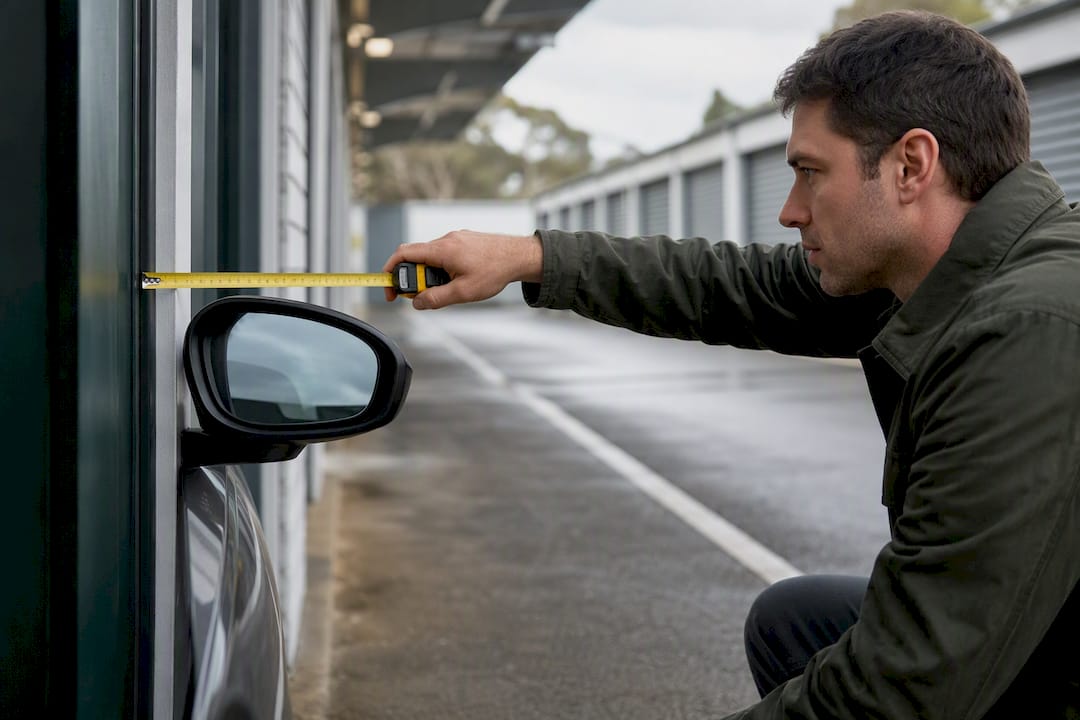
Before reserving, measure your vehicle including mirrors, and account for a hitch or bike rack if one’s attached. A checklist that takes two minutes:
- Total length bumper to bumper, including any hitch-mounted accessories
- Width including side mirrors extended
- Height including roof racks, AC units, or antennas
- Turning clearance needed to back into the stall
What ground level units actually cost
Pricing swings widely by city and by whether you’re renting an outdoor stall or an indoor drive-up bay. Local facility listings show real spread even within a single metro area. For example, Los Angeles-area listings show ground-floor 5x5 units priced around $25 a month while 10x10 units run closer to $75, and pricing moves with demand, season, and promotions. The biggest cost drivers are market (urban San Francisco or Los Angeles costs more than a smaller city), whether the unit has climate control, and whether you need a vehicle stall versus a household unit. Expect vehicle and RV parking to command a premium over an equivalent-sized storage unit, since covered and enclosed vehicle spaces carry higher demand.
Islandparkstorage’s own unit size and pricing page breaks down current rates starting at $29 a month, which gives you a real baseline for comparing what a given size should cost in a competitive urban market.
How to Choose the Right Ground Level Unit
Picking a unit isn’t just about size. The lease terms, security setup, and facility policies matter just as much as the square footage. Work through this checklist before you sign anything:
- Access hours. Is the gate open 24/7, or does it lock at a set time each night?
- Gate and lock policy. Does the facility use a keypad, an app, or a physical key, and who else can access your unit?
- Surveillance coverage. Are cameras positioned to cover your specific unit row, or just the main entrance?
- On-site staff. Is someone actually on the property, or is it a remote-managed lot?
- Insurance requirements. Does the facility require proof of coverage, or offer its own protection plan?
- Lease terms. Month-to-month, or a fixed-term commitment with an early termination fee?
- Deposit and fees. Is a deposit required, and are there hidden administrative charges?
- Payment methods. Can you pay online or by auto-draft, or is it check-only?
When you’re touring or calling a facility, ask these questions directly:
- Is the stall covered, uncovered, or fully enclosed?
- What are the exact gate hours, including holidays?
- Do you accept deliveries or drop-offs on my behalf?
- Is there a size upgrade or downgrade option if my needs change?
- What’s your policy on vehicle maintenance or working on a car inside the unit?
- Is there a minimum lease length, and what’s the notice period to move out?
- How is pest control handled at the property?
- What insurance options do you offer, and is proof of coverage mandatory?
Pro Tip: Ask about gate hours before you ask about price. A unit that’s $10 cheaper but locks at 9 p.m. is useless if you work nights or need weekend access at odd hours.
Watch for red flags: no visible on-site staff during business hours, gate cameras that are clearly non-functional, or a facility that won’t put lease terms in writing before you pay a deposit. A legitimate operator answers every one of these questions without hesitation.
Security, Access, and Climate Realities
Drive-up doesn’t mean unprotected. Well-run facilities pair ground level access with layered security: gated entry that requires a code or card, cameras covering the drive aisles, on-site management during business hours, and adequate lighting after dark. Some facilities add individual unit alarms as an extra layer, which is worth asking about if you’re storing higher-value items.
Climate control is the real trade-off to think through honestly. Items that genuinely need a controlled environment include:
- Important documents, photographs, and paper records
- Wood furniture and antiques prone to warping
- Leather goods, which crack in extreme dryness
- Electronics and anything with a battery
- Musical instruments with wood components
If what you’re storing is furniture, tools, sporting goods, or a vehicle, a ground level unit without climate control is usually fine. Outdoor and non-climate-controlled units face more exposure to temperature swings and pests than indoor climate-controlled spaces, so a few protective habits go a long way:
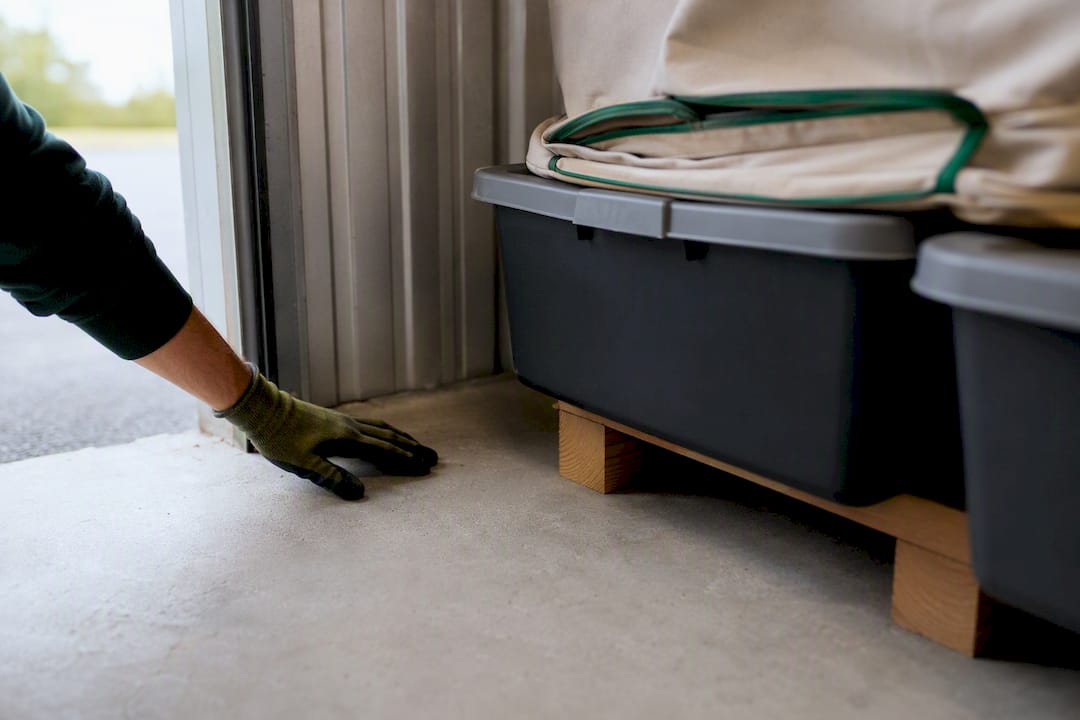
- Store items on pallets or shelving, never directly on the concrete floor
- Use sealed plastic bins instead of cardboard boxes for anything moisture-sensitive
- Add moisture absorbers or desiccant packs in enclosed containers
- Use a breathable vehicle cover, not a tarp that traps condensation
- Do a seasonal check every few months, especially before and after extreme weather
Islandparkstorage’s moving and storage guides cover more specific packing techniques if you want a deeper walkthrough for particular item types.
Keeping Your Unit Clean and Pest-Free
Most leases put the maintenance burden on you, not the facility. The property manages the grounds, gates, and shared security, but what happens inside your unit is your job. That distinction catches new renters off guard.
Sweep out your unit periodically, especially if you’re storing anything organic like wood, fabric, or cardboard that can attract pests looking for a dry place to nest. Avoid storing food entirely. Even sealed snacks left in a moving box are enough to draw rodents or insects over a few months.
Check your unit every few weeks if you’re a long-term renter, not just at move-in and move-out. A quick look for droppings, chewed cardboard, or unusual moisture stains catches problems early, before they spread to everything you own. If you do spot signs of pests, tell facility management immediately. Most operators treat common areas regularly, but they can’t act on a problem inside your unit unless you report it. Leaving damaged boxes or spilled contents unaddressed is the fastest way to turn a small issue into a total loss.
Do You Need Extra Insurance for a Ground Level Unit?
Most facility leases require proof of insurance, either through your own homeowner’s or renter’s policy or through a coverage plan the facility sells directly. Read your existing policy before assuming it covers off-site storage. Many renter’s and homeowner’s policies do extend some coverage to a storage unit, but often with a lower coverage cap than what’s covered in your home.
Ground level units carry a slightly different risk profile than interior climate-controlled units, given the added exposure to weather and pests, so it’s worth asking specifically whether a facility’s own coverage plan accounts for water damage or pest-related loss. Some plans exclude these causes entirely and only cover theft or fire.
If you’re storing a vehicle, RV, or boat, check whether your auto or marine insurance policy already covers it while parked, since many drivers pay twice for overlapping coverage without realizing it. A quick call to your insurance agent before you sign a storage lease can save you from either being underinsured or paying for redundant protection you don’t need.
Ground Level vs. Interior Unit Costs
Ground level units and interior units aren’t always priced the same, and the gap runs in different directions depending on the market. In many facilities, drive-up units actually cost more than comparable interior units because of the convenience premium. Vehicle access and no elevator or hallway travel add value that facilities price accordingly.
In other markets, especially where climate-controlled interior space is scarce, interior units carry the higher price because of the added building infrastructure needed to control temperature and humidity. The only reliable way to know which way the pricing runs in your city is to compare quotes directly for the same size unit at the same facility.
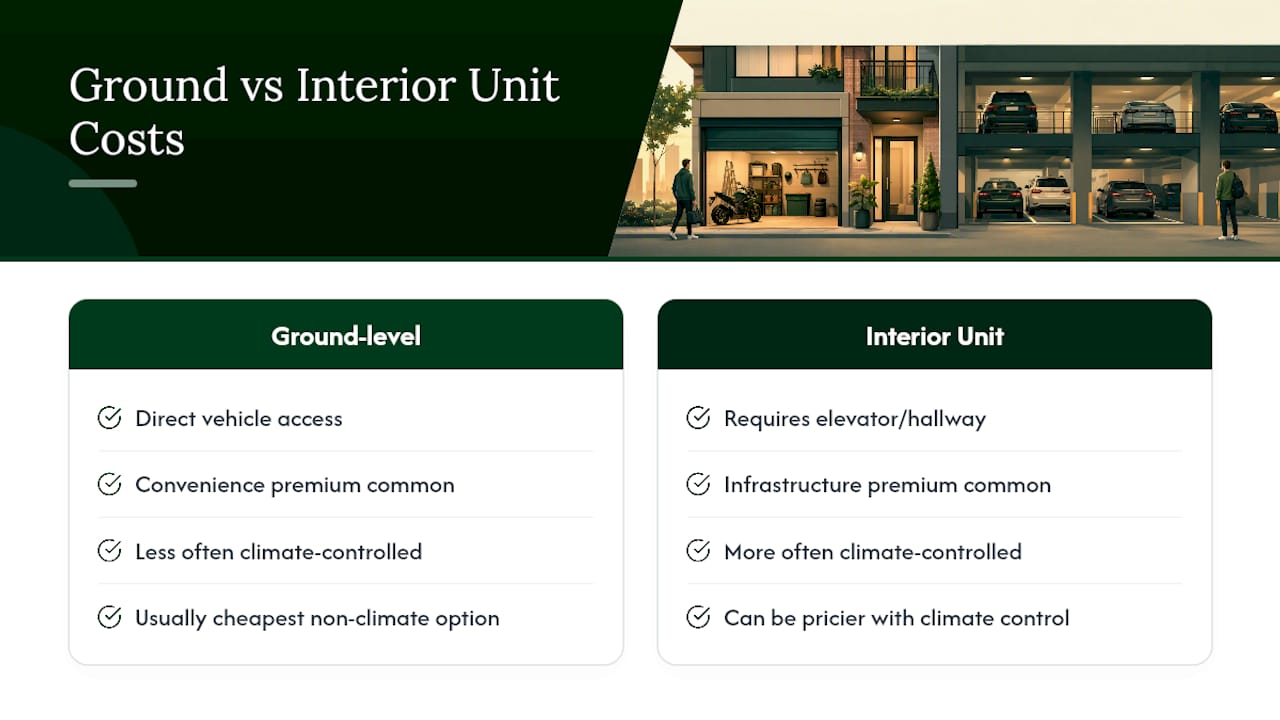
What stays fairly consistent: climate-controlled units, whether interior or ground level, cost more than non-climate units of the same footprint. Vehicle stalls and enclosed parking bays also typically run higher than an equivalent-sized general storage unit. If budget is the deciding factor, a non-climate ground level unit is usually your cheapest square-foot option, provided what you’re storing can tolerate the exposure.
Protecting Your Belongings From Weather and Pests
A little prep at move-in prevents most of the problems that show up months later. Elevate everything off the floor using pallets, plastic shelving, or even simple wood blocks. Concrete floors can sweat with humidity changes, and anything sitting directly on that surface is the first thing to show moisture damage.
Switch from cardboard to sealed plastic totes wherever you can. Cardboard absorbs moisture and gives pests something to chew through; plastic bins with locking lids don’t. For anything with fabric, wrap it in a breathable cover rather than plastic sheeting, which traps humidity instead of blocking it.
Drop a few moisture absorbers or desiccant packs inside larger sealed containers, and replace them every few months. If you’re storing a vehicle, use a car cover designed for the actual weather your unit is exposed to, not a generic indoor cover that won’t handle rain or dust. Finally, build a simple habit: check your unit every season change. Catching a small leak or the first sign of pests in month two beats discovering it in month eight.
What I’d Actually Tell a Friend Renting Storage
Most storage guides treat ground level and interior units as a simple upgrade ladder, where climate control is always “better” and drive-up access is the budget compromise. That framing misses the point for a huge share of renters. If you’re storing a truck full of contractor tools, a motorcycle, or last season’s inventory for a small business, climate control solves a problem you don’t have while adding cost you don’t need.
The bigger blind spot is how people evaluate access hours. Renters obsess over unit size and price, then discover months later that the facility gates lock at 8 p.m., right when they actually need to grab equipment for an early job the next morning. Access hours and gate policy deserve the same scrutiny as square footage, arguably more, because a cheap unit you can’t reach when you need it isn’t actually cheap.
Vehicle owners get shortchanged the most by generic storage advice. A guide that says “measure your vehicle” without mentioning mirrors, hitches, or roof-mounted gear sends people to a facility with a stall that’s technically the right length but functionally too tight. The details that seem minor, like covered versus open parking, matter more over a year of San Francisco fog and rain than most renters expect going in.
Reserve a Drive-Up Unit With No Long-Term Commitment
Certain storage facilities offer practical alternatives to long leases and deposits. Some locations run on month-to-month contracts with no deposit required, so you’re not locked into a term longer than you need.
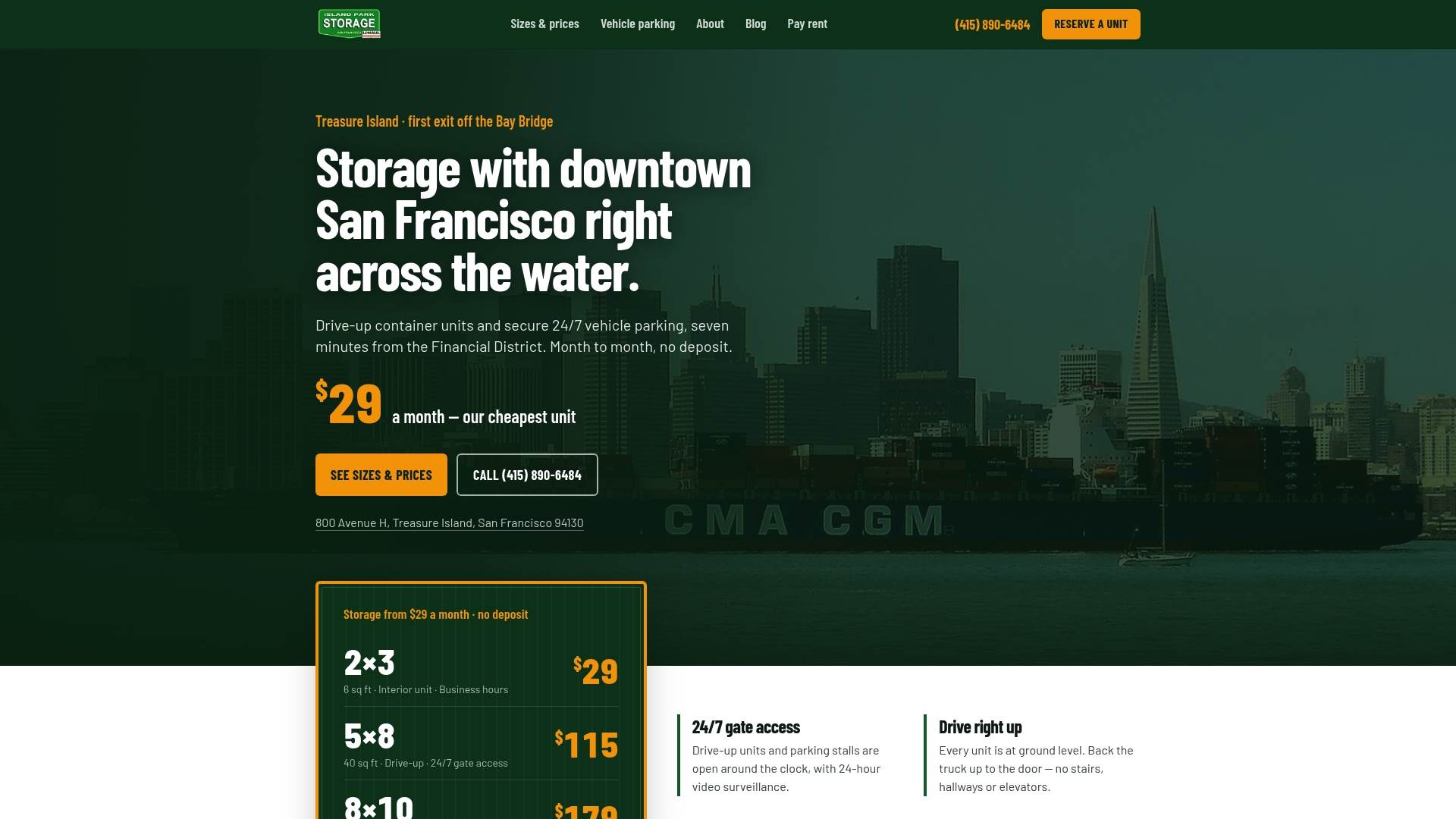
Many units offer drive-up access with 24/7 gated entry, and secure parking may be available for cars, RVs, boats, and commercial vehicles, with possible discounts for renters who need more than one space. Some facilities provide on-site management to answer questions. If you’re ready to see what fits your load and your budget, check current unit sizes and pricing or browse vehicle and RV parking options to reserve a space today.
Sources
- Drive-Up Access Storage | MyPlace Self-Storage
- Drive-Up Storage Units in Roseville, CA | STORE on Baseline
- Drive Up Storage Ocala FL | Secure Ground Level Units