
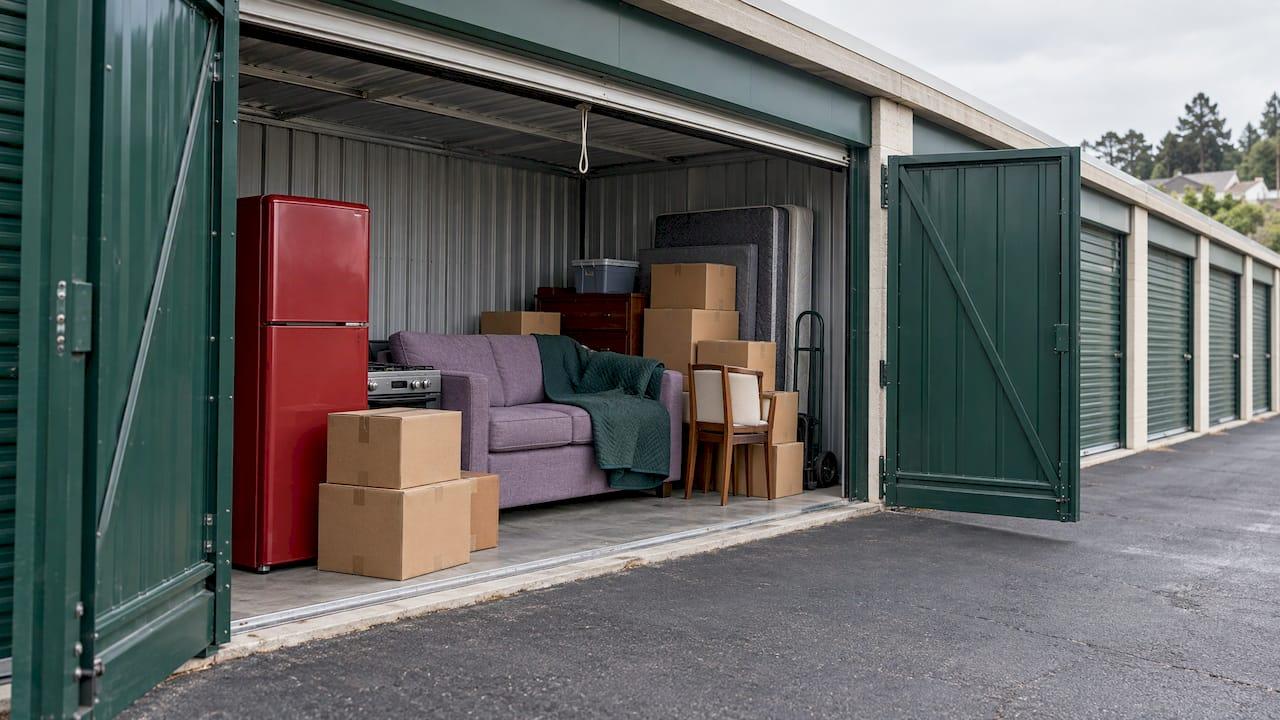
The simplest way to get through a remodel is to move everything the crew doesn’t need out of the house, and a month-to-month self-storage unit does that job well. You pay only for the months the work actually takes, and you can pull things back out as rooms are finished. At Island Park Storage, units start at $29 per month, we’re seven minutes from downtown San Francisco, and the gate is open 24/7. This guide covers what to move, what to keep close, how to size a unit and what it costs.
TL;DR
- Move out everything you won’t touch for the length of the job: furniture, books, decor, off-season clothes, boxes from the garage.
- Keep an “essentials” box and a small kitchen setup at home so daily life keeps working.
- Size your unit from a room-by-room inventory, not a guess. Our units run from 2×3 at $29 per month to 8×40 at $399 per month.
- Renovations run long. Month-to-month terms and a unit you can reach any hour make delays much less painful.
- Wrap furniture in breathable layers, keep it off the floor and label every box.
Table of Contents
- Why a remodel and your stuff don’t mix
- What to put in storage, and what to keep home
- Where to store furniture during a renovation
- How to prepare furniture so it comes out the way it went in
- How much space do you need?
- What storage during a renovation costs
- Timing: when to move in, when to move out
- Perspective
- Ready to clear the house?
- FAQ
- Sources
Why a remodel and your stuff don’t mix
Renovation dust gets everywhere. It slips under doors, into closets and through the weave of your sofa. Even if you cover furniture with plastic, you still have to live around it, and crews need clear floors to work fast. Clear floors are cheaper floors, because workers who aren’t shuffling your bookcase around finish sooner.
There’s a second problem: you probably own more than you think. Most people only find out when they start packing a kitchen or a living room. That’s why the first step isn’t renting anything. It’s counting.
The second thing to accept is that timelines slip. A permit takes longer, a tile order is back-ordered, a wall opens up and reveals something nobody planned for. Plan your storage for the schedule plus a cushion. That’s the main reason flexible terms matter here, and why we run every rental month to month with no deposit.
What to put in storage, and what to keep home
Sort every room into four piles before anything moves:
- Store: things you won’t need during the job. Furniture from rooms being worked on, rugs, art, extra bedding, seasonal clothes, books, boxes of decor.
- Keep at home: the daily stuff. Work gear, medications, a week of clothes, kids’ school things, pet supplies.
- Keep within reach: items you might want on short notice, such as a winter coat if the weather turns, tax papers, or tools. These go in storage but near the front, labeled, in a unit you can get into any time.
- Let go: anything you’d rather donate or sell than pay to store.
That last pile matters more than people think. Every box you don’t store is rent you don’t pay and a smaller unit you can choose. A room-by-room inventory also helps with downsizing if the remodel is part of a bigger plan, like moving into a smaller home. Storing what you really want to keep, and only that, is the whole idea.
If you’re setting aside valuables, like jewelry, passports or original documents, keep them with you or in a bank safe deposit box. A storage unit is for furniture and household goods, not for your birth certificate.
Keep a working kitchen and an essentials box
If the kitchen is being done, set up a temporary kitchen zone before demolition. A builder’s guide to living at home during a remodel suggests a refrigerator, microwave, coffee maker, a water source, a few dishes and shelving for about a week of everyday food. It also says to move the things you use often out of the work area instead of sealing them in cabinets you’ll soon be unable to reach.

Then pack one clearly marked essentials box for daily use and keep it apart from everything else. That box is your insurance against the 9 p.m. “where is the phone charger” meltdown.

Where to store furniture during a renovation
You have a few places to put furniture. Here is how they work in practice.
An unused room in your home. A spare bedroom works for the things you use often and for a small number of pieces. It runs out of room quickly, and it’s still in the same house as the dust, so it suits the essentials more than the big stuff.
An off-site self-storage unit. This is the option that takes everything out of the construction zone at once. The pieces are away from dust, paint fumes and foot traffic, and the crew gets an empty house to work in. For a whole-room or whole-house project, this is where we’d start.
Parking for the vehicles that suddenly have no driveway. Remodels can take over the driveway and the street in front. If a work truck, dumpster or scaffolding pushes your car, RV, boat or trailer out, we offer secure vehicle parking stalls at 11×30 for $299 per month, 11×40 for $399 per month and 11×66 for $599 per month, plus indoor motorcycle storage at $115 per month. See the vehicle storage page.

For a San Francisco household, a drive-up unit is particularly handy. You back the truck or van right up to the door, load, and go. No elevator, no carts, no loading dock to book.
How to prepare furniture so it comes out the way it went in
This is the question that gets skipped. Good prep takes a Saturday and saves you a lot of regret.
- Clean it. Vacuum upholstery, wipe wood and metal, and clear out drawers. Lint, hair and organic debris in crevices can attract fabric pests, so clean those spots before storing, as university extension guidance on fabric pests advises.
- Make sure it’s dry. Anything packed damp will smell later. Give cushions and wood a full day to air out.
- Take apart what comes apart. Legs off tables, bed frames down to rails and slats. Tape a bag with the screws and bolts to the largest piece, so you aren’t hunting for hardware on reassembly day.
- Wrap in layers that breathe. Moving blankets or cotton sheets are better against wood and leather than a tight plastic wrap, which can trap moisture. Use plastic only as a loose cover on top if you use it at all. Our moving supplies checklist lists what you actually need, and we sell boxes and moving supplies on site.
- Lift it off the floor. Pallets or a few 2x4s keep legs off the concrete. Stand sofas on end only if the frame allows it, and never stack heavy things on soft ones.
- Leave a path. Stack things so you can walk in and reach the back row. A narrow aisle down the middle saves you from unloading the whole unit to find one lamp.
Label like a pro
Write the room, the contents and a priority on every box: “Kitchen, glasses, handle with care, #3.” Keep a written inventory and a photo copy on your phone. When the kitchen is finished and you want the dishes back, you’ll know exactly which box and which corner.
When you’re protecting stored items from damage, it also helps to read up on the questions to ask before renting a storage unit, covering costs, security and coverage, so there are no surprises.
How much space do you need?
Don’t guess. Do this instead:
- Walk through the rooms being worked on and list every item you plan to store.
- Measure the big pieces: sofa, mattress, dresser, table. Note length, width and height. This storage unit size guide explains how to estimate a unit from your measurements.
- Add the boxes. Count them, then add about 10 percent for the ones you forgot.
- Match the total to a unit, and leave a walking aisle.
Here’s how our sizes line up, with the monthly price for each:
| Unit | Monthly price | Typical renovation use |
|---|---|---|
| 2×3 | $29 | A few boxes, small valuables, a lamp or two |
| 3×4 | $55 | Bedroom odds and ends, bins, small decor |
| 5×5 | $79 | Boxes and small furniture from one room |
| 5×8 | $115 | Several rooms’ worth of boxes and a few pieces |
| 8×10 | $179 | Larger furniture and a good number of boxes |
| 8×20 | $279 | Multiple rooms of furniture, whole-house projects |
| 8×40 | $399 | Big projects, business inventory, large households |
The unit you need depends on your inventory, and the full list with details is on our unit sizes and prices page. If you need the unit to hold the contents of a whole house, go up a size. It’s easier to leave open floor than to wish you had more.
By the way, if you’re a small business owner remodeling a shop or an office, the same logic holds. Shelving, display fixtures and inventory can sit in a unit while contractors work. The bigger units are made for that.
What storage during a renovation costs
Prices vary by city, size and facility. For context, a professional guide to storage unit sizes puts average monthly costs at roughly $65 to $100 for a 5×5 and $125 to $175 for a 10×10. On the national side, a SpareFoot report covered by Commercial Observer put the average rent for a 10×10 unit at $74.98 per month in April 2026, down from a July 2022 peak of $132.06. Averages like these move with each new report, so use them for orientation and compare against actual quotes for your size and area.
The same report found that 55 percent of renters polled named cost as their main concern, with security and 24/7 access next. That’s a fair list of priorities, and it’s the reason we publish our prices and keep access open around the clock.
Here’s a worked example. Say you’re redoing a kitchen and living room, and your inventory fits an 8×10 at $179 per month. The job is quoted at three months. Allow a month of slack, so budget four months: $716. If the work finishes early, you give notice and stop paying. If it runs long, you aren’t stuck in a fixed term. That’s what month to month is for.

When you total your budget, count more than rent: boxes and wrapping, a truck for the move in and out, and any insurance you decide to carry. Our truck rentals start from $19 per day, and our guide on self storage insurance covers what you need and what to skip. Also check your own homeowner’s or renter’s policy, because it may already cover belongings away from home, and ask your insurance agent how.
Timing: when to move in, when to move out
- Start about a week before demolition. That gives you time to pack, sort and clear rooms without panic.
- Move out only what you can store well. Don’t cram the unit on the last night. Rushed packing is how lamps break.
- Plan the return in stages. If the project finishes room by room, bring things back as each area is cleaned. Dust from the next phase can settle on furniture you’ve already moved back in.
- Make the final clean before the move-back. Fine drywall dust lingers. Wipe surfaces and vacuum before the sofa returns.
Because our gate is open 24/7, you can handle these trips at 6 a.m. before work or late in the evening after it, which matters when you’re juggling a job, kids and a contractor.
Perspective
Here’s what we’ve learned from how people use storage: nobody plans on their remodel running long. Everybody’s does. That’s why we run every rental month to month with no deposit. You shouldn’t have to guess the finish date to get your stuff out of the way.
Our drive-up units help too. You pull up, open the door and load straight from the vehicle. And since the manager is on site, you can talk to a real person about which size fits. We’re seven minutes from downtown San Francisco without the city traffic, so a trip to grab a box doesn’t eat your afternoon.
If you’re staring at a living room full of boxes, take a breath. Count what you have, pick a size, and get it out of the house. The project gets easier from there.
Mike
Ready to clear the house?
If you’re planning a remodel, we can give you a unit sized to your inventory, from a 2×3 for a handful of boxes to an 8×40 for a whole house or a small business’s stock. Rentals are month to month, there’s no deposit, and our on-site manager will help you pick. Boxes and moving supplies are available, and U-Haul trucks rent from $19 per day. Browse unit sizes and prices and reserve your space.

Need room for a vehicle while the driveway is torn up? Our vehicle parking stalls and indoor motorcycle storage are month to month too, and multi-vehicle discounts are available.
FAQ
How long should I plan to rent storage for a renovation?
Plan for your contractor’s estimate plus a month of cushion, since schedules often slip. Month-to-month rental lets you end the rental when the last room is done. Give notice when the job wraps so you aren’t paying for an empty unit.
What should I not put in storage during a renovation?
Keep documents, jewelry, medications, passports and anything you use daily with you. Perishable food and anything flammable or hazardous also stay out of the unit. Put the daily essentials in one labeled box at home.
How do I protect furniture from dust and moisture in storage?
Clean and fully dry each piece, then wrap it in moving blankets or cotton sheets. Use plastic only as a loose outer cover. Raise everything off the concrete floor on pallets or boards, and leave an aisle so air can move and you can reach things.
How do I know what size unit I need?
List every item, measure the large pieces and count the boxes. Then match that total to a unit size with a little room to walk. Our on-site manager can help you check your list against the sizes we offer.
Can I get into my unit while the work is going on?
Yes. Our drive-up units have 24/7 gate access, so you can stop by to grab or add things whenever your schedule allows.
Sources
- Living at Home During a Remodel, VanFleet Homes
- IPM for Fabric and Pantry Pests, Utah State University Extension
- Guide to Storage Unit Sizes, This Old House
- Rental Cost of Self-Storage Units in U.S. Almost Halved, Commercial Observer
- 12 Questions to Ask Before Renting a Storage Unit