
You can usually store an unregistered car on private property, but many cities require it to be out of public view or fully enclosed, and public roads are off limits. Your first move is to read your local municipal code, then either file Planned Nonoperation (PNO) with the DMV or book enclosed, licensed storage. Filing windows are tight, and code enforcement does not wait. We at Island Park Storage help customers find vehicle parking.
TL;DR:
- Many municipalities prohibit visible unregistered or inoperable cars, so check local code and get written landlord permission before storing a vehicle for a long time.
- California accepts PNO filings from 60 days before registration expires through 90 days afterward, but filing after the expiration date triggers penalties.
- Move a California car with a DMV Vehicle Moving Permit valid for one day, or hire a licensed tow carrier and keep the paperwork.
- Commercial storage contracts state rent, access, and retrieval terms, while California operators keep records for vehicles held over 12 hours and retain them one year.
Table of Contents
- Where can you keep an unregistered car on private property?
- What does Planned Nonoperation (PNO) do for you?
- How do you legally move an unregistered car?
- What do storage operators and garages have to record?
- Your checklist for storing an unregistered car with the least legal risk
- Why licensed storage is the calmer way to do this
- How we help when your car is sitting unregistered
- FAQ
- Sources
Where can you keep an unregistered car on private property?
Short answer: often yes, but the details live in your city’s code, not in the DMV handbook. Plenty of municipalities treat an unlicensed, inoperable, or expired-plate vehicle sitting in a visible yard as a nuisance. Many of them require that vehicle to be stored in a fully enclosed structure, like a garage. Local news coverage from Colorado shows this pattern clearly: the rule comes from city ordinances, and enforcement starts at the local level.
The wording varies from place to place, but the pattern is steady. Codes tend to ban any of these on private property if the car can be seen from the street or a neighbor’s lot:
- A vehicle with no current registration or license plates
- A vehicle that cannot run, such as one with missing wheels, a dead engine, or a flat-tire setup
- A vehicle left on blocks or jacks outdoors
- A vehicle with expired plates that has sat in one spot for days or weeks
Stored, parked, or abandoned: why the words matter
Enforcement officers do not use these words loosely. “Parked” usually means a working car that moves now and then. “Stored” means it sits for a long stretch, often with a deadline written into the code. “Abandoned” is the one that gets a car towed, and it usually kicks in when a vehicle is left on public property or sits untouched for a stated period. A car can slide from parked to stored to abandoned without you changing a thing, simply because time passed.
How enforcement usually plays out
Most cases start with a complaint, not a patrol. A neighbor calls, an officer visits, and you get a notice with a deadline to fix the problem. Miss that deadline and you can face fines, and in some places a tow. Towing costs pile up fast, because a tow yard starts charging storage the moment your car arrives.
Homeowner or tenant: who carries the risk
If you own the property, the citation lands on you. If you rent, the landlord is often the one who gets the notice, and then you hear about it. Get permission in writing before you park or store anything long term. A dated email from your landlord that says “yes, you may keep the vehicle inside the garage” is simple, free, and worth keeping.
What does Planned Nonoperation (PNO) do for you?
PNO is the DMV’s way of saying “this car is off the road for the whole registration year.” In California, Planned Nonoperation means the vehicle cannot be driven, towed, stored, or parked on any public road or highway for the entire registration year. That includes street parking in front of your own house. If the car stays on private property, you are inside the rule.
The payoff is practical. With PNO on file, you generally avoid paying full registration on a car you are not driving, and you keep your record clean instead of racking up late fees.
Filing windows and penalties: the DMV accepts PNO filings up to 60 days before registration expires and up to 90 days after, with penalties for filings made after the expiration date.

The DMV’s procedures manual adds that PNO must be filed by midnight of the expiration date to avoid late penalties. Miss it and you can still file during the 90-day grace stretch, but you owe penalties.
Who does not need PNO
Not every vehicle falls under the PNO requirement. The DMV’s PNO certification guidance lists these exceptions:
- Vehicles sitting in dealer, lessor, or manufacturer inventory
- Vehicles held for a lien sale by a garage keeper or towing service
- Cases where records are unavailable, which may call for a Verification of Vehicle form
What PNO does not fix
Here is the catch people miss. PNO is a DMV filing. It does not cancel your city’s rules about visible, inoperable vehicles on private property. You can have PNO filed perfectly and still get a notice because your car sits in the driveway with a dusty windshield. That is why the two checks go together: DMV paperwork on one side, local code on the other. Your state’s rules may differ from California’s, so confirm the equivalent program with your own motor vehicle agency.
How do you legally move an unregistered car?
Moving the car is the step that trips people up. You cannot just drive an unregistered vehicle to storage, and the road is exactly where PNO says it cannot go. In California, the DMV issues a one-day Vehicle Moving Permit (REG 172) that lets you tow or drive an unregistered vehicle for repairs, inspection, or relocation to a new storage site. You get it at a DMV office, and it covers a single day, so plan the trip before you walk in.
Here is a simple order of operations:
- Decide where the car is going and confirm the destination accepts it that day.
- Visit a DMV office and request the one-day moving permit for your vehicle.
- Keep the permit with the vehicle during the move, along with proof of the destination.
- Make the move within the permit’s single day, and take the most direct route.
- File or keep your PNO paperwork so the car’s status is documented once it is parked.
The tow option
A licensed tow or flatbed carrier is the other path, and it is often the simplest for a car that does not run. The carrier handles the transport, and you keep the paperwork. Ask for a receipt that shows pickup and drop-off addresses and times. That paper trail proves the car moved lawfully if anyone ever questions it.
What do storage operators and garages have to record?
Once your car sits with a commercial operator, the operator has legal duties, and they shape your bill. Under California’s vehicle code, towing services and garage keepers must keep written records for vehicles stored longer than 12 hours and hold onto those records for one year. The same code sets notice and mailing timelines that decide when an operator can start charging fees or enforce a lien. There is a first 15 day exception, and after that, certified-mail notification comes before extended charges.
What this means for you in plain terms:
- Expect your vehicle and your contact details to be written down on arrival.
- Expect notices by certified mail if charges or a lien are ever on the table, so keep your address current.
- Do not ignore mail from a storage operator or tow yard. The clock on fees and liens runs from those notices.
- Ask about holding periods and fee schedules before you sign, not after the car is parked.
Private garages face duties too. California law places reporting obligations on private storage operators, and an operator who rents private garage space for vehicle storage must report the tenant’s name and a description of the vehicle to local law enforcement within 24 hours in some circumstances. Do not read that as a threat. It is routine paperwork, and it works in your favor when you want proof the car was stored legitimately.
Private garage rental versus commercial storage
The difference is protection. A private garage rental can be as casual as a handshake, with no standard fee schedule and fuzzy rules on retrieval. A commercial storage contract spells out rent, access, and what happens if payments stop. That written structure is what keeps surprises small. When an unregistered car is involved, the extra documentation is worth far more than the small convenience of a casual deal.
Your checklist for storing an unregistered car with the least legal risk
Work through this in order. Each step protects the next one.
- Check local code. Search your city or county municipal code for “inoperable,” “unlicensed,” or “stored vehicle,” or call code enforcement and ask directly.
- Check your registration date. Count the days to expiration. You have up to 60 days before to file PNO, and up to 90 days after with penalties.
- File PNO or renew. If the car stays off public roads all year, file Planned Nonoperation. If you plan to drive it soon, renew instead.
- Pick where it will live. An enclosed garage you control, or a licensed commercial space, keeps you on the right side of most “out of public view” rules.
- Get the car there legally. Use a one-day moving permit or a licensed tow, and keep the receipts.
- Sign something. Get a written storage agreement or a dated permission note from your landlord.
- Document the car. Take photos of all sides, the odometer, and the interior, with dates.
- Prep the vehicle. Details below.
- Schedule check-ins. Put a monthly reminder on your calendar to look in on it.
Paperwork worth keeping in one folder
Keep these together, on paper or in a single cloud folder:
- PNO confirmation or receipt
- Storage agreement or landlord permission
- Tow receipt or moving permit copy
- Dated photos of the car’s condition
- Any mailed notices from the operator
Getting the car ready
A sitting car ages even when nothing happens to it. A few small moves go a long way:
- Fill the tank and add fuel stabilizer so the fuel does not go bad.
- Disconnect the battery or hook up a maintainer.
- Inflate the tires a bit above normal, or use jack stands for very long stretches.
- Clean it inside and out, and skip food or anything that draws pests.
- Cover it with a breathable cover, never a plastic tarp that traps moisture.
- Fix any fluid leaks first. A leaking car on someone else’s floor is a fast route to a bad day.
Why licensed storage is the calmer way to do this
Here is where I land after looking at all of this: the legal rules are not hard, but they are scattered. DMV paperwork lives in one place, city code in another, and operator duties in a third. The more you do yourself in a driveway or a borrowed garage, the more of that patchwork lands on your shoulders. A licensed, monitored facility with a written contract collapses most of it. You get a paper trail, a spot out of view, controlled access, and clear terms for fees. I would take boring and documented over clever and exposed every time, especially for a car you cannot legally drive.
— Mike
How we help when your car is sitting unregistered
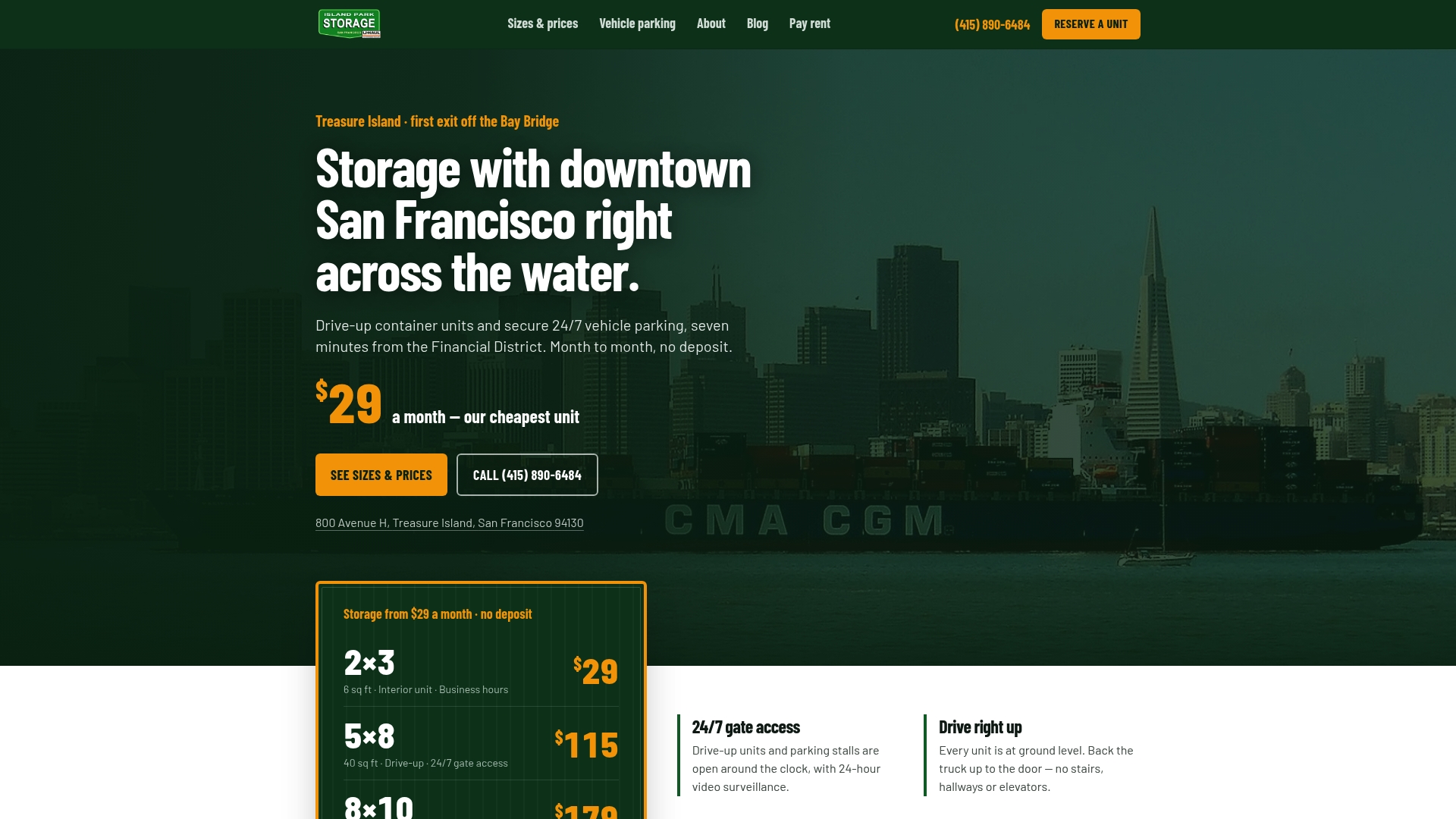
Unregistered cars do not need drama, they need a place to sit. We offer vehicle parking stalls sized for cars and larger vehicles, starting with an 11×30 stall at 299 USD per month, with 11×40 at 399 USD per month and 11×66 at 599 USD per month. Indoor motorcycle storage runs 115 USD per month.
What you get with us:
- Drive-up access and 24/7 gate access, so permitted moves never depend on office hours
- Month-to-month contracts with no deposit required
- On-site management who actually answer questions
- Rental terms for your records
- Multi-vehicle discounts and U-Haul rentals if you are moving more than one thing
Those features matter here because an unregistered car needs a spot you can point to on paper. You rent the space, you get a written agreement, and you can come and go when your one-day permit or tow is scheduled. We are near downtown San Francisco, with no city traffic in the way.
Want to see what fits? Look over our vehicle storage options, then contact us to confirm documentation requirements and current availability. If you also need boxes, supplies, or a truck for the move, our homepage has the details.
This article is general information, not a substitute for advice from a qualified lawyer. Consult a qualified legal professional about your own circumstances before acting on anything here.

FAQ
Can you store an unregistered car at your own house?
Usually yes, if it stays on private property and meets your city’s rules. Many cities want it enclosed or out of public view, so a closed garage is the safest bet. Check your local code first.
What does Planned Nonoperation mean for a stored car?
It means the car stays off public roads for the whole registration year. In California, it cannot be driven, towed, stored, or parked on a public road or highway during that time. It does not replace local rules about visible vehicles.
How can you move an unregistered car to storage?
Get a one-day Vehicle Moving Permit (REG 172) from a DMV office, or hire a licensed tow or flatbed carrier. Keep the receipts and permit copies as proof the move was lawful.
Can you park a car in a public storage unit?
Many storage facilities offer vehicle parking stalls and some allow vehicles in larger units, but rules differ by facility. Ask the operator about vehicle policies and get the terms in writing before you move in.