
The right motorcycle storage option comes down to one question: how long is the bike sitting? For anything longer than a couple of months, you want an enclosed, ventilated space, whether that’s a garage, an indoor unit, or a hard pod. For short breaks between rides, a breathable cover in a dry, secure spot usually gets the job done. This guide walks through every category, plus the prep and security steps that keep your bike ready to ride when you are.
TL;DR:
- Indoor storage provides the best protection against weather, theft, and corrosion, especially for long-term or high-humidity conditions.
- Ventilated enclosures or hard pods are more effective than sealed covers for protecting bikes stored outdoors for multiple months.
- Proper security layering, including multiple locks and theft deterrents, is crucial regardless of storage type, especially in high-theft areas.
- Efficient access and regular maintenance, such as oil changes and battery care, are more important than choosing a storage location with minimal waterproofing.
- Rented indoor units with drive-up access and flexible terms are ideal for riders without garage space, offering convenience and security at reasonable costs.
Table of Contents
- Motorcycle Storage Options at a Glance
- Indoor Storage: Garages, Rented Units, and Climate Control
- Outdoor Storage: Covers, Shelters, and Hard Pods
- Off-Site Storage: Rented Units and Motorcycle Facilities
- Prep Checklist: Getting Your Bike Ready, Short or Long Term
- Security and Theft Prevention for Every Storage Type
- How to Choose: Matching Storage to Your Situation
- How Island Park Storage Fits Into the Picture
- What Actually Matters When You’re Choosing Storage
- Ready for Secure, Flexible Motorcycle Storage?
- Sources
- FAQ
Motorcycle Storage Options at a Glance
Before you commit to anything, it helps to see the whole lineup side by side. Each option trades off differently on protection, cost, and how easily you can get to your bike when the itch hits.
- Home garage: Best protection-to-cost ratio if you already have one. Zero monthly fee, but space is often tight and shared with cars, bikes, and holiday decorations.
- Rented indoor unit: Ideal for apartment dwellers or anyone without garage space. Climate-controlled options fight humidity, but you’re paying rent and working around facility hours.
- Shed or hard storage pod: Good middle ground for homeowners with yard space. More weatherproof than a cover, but needs a level pad and real anchoring.
- Ventilated enclosure (cover-only): Cheapest option for short stretches. Fast to set up, but a poor choice past a few weeks outdoors.
- Cover-only, no shelter: Fine for a week or two between rides. Offers almost no theft resistance and struggles in heavy rain or snow load.
- Trailer storage: Convenient if you already tow. Doubles as transport, but exposes the bike to the same weather as outdoor parking unless the trailer is enclosed.
Access and budget usually decide the winner faster than weather does. A rider who commutes twice a week needs something they can reach in under a minute, not a padlocked unit across town.
Indoor Storage: Garages, Rented Units, and Climate Control
Indoor storage wins on almost every metric that matters: minimal weather exposure, easier maintenance access, and a meaningfully lower theft risk since the bike isn’t visible from the street. Visit the Sklep - PARKING SOPOT CENTRUM PROPARK for secure and ventilated motorcycle storage options designed to keep your bike safe and ready to ride. Indoor storage generally offers the strongest protection because it removes rain, UV, and temperature swings from the equation entirely.
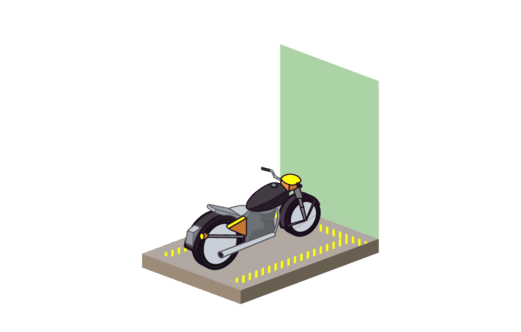
A regular garage or storage unit works fine for most climates. Climate control earns its extra cost when you’re dealing with coastal humidity, salt air, or storage stretching past six months, since moisture buildup accelerates rust on chrome and exposed metal even indoors.
A few things that make indoor storage work harder for you:
- Use a motorcycle stand or wheel chock to free up floor space in a tight garage.
- A rear paddock stand takes weight off tires during long layups.
- Keep battery tenders on a timer or smart charger rated for indoor use.
Pro Tip: If you’re storing indoors near drywall or a shared wall, crack a window or run a small fan occasionally. Even enclosed spaces trap humidity from a cold engine block.
Outdoor Storage: Covers, Shelters, and Hard Pods
Not every cover is created equal, and this is where riders lose the most gear to preventable damage. A motorcycle cover needs to be waterproof yet breathable, properly fitted, and secured against wind. A sealed tarp traps the moisture that sweats off a cooling engine, which is worse than no cover at all.
Standard fabric covers typically fail within a single riding season when relied on for months at a time outdoors. That’s the gap ventilated enclosures and hard pods are built to close, using filtered intake fans and positive airflow to keep condensation and pests out while still shielding against rain and sun.
- Sheds and pods add real structure and theft resistance a cover can’t match.
- Both still need anchoring against wind and a barrier under the tires.
- Concrete and asphalt wick moisture upward into tires and lower frame components, so a rubber mat or plywood sheet underneath makes a real difference over a long winter.
Ventilation is the deciding factor, not waterproofing. A shelter that breathes beats a sealed one every time storage runs past a month.
Off-Site Storage: Rented Units and Motorcycle Facilities
Riders turn to off-site storage when home space runs out, when a bike needs to sit through a long deployment or seasonal layup, or when they simply want a lockable space away from a shared driveway. It’s a solid trade of a little inconvenience for a lot of security.
The catch is facility rules. Many storage facilities restrict fuel storage entirely and limit electrical access, which matters if you were planning to run a battery tender through the winter. Before signing anything, check on:
- Fuel storage policy and any stabilizer requirements
- Whether outlets are available for tenders or if you’ll need to pull the battery
- Unit size versus your bike’s footprint, plus room to walk around it
Factor in transport time, monthly rent, and insurance as one combined cost, not just the sticker price on the unit.
Prep Checklist: Getting Your Bike Ready, Short or Long Term
Storage location doesn’t excuse you from winterization. Whether the bike sits in your garage or a rented unit, the same maintenance sequence applies regardless of where it’s parked.
Short-term (a few weeks):
- Wash and thoroughly dry the bike, including chain and fork seals.
- Top off the fuel tank and add a stabilizer to prevent varnish buildup.
- Start the engine and let it run a few minutes to circulate treated fuel.
- Check tire pressure before covering.
Long-term (a month or more):
- Change the oil before storage, since used oil turns acidic and corrodes internals over time.
- Fog the cylinders for layups stretching past four to six months, and apply corrosion inhibitor to exposed metal.
- Disconnect the battery or connect a smart tender; batteries can discharge fully within weeks if left alone.
- Get the tires off the ground with a stand, or roll the bike periodically to avoid flat spots.
Lithium battery owners, take note: LiFePO4 batteries should never be charged below freezing. If your storage spot regularly drops below 0°C (32°F), pull the battery and charge it somewhere warmer.
Security and Theft Prevention for Every Storage Type
A locked door isn’t enough on its own. The most effective deterrent is layering: use at least two independent locks, like a disc lock paired with a heavy chain, secured to a bolted ground anchor or an immovable structure. Two locks requiring two different tools stop most opportunistic theft before it starts.
- Renters who can’t drill an anchor can run a heavy-gauge chain under a parked car’s tire or around a fixed rack instead.
- Motion-activated lighting and a visible camera, even a cheap one, push thieves toward easier targets.
- Photograph your bike’s VIN, accessories, and any custom parts, and keep that documentation with your insurance policy.
Pro Tip: Store your bike facing away from a quick exit path. A few extra seconds to maneuver it out is often enough to make a thief walk away.
How to Choose: Matching Storage to Your Situation
Run through four questions before you commit to anything: how long will the bike sit, how often do you ride between now and then, what’s your budget, and how exposed is the location to theft or road salt?
- Daily or weekly commuter: Garage or driveway with a cover; you need fast access more than deep protection.
- Seasonal rider laying up for winter: Indoor unit or a ventilated pod with full winterization.
- Apartment dweller with no garage: Rented indoor unit or dedicated vehicle parking stall.
- High-theft area: Prioritize enclosed storage plus the two-lock rule over any cover, however good.
How Island Park Storage Fits Into the Picture
For riders without garage space, a drive-up unit or dedicated vehicle parking stall solves the access problem directly. Island Park Storage offers 24/7 gate access and month-to-month contracts, so frequent riders aren’t locked into a long commitment just to keep their bike secure and dry.
What Actually Matters When You’re Choosing Storage
Most storage advice online obsesses over the cover. Waterproof this, UV-resistant that. It’s the wrong fixation. Ventilation, not waterproofing, is what determines whether your bike comes out of storage running clean or corroded, and that single distinction gets buried under buying guides for tarps.
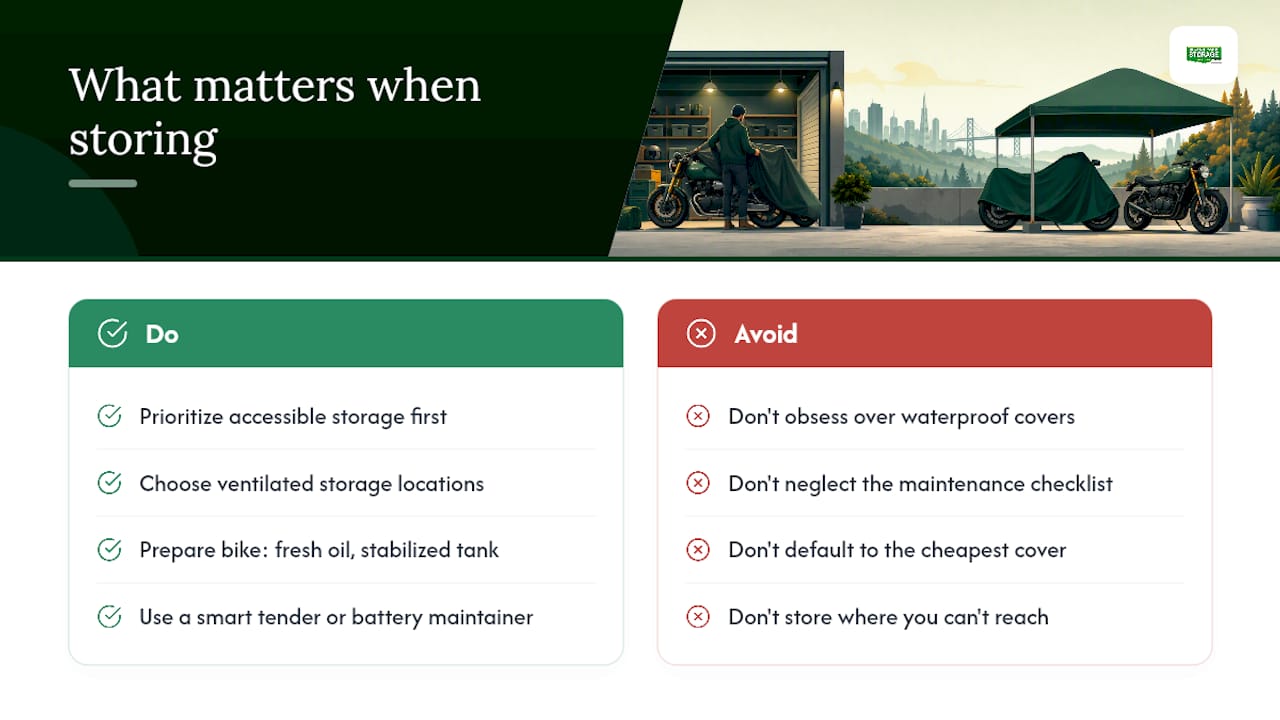
Here’s where I’d push back on conventional wisdom: people treat the storage location as the hard part and the maintenance checklist as an afterthought. It’s backwards. A bike in a mediocre shed with fresh oil, a stabilized tank, and a smart tender will outlast a bike in a pristine garage that got parked and forgotten. Location buys you convenience and theft resistance. Prep buys you an engine that actually starts in spring.
If you’re short on garage space, don’t default to the cheapest cover and hope for the best. A rented unit with real access, paired with the maintenance sequence above, beats a “free” driveway spot that costs you a carburetor rebuild come April. Prioritize access first, since a storage spot you can’t reach easily is one you’ll neglect, and neglect is what actually kills motorcycles in storage.
— Mike
Ready for Secure, Flexible Motorcycle Storage?
Island Park Storage offers drive-up access, on-site management, and flexible rental terms, providing convenient storage solutions near downtown San Francisco.

If your bike needs weather protection without the humidity risk of a sealed cover, indoor motorcycle storage runs $115 a month with 24/7 gate access built in. Prefer a dedicated parking stall for a bike, ATV, or small fleet? The vehicle parking options range from an 11×30 stall at $299 a month up to an 11×66 at $599, all on flexible month-to-month terms. Need a slightly larger footprint for gear alongside the bike? Check the full unit sizes and pricing starting at $29 a month for a 2×3 space. Reach out to on-site management to compare stall sizes and find what fits your bike and your budget.
Sources
- How To Store a Motorcycle - Keter US
- Outdoor motorcycle storage guide - CarCapsule
- Winter motorcycle riding and storage guide - Motozmo
- Short Term & Long Term Motorcycle Storage Break Down - Speedway Shelters
FAQ
What Is the Average Cost of Storing a Motorcycle?
Costs vary widely depending on whether you’re renting indoor space or parking outdoors. At Island Park Storage, indoor motorcycle storage runs $115 per month, while dedicated vehicle parking stalls start at $299 per month for an 11×30 space.
Where Can I Store My Motorcycle if I Don’t Have a Garage?
A rented indoor storage unit or a dedicated vehicle parking stall is the most practical option without a home garage. Ventilated outdoor pods and shelters work too, as long as you add ground protection and proper anchoring against theft and moisture.
Is It Okay to Store a Motorcycle in a Storage Unit?
Yes, a storage unit is a solid choice, especially one with drive-up access so you’re not wrestling the bike through narrow hallways. Just confirm the facility’s fuel and electrical policies first, since many facilities restrict fuel storage and limit power access for battery tenders.
What Is the 12-Second Rule for Motorcycles?
The 12-second rule has nothing to do with storage. It’s a rider-training guideline that tells you to scan roughly 12 seconds ahead on the road to spot hazards early. If you saw it while researching storage, that’s a different topic entirely.
How Long Can a Motorcycle Sit Without Being Ridden?
A motorcycle can typically sit for a few weeks with minimal prep beyond a stabilized tank and a topped-off battery. Past one to two months, follow the full winterization sequence, including oil change, cylinder fogging, and tire care, to avoid damage.