
Yes, you can rent storage month to month. Most self-storage facilities, including Island Park Storage, offer flexible monthly leases with short notice periods instead of locking you into a year-long contract. Before you sign anything, check the access hours and confirm whether you need renter’s insurance or facility coverage. That’s really the whole answer. The rest is just details worth knowing before you hand over your credit card.
TL;DR:
- Most storage facilities, including Island Park Storage, offer flexible month-to-month leases with no long-term commitments and short notice periods to cancel.
- Security features such as cameras, fencing, and on-site management vary; 24/7 gate access is common and highly valued for convenience.
- Expect to pay starting around $29 per month for small units, with prices scaling up based on size and location, and be aware of potential rate increases after promotional periods.
- Insurance is usually required and can often be covered by existing renter’s or homeowner’s policies, but check the facility’s specific policies before signing.
- The most critical factors when choosing a facility are access hours and notice period policies, as these directly impact cost and usability.
Table of Contents
- What Month-to-Month Storage Means and Who It’s Best For
- What to Expect From Facility Features, Security, and Fees
- How Pricing Works and What You’ll Likely Pay Monthly
- Checklist: How to Choose a Month-to-Month Unit
- Reserving, Moving In, and Moving Out on a Month-to-Month Plan
- How Island Park Storage Serves Month-to-Month Renters
- The Real Gap Between Storage Marketing and Storage Reality
- Get Started: Reserve a Month-to-Month Unit
- Sources
- FAQ
What Month-to-Month Storage Means and Who It’s Best For
A month-to-month lease renews automatically every 30 days until you cancel. Compare that to a fixed-term lease, which locks you in for six or twelve months whether your plans change or not. With month-to-month, you’re not betting on the future. You just pay for the space you need, for as long as you need it, and walk away with a short heads-up when you’re done.
This setup fits people whose timelines are fuzzy by nature. Think about who’s actually dealing with a storage decision on any given week:
- Students clearing out a dorm for summer break, unsure exactly when they’ll be back
- Homeowners mid-renovation who need furniture out of the house for “a few weeks” that always run longer
- Small business owners storing seasonal inventory or overflow stock without renting a warehouse
- Anyone between leases who needs a bridge, not a destination
- Vehicle owners who need somewhere to park a boat, RV, or work van temporarily
Unit types for short stays usually run the gamut, from small closet-sized lockers to large drive-up containers, plus dedicated vehicle stalls for anyone storing something with wheels. Drive-up units tend to be the popular pick for short-term renters because you can pull right up and load without hauling boxes through a hallway.
What to Expect From Facility Features, Security, and Fees
Not all “month-to-month” facilities operate the same way, and the differences show up fast once you’re actually moving in. Access policy is the first thing to check. Some places restrict you to daytime hours; others, including Island Park Storage, offer 24/7 gate access so you’re never locked out at 9 p.m. when you finally have a truck free.
Security is the next layer. Look for cameras covering the property, secured fencing, and someone actually on-site rather than a facility that’s unmanned after hours.
Then there’s insurance, which surprises a lot of first-time renters. Most self-storage facilities require some form of insurance on your belongings, either through your own policy or facility coverage. You can often use an existing renter’s or homeowner’s policy if it extends to off-site property, or buy inexpensive facility coverage at checkout.
A few more things to nail down before you sign:
- Deposit or admin fee structure, and whether “no deposit” is truly zero or just deferred
- Whether billing happens through an online account with autopay
- If a facility app lets you manage payments and reservations remotely
How Pricing Works and What You’ll Likely Pay Monthly
Price scales with size, and size is really about what you’re storing. A small locker for boxes and seasonal gear costs far less than a large drive-up unit that fits furniture from a full apartment. Location matters too. A facility a few blocks from a dense city center tends to price differently than a facility on the edge of town, simply because land and demand differ.

Watch for the gap between promotional rates and what you’ll actually pay after a few months. Some operators advertise a teaser rate that climbs after an introductory period, while others offer a rate lock that guarantees your price for a set stretch, often a year. It’s worth asking directly: “Is this rate guaranteed, or does it adjust?” A vague answer is itself useful information.
Budget for recurring extras beyond the sticker price:
- Monthly insurance, whether through your own policy or facility coverage
- Local tax on the rental, where applicable
- A small administrative or account fee some facilities tack on
- Optional autopay convenience fees, though these are increasingly rare
Check current unit sizes and pricing directly with a facility rather than relying on a generic estimate, since real numbers shift by market and season.
Checklist: How to Choose a Month-to-Month Unit
Picking a facility over the phone or during a five-minute walk-through gets a lot easier with a short script in your head. Run through these in order:
- Ask about the notice period required to end the lease, since most facilities want 10 to 30 days written notice.
- Ask whether your final month gets prorated or if you’re charged in full regardless of move-out date.
- Confirm insurance requirements and whether your existing policy qualifies.
- Ask about access hours and whether gate access is truly 24/7 or restricted.
- Check whether the facility requires a specific lock type, or if you supply your own.
Pro Tip: Call at a slightly odd hour, like 7 p.m. on a weeknight, and see if anyone actually answers or if you’re stuck in a phone tree. That tells you more about day-to-day support than the sales pitch does.
A few red flags are worth walking away from: vague or shifting answers about fees, access hours that don’t match what’s advertised online, and any facility that seems eager to raise rates without explaining why. If the person on the phone can’t clearly explain the notice period, that’s a sign the fine print might not favor you either.
Reserving, Moving In, and Moving Out on a Month-to-Month Plan
Getting into a unit is faster than most people expect, and getting out cleanly just takes a little planning.
- Reserve online or by phone. You’ll typically need your name, contact information, a rough idea of unit size, and a payment method.
- Move in. Bring photo ID, your payment method, and a lock if the facility doesn’t sell one on-site. Snap a quick photo of your loaded unit for your own records.
- Track your billing cycle. Mark the date your lease renews each month and give written notice 10 to 30 days before you plan to leave, so you don’t get hit with an extra month.
- Pack smart for a short stay. Use uniform boxes where possible, label every side (not just the top), and keep anything fragile off the floor.
How Island Park Storage Serves Month-to-Month Renters
Island Park Storage runs on the exact model this guide describes. Drive-up container units, plus dedicated parking for vehicles, RVs, and boats, all come with 24/7 gate access so you’re never boxed out by someone else’s office hours. Rentals are month-to-month with no deposit required, which removes the two biggest friction points renters run into elsewhere.
Unit sizes range widely enough to fit a college student’s dorm boxes or a small business’s overflow inventory. On-site management means a real person, not a call center, handles questions about access or billing. For anyone storing a work van or a fleet vehicle, the vehicle storage options extend the same flexible terms to parking, not just units.
The Real Gap Between Storage Marketing and Storage Reality
Most storage marketing leans on two phrases: “no deposit” and “month-to-month.” Both are usually true, and both are usually incomplete. No deposit rarely means no cost at move-in. It often means the deposit is baked into a slightly higher first month or an admin fee that functions the same way. That’s not dishonest, but it’s a distinction worth knowing before you compare two facilities on price alone.
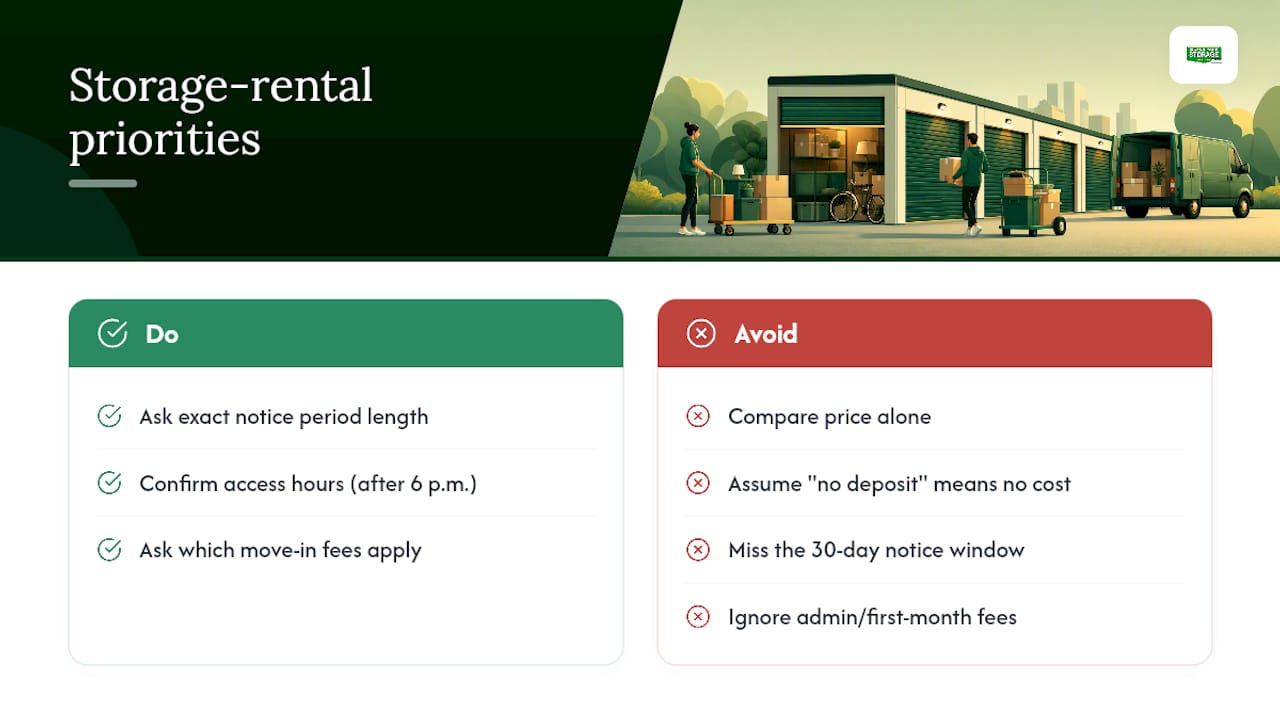
The conventional advice in most guides stops at “ask about fees.” That’s thin. The better question is about the notice period, because that’s where renters actually lose money. Miss a 30-day window by two days and you’re paying for a full extra month of a unit that’s already empty. Facilities aren’t hiding this, but they’re also not leading with it.
What should you prioritize first? Access hours and notice periods, before price. A cheap unit you can’t reach after 6 p.m., or one that quietly charges you an extra month on the way out, isn’t actually cheap. Get those two answers locked down, and the rest of the decision gets a lot simpler.
— Mike
Get Started: Reserve a Month-to-Month Unit
This facility skips the two things that make storage rentals annoying elsewhere: deposits and long-term contracts. You get month-to-month terms, online billing you can manage from your phone, drive-up access, and a gate that’s open around the clock, not just during business hours.
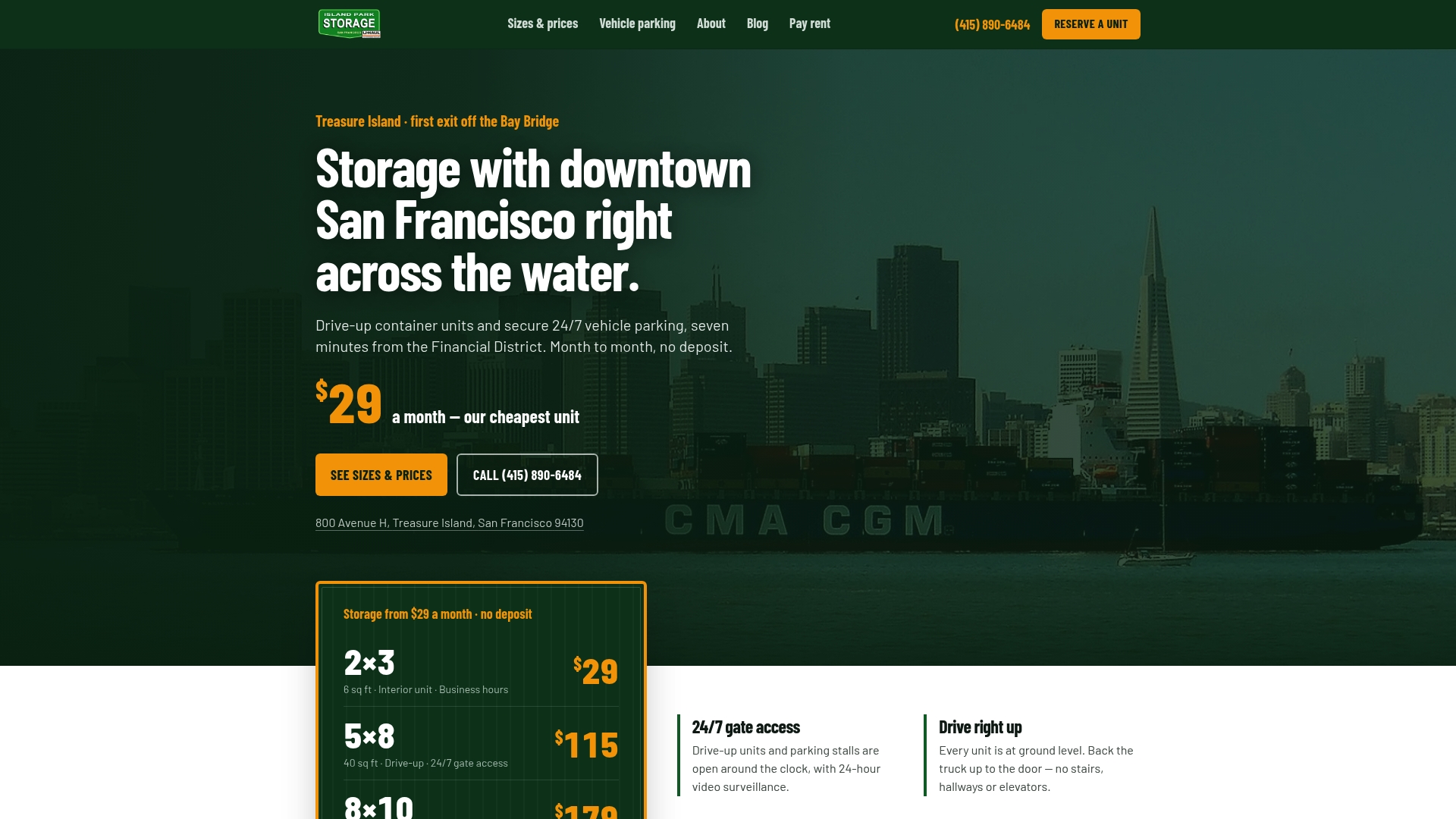
If you’re ready to see what fits your load, browse unit sizes and current pricing starting at $29 a month, or check out vehicle and RV parking options if you need somewhere for a boat or work van. Reserve online in a few minutes, no deposit required, and move in on your own schedule.
FAQ
Can I get a storage unit for just a month?
Yes. Most facilities, including Island Park Storage, rent month-to-month with no requirement to commit beyond a single 30-day cycle.
Do storage units go month to month?
The majority do. Fixed-term leases exist, but month-to-month is the standard structure across most self-storage facilities today.
What is the cheapest way to get storage?
Choose the smallest unit that fits your items, skip climate control unless you’re storing something sensitive to heat, and confirm whether your own renter’s insurance already covers stored belongings before buying facility coverage.
What’s the average price for storage per month?
Price depends heavily on unit size and location, so check current sizes and pricing directly rather than relying on a national average that won’t reflect your local market.