
For long-term car storage, prep the car first, pick a secure indoor or covered facility if you can, and stick to a monthly maintenance routine. Wash it, treat the fuel, care for the battery, handle the tires right, and don’t just park it and forget it. Storage past 30 days is when battery drain, tire flat spots, and fuel breakdown start becoming real risks, so the prep work matters more than people think.
TL;DR:
- Keeping the fuel stabilized with a proper additive is crucial for ethanol-blended gas, which only lasts 3 to 6 months without treatment.
- A paved, gated storage facility with electrical access and on-site management offers the best protection against weather, pests, and theft.
- Monthly maintenance should include checking the battery voltage, tire pressure, and inspecting for pests or leaks, with a full engine drive every 6 to 8 weeks.
- Using a microprocessor-controlled float charger and inflating tires to the correct storage PSI prevents battery sulfation and flat spots during long-term storage.
- Avoid plastic covers, and instead, use breathable, fitted covers indoors, while outdoor storage needs extra prep to prevent moisture buildup and damage.
Table of Contents
- How Do You Prepare a Car for Long Term Storage?
- Indoor, Covered, or Outdoor: Which Storage Fits Your Car?
- What Maintenance Does a Stored Car Need Each Month?
- Should You Change Your Insurance While the Car Is in Storage?
- How Do You Bring a Stored Car Back on the Road?
- Why Facility Choice Matters More Than People Realize
- Check Availability for Vehicle Storage Near You
- Where This Guidance Comes From
- Sources
- FAQ
How Do You Prepare a Car for Long Term Storage?
Give yourself a week before the car goes into storage. Rushing this part is how you end up with a moldy interior or a dead battery six months from now.
Start with the cosmetics, because dirt and grime do real damage over time, not just aesthetic annoyance.
- Wash and wax the exterior. Road grime holds moisture against paint. A coat of wax adds a protective barrier for the months ahead.
- Clean the interior thoroughly. Vacuum crumbs, wipe down surfaces, and pull out anything edible. Mice do not care that your car is “just resting.”
- Condition the leather or vinyl. Untreated interiors crack and dry out faster than you’d expect in an unheated space.
- Change the oil and filter. Used oil holds contaminants that can slowly damage internal engine parts if it sits for months.
- Top off brake fluid, coolant, and transmission fluid, and check for leaks while you’re under there.
- Handle the fuel. Ethanol-blended gas (E10) has a shelf life of only 3 to 6 months, so fill the tank to reduce air (and condensation) and add a fuel stabilizer at the ratio listed on the bottle, usually somewhere around one ounce per several gallons. This matters more with modern ethanol blends than it did with old-school gasoline.
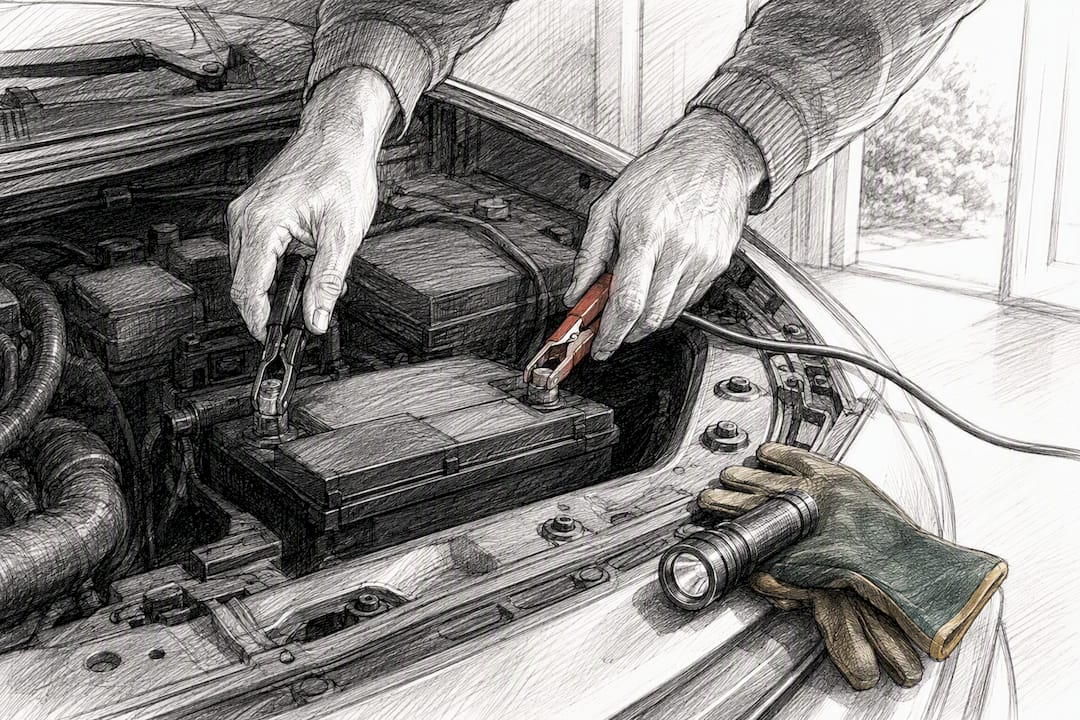
- Take care of the battery. A microprocessor-controlled float charger built for indefinite connection is the smartest move here. It holds voltage in the 13.2 to 13.8V range without overcharging. If you’d rather disconnect it entirely, just know you’ll likely need to reset the clock, radio presets, and any driver settings later.
- Inflate tires to the storage PSI on your door jamb sticker, often a few PSI above normal driving pressure. For storage longer than a few months, jack stands take the weight off the tires entirely and prevent flat spots. Skip the parking brake. Left engaged for months, it can seize or leave the pads stuck to the rotors. Use wheel chocks instead.
- Check tire age. If the DOT date code shows the tires are older than six years, replace them before storage even if the tread looks fine. Rubber degrades whether or not you’re driving on it.
- Block pest entry points. Stuff the exhaust pipe and air intake with mesh or rags (something you’ll remember to remove later) and toss a few moisture-absorbing desiccant packs inside.
Pro Tip: Skip the plastic car cover. It traps moisture against the paint and can cause worse damage than no cover at all. A breathable, fitted cover works for indoor storage. A breathable, waterproof one is better outdoors.
Indoor, Covered, or Outdoor: Which Storage Fits Your Car?
The right storage environment depends on your car’s value, your climate, and how much you want to spend. Indoor climate-controlled space gives the best protection against humidity swings, which is exactly what causes mold and corrosion inside a vehicle that’s sitting still for months. Covered parking splits the difference: real protection from sun and rain, lower cost than a full indoor unit. Outdoor storage is the cheapest option and the one that asks the most of your prep work, since the car is fully exposed to weather.
Before you commit to any facility, look for these signs it’s actually going to protect your car:
- Paved surface, not gravel or dirt that pools water after rain
- Gated access with cameras, not just a padlock and a prayer
- Visible pest control measures, since rodents love a quiet, undisturbed engine bay
- Electrical outlets nearby if you’re running a battery tender
- Staff presence on-site, not a fully unmanned lot
Watch for red flags too. Standing water in the lot, inconsistent access hours, or an insurance policy that excludes mold and fungus damage should all send you elsewhere. If you’re storing a classic car or anything with sentimental or resale value riding on its condition, climate control is worth the extra monthly cost. For a daily driver you’re parking during a work trip abroad, covered or outdoor storage is usually plenty.
What Maintenance Does a Stored Car Need Each Month?
This is where most people drop the ball. Storage isn’t a “set it and forget it” situation, and the OEM guidance on this is pretty specific about timing.
| Interval | Task | Why it matters |
|---|---|---|
| Monthly | Check the float charger connection and battery voltage | Prevents sulfation, the top cause of “dead on arrival” batteries |
| Monthly | Check tire pressure | Cold weather and slow leaks drop PSI even when the car doesn’t move |
| Monthly | Visual check for pests, leaks, or new stains | Catches problems while they’re still small |
| Monthly | Swap or check desiccant packs | Keeps cabin humidity from climbing |
| Every 6 to 8 weeks | Start the engine and drive it, ideally 60 to 90 minutes | Fully heats the engine, cycles the transmission, and clears moisture from the exhaust |
| Every 8 weeks | Light brake application while driving, or manual rotor cleaning | Removes surface rust before it pits the rotors |
| Ongoing (EV/hybrid) | Keep high-voltage battery at 40 to 60 percent charge, use storage mode if available | Prevents accelerated battery degradation |
| Past 12 months | Consider fogging cylinders, draining or replacing fluids | Cost-effective compared to replacing corroded components |
A short idle in the driveway does nothing close to what a real drive does. The engine needs to reach full operating temperature to burn off condensation, and the transmission needs to cycle through its gears to redistribute fluid. Fifteen minutes of idling in the driveway just makes noise.
Pro Tip: Set a recurring phone reminder for your maintenance dates. “I’ll remember” is exactly how batteries end up dead and rotors end up rusted through.
Should You Change Your Insurance While the Car Is in Storage?
Do not just cancel your policy and hope for the best. A vehicle with zero coverage sitting in a lot is still exposed to fire, theft, and weather damage, and a lapse in coverage can also complicate reinstating your policy later.
- Ask your insurer about switching to comprehensive-only coverage, which typically keeps you protected against theft, fire, and weather while dropping the cost of liability and collision you don’t need for a parked car.
- Some insurers, as State Farm notes, offer dedicated storage or layup coverage for exactly this situation.
- If the car is financed, check your loan terms first. Many lenders require full coverage regardless of whether the car is being driven.
- Confirm your state’s DMV rules. Some states require you to maintain minimum liability coverage to keep the registration active, even if the car never leaves the lot.
- Photograph the car’s condition before storage, get any policy change confirmed in writing, and mark your calendar for when to reinstate full coverage.
How Do You Bring a Stored Car Back on the Road?
Getting a car out of storage takes almost as much care as putting it in. Rushing this step is how minor issues turn into roadside breakdowns.
- Inspect for pests, leaks, and damage before you touch anything else. Check under the hood and under the car.
- Remove exhaust and intake plugs or covers you installed before storage. This one gets forgotten more than you’d think.
- Test the battery and charging system. If you disconnected it, reconnect and check voltage before starting the engine.
- Check every fluid level. Top off or replace anything that’s low or looks off.
- Inspect tires for pressure and condition, and check brakes for surface rust. A few gentle stops in a parking lot will scrub off light rust.
- Test lights, wipers, and turn signals before you’re relying on them in traffic.
- Take a short test drive first, staying alert for warning lights, odd smells, or noises. Build back up to normal driving gradually.
- Reinstate full liability and collision coverage before you get back on regular roads, if you’d reduced it during storage.
Why Facility Choice Matters More Than People Realize
Most long-term car storage guides focus entirely on what you do to the car and barely touch on where you’re putting it. That’s backwards. You can follow every step of a battery-tender routine perfectly and still end up with a rusted undercarriage if the lot floods every time it rains, or a stolen car if the “secure” facility turns out to have one shared gate code that half the neighborhood knows.
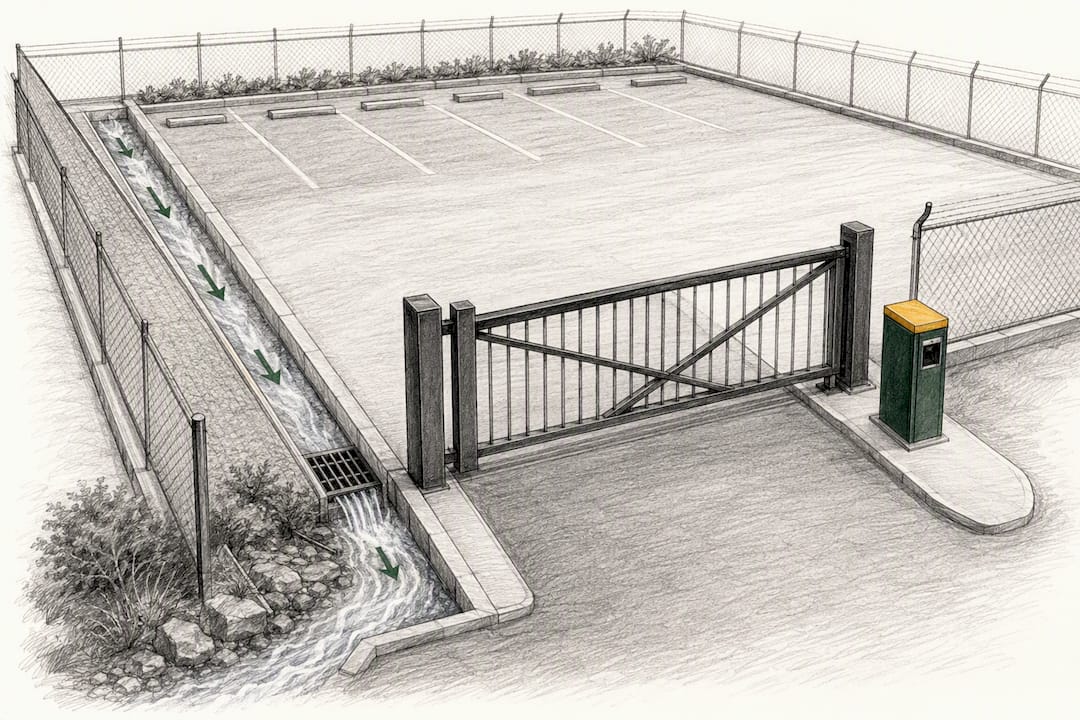
Some storage facilities build the environment and amenities with vehicle storage needs in mind. Drive-up vehicle parking makes access easier, and gated entry enhances security for stored vehicles. Electrical access near parking spots can support battery maintenance, and having on-site management helps ensure oversight of the facility.
The maintenance schedule earlier in this guide only works if the environment supports it. A paved lot with real oversight is what makes a monthly battery check practical instead of theoretical.
— Mike
Check Availability for Vehicle Storage Near You
Some storage options offer drive-up vehicle parking with 24/7 gate access and month-to-month terms without requiring a deposit, allowing flexibility for vehicle storage durations.

Before you book, confirm a few practical details: measure your car (and any roof racks or accessories) against the unit dimensions, ask about electrical access if you’re planning to run a battery tender, and sort out your insurance changes ahead of time so there’s no gap in coverage. If you’re storing an RV, boat, or a small fleet of company vehicles instead of just one car, the vehicle parking options scale to that too. Check current pricing and reserve a spot before the size you need is gone.
Where This Guidance Comes From
This checklist draws on manufacturer storage guidance, insurance industry recommendations, and technical maintenance bulletins, including Kelley Blue Book’s consumer storage guide, State Farm’s insurance and preparation advice, and an OEM technical bulletin on vehicle storage intervals. Battery charger specifications come from Battery Tender’s technical guidance.
Sources
- Preparing for Long Term Car Storage - State Farm®
- Long-Term Vehicle Storage Guidelines (OEM technical/NHTSA bulletin)
FAQ
What Is the Best Way to Store a Car Long Term?
Clean and prep the car, treat the fuel with a stabilizer, use a float charger on the battery, inflate tires to storage PSI, and choose a secure, paved facility like Island Park Storage with gated access. Follow that with monthly checks and a drive every 6 to 8 weeks.
How Long Can a Car Sit in Storage?
A car can sit in storage for months or even years with the right prep, but risks like battery drain, fuel degradation, and flat spots begin after about 30 days of inactivity without maintenance. Storage past 12 months usually calls for extra steps like fuel system draining or engine fogging.
Is It Legal to Store a Car in a Storage Unit?
Storing a car in a designated vehicle storage space or drive-up unit, like the parking options at Island Park Storage, is standard practice and fully legal. Just confirm your state’s registration and insurance rules, since some states require active liability coverage to keep a car’s registration valid even while parked.
Do I Need to Start My Car While It’s in Storage?
Yes. Manufacturer guidance recommends starting the engine and driving it every 6 to 8 weeks for 60 to 90 minutes to fully heat the engine, cycle the transmission, and clear moisture from the exhaust system.
Should I Disconnect the Battery or Use a Charger for Long Term Storage?
A microprocessor-controlled float charger rated for indefinite connection is generally the better option, since it maintains voltage automatically and prevents sulfation without you needing to reset the car’s electronics afterward.