
The fastest compliant move is renting a commissary or servicing area with potable water, approved waste disposal, and overnight parking. Call your local health department first to confirm whether a commissary letter is required for your permit. If you just need secure overnight parking with drive-up access and month-to-month flexibility, a vehicle-storage facility with verified amenities can fill the gap.
TL;DR:
- Most health departments require a signed commissary agreement that confirms access to potable water, approved waste disposal, and supervised overnight parking.
- Food truck storage sites must have a potable water fill point, proper grease and gray-water disposal, secure overnight parking, and reliable power supply, with details confirmed in writing.
- Renting a flexible, month-to-month vehicle-storage stall with 24/7 access and proper amenities, like Island Park Storage, offers a practical solution for early-stage or changing routes.
- Costs for commissary services typically range from $400 to $1,200 monthly, while vehicle-only storage can start as low as $299 per month, depending on site features.
- Lease agreements should specify access hours, utility billing, security measures, and permit-related clauses to prevent operational issues or locked-out scenarios.
Table of Contents
- What Should You Look For in a Food Truck Storage Facility?
- Does Your Health Department Require a Commissary Agreement?
- What Contract Terms Protect You in a Storage Lease?
- How Do You Reduce the Daily Cost of Commissary Trips?
- An Operator-Focused Take on Storage Logistics
- How Island Park Storage Fits Into Your Food Truck Setup
- Where to Verify the Rules Before You Sign
- Sources
- FAQ
What Should You Look For in a Food Truck Storage Facility?
Before you sign anything, walk the site (or ask the right questions over the phone) with a checklist in hand. Food truck storage isn’t one-size-fits-all, and the wrong pick can cost you a permit renewal or a very bad 5 AM surprise.
Non-negotiables first. These aren’t nice-to-haves, they’re the stuff your health inspector actually checks:
- Potable water fill point on site, with a hose bib you can actually reach
- Gray-water and grease disposal that meets your local code (ask to see the permit, not just hear “yeah, we handle that”)
- A secure, assigned overnight parking stall, not a “find a spot” arrangement
Power and cold storage matter almost as much. Ask exactly what amperage the shore power circuit delivers. A truck running reach-in coolers, warmers, and a flat-top all night needs more than a household outlet can handle. If overnight refrigeration access is part of the deal, get that in writing, not implied.
Site access affects your whole morning. Confirm 24/7 gate access if you’re rolling out before sunrise for a breakfast route. Check the gate width and turning radius with your actual rig, not a generic pickup truck. Ask whether parking is covered or open lot, and whether the ground surface is paved (gravel plus a loaded truck plus rain equals a bad time).

Fees deserve their own line-item review. Get a full written fee schedule before you sign anything. Monthly commissary membership fees commonly run $400 to $1,200 depending on services included, with hourly kitchen rental often layered on top. Ask specifically about utility billing method, deposits, and any surcharge for refrigeration, trash, or extra parking time.
When you visit in person, test things. Watch the gate open and close. Check lighting coverage after dark if you can. Look for working cameras, not just camera-shaped boxes. And talk to another tenant if one’s around. Ask how fast management responds when something breaks.
Pro Tip: Bring a multimeter or ask the site manager to demonstrate the shore power circuit before you sign. A “dedicated 30 amp” outlet that’s actually shared with three other units will blow your breaker the first busy Saturday.
Does Your Health Department Require a Commissary Agreement?
In most places, yes. Local health departments typically require a signed commissary or servicing-area agreement before they’ll issue or renew your mobile food permit. It’s your proof that you have a legal, fixed base for water, waste, and equipment servicing between shifts, not just a truck and a prayer.
Commissary services usually need to include potable water fill, approved gray-water and grease disposal, warewashing capability, and supervised overnight parking, according to food-grade cleaning methods that meet audit standards without water. Fees for that kind of full-service arrangement can be substantial depending on what’s bundled in.
Zoning adds another layer. Municipal codes frequently forbid food truck parking in residential districts entirely, and public street parking often comes with its own restrictions on time limits and proximity to brick-and-mortar restaurants. Fairfax County’s zoning ordinance is a good example of how specific these rules get, right down to vehicle length limits and enclosure requirements for outdoor storage. Private lots zoned industrial or commercial are usually your safest bet, and cities like Raleigh spell out exactly what’s needed for private-property parking, including signed owner permission and minimum distances from hydrants and sidewalks.
Build your documentation package before you need it:
- A current commissary license, not an expired one someone forgot to renew
- The most recent inspection report for that servicing area
- A signed servicing agreement, not a handshake
- Written property owner permission if you’re parking on a private lot
When you call your health department, ask three questions and write down the answers: Is a commissary required for my permit type? What specifically must the commissary provide? What paperwork format do you accept? Get the name of whoever answers. Regulatory interpretation varies more than you’d expect between counties, and having a direct contact saves you from getting bounced around later.
What Contract Terms Protect You in a Storage Lease?
A vague lease is how food truck owners end up locked out of their own vehicle over a billing dispute. Read every clause like your business depends on it, because it does.
The clauses that matter most:
- Access hours (spelled out, not “reasonable hours”)
- Month-to-month versus fixed term, and what happens at renewal
- Permitted activities on site (can you run a generator? Wash the truck?)
- Utilities and exactly how they’re billed
- Early termination notice period, in days, not vague language
- Security deposit amount and refund conditions
Insurance is where a lot of operators get burned. Most lot owners require a certificate of insurance naming them as additional insured, which is standard and fair. What’s not fair is an indemnity clause so broad it makes you liable for the property owner’s own negligence. Truck parking leases should clarify permitted uses and insurance requirements clearly, not bury them in boilerplate.
Push back where it counts. Bundle utilities into one flat rate if you can. Ask for a dedicated circuit in writing, not “should be fine.” Request a trial month before committing long-term. And get written fee caps on anything labeled “additional services,” because that’s where surprise charges hide.
Walk away from any lease with vague access language, open-ended repair permissions for the landlord, or lien and auction clauses without a required notice period and cure window. A basic clause requiring written notice before any impound action protects your entire business from a billing mix-up turning into a seized truck.
Pro Tip: Ask for a fee schedule as a signed addendum, not a verbal promise. If a site won’t put pricing in writing, that’s your answer.
How Do You Reduce the Daily Cost of Commissary Trips?
Every extra mile to a commissary is time you’re not serving customers, and it adds up fast. Batch your visits where you can: stock up on ice, water, and dry goods in fewer, longer trips instead of daily quick stops. Some commissaries will even arrange scheduled weekly refrigeration drops and certified waste pickups instead of requiring you in person every day.
Security shouldn’t be an afterthought either:
- Wheel chocks and a quality hitch lock, every single night
- Recorded CCTV covering the parking area, not just the office door
- Alarmed gates and well-lit stalls (dark corners invite trouble)
- Locked, labeled dry storage for anything you leave off the truck
Cold-chain handling deserves its own routine. Label everything, rotate stock, and confirm your refrigeration access is actually secured, not shared with three other trucks reaching in and out all day.
Running a food truck already involves a mountain of red tape. One industry report found operators complete roughly 45 government-mandated procedures and spend close to $28,276 on permits and compliance in the first year alone. That’s exactly why testing a storage site month-to-month before locking into anything longer is smart money management, not indecision. Photograph the site’s condition before you move in, and negotiate a cap on utility surcharges up front.
An Operator-Focused Take on Storage Logistics

Most food truck owners treat parking as an afterthought, something to sort out after the menu and the truck build. That’s backwards. Reliable overnight access and a contract you can exit without penalty do more for your business’s staying power than almost any other operational decision.
The commissary requirement isn’t going away, and daily trips eat real hours. Operators who negotiate scheduled service drops instead of daily visits, or who pick sites within a tight radius of their route, get those hours back. Whatever you sign, get it in writing, and confirm with your health department contact directly. Verbal assurances don’t hold up at a permit renewal hearing.
— Mike
How Island Park Storage Fits Into Your Food Truck Setup
Island Park Storage isn’t a commissary, but it solves the parking half of your equation without requiring a long-term contract. Rentals are flexible with month-to-month terms and no deposit required, allowing you to test a location before committing your route around it.
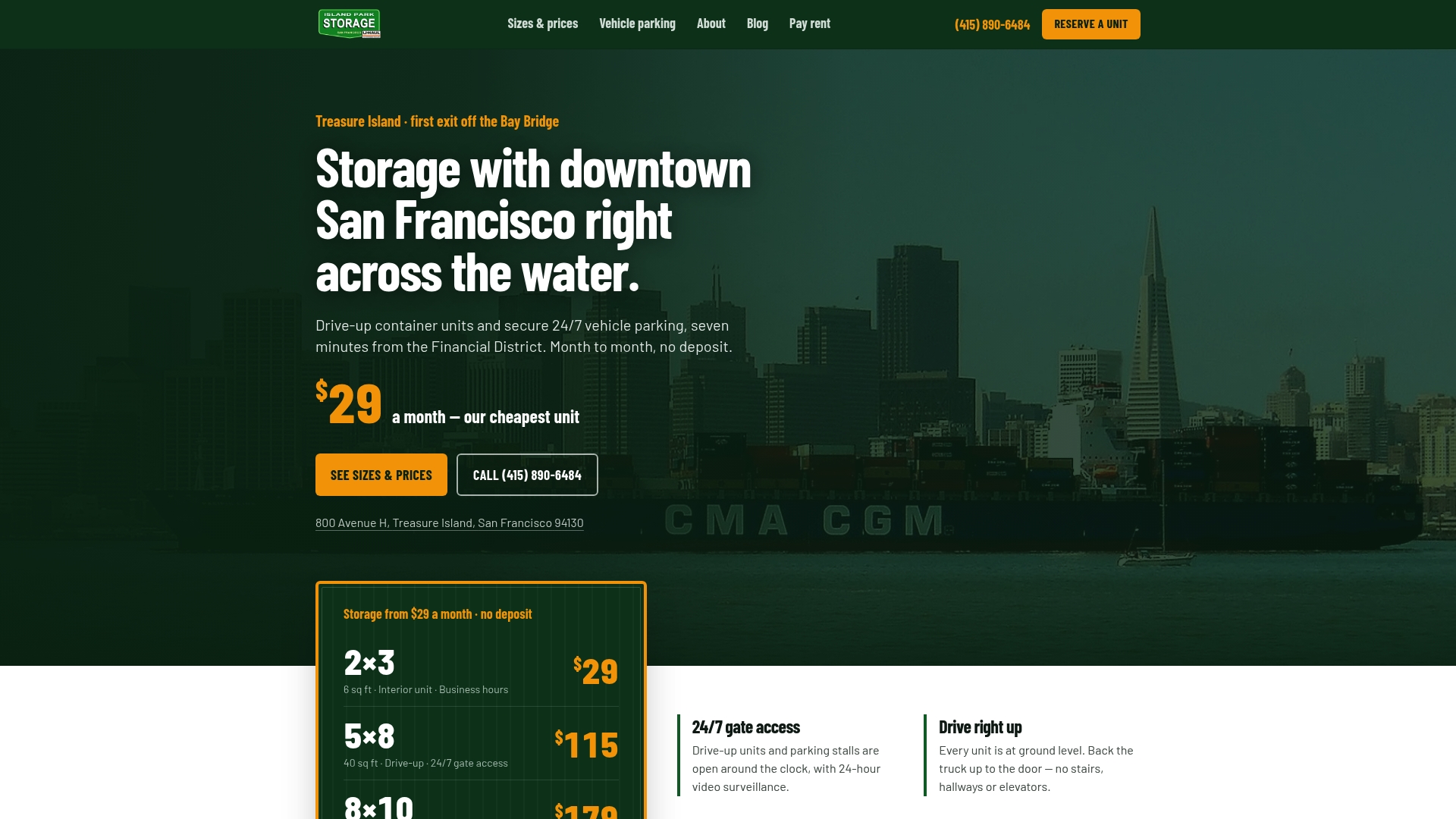
That flexibility matters when your business is still finding its footing or your route changes with the seasons. Secure vehicle parking stalls come in multiple sizes, including the 11×30 and 11×40 options built for commercial vehicles like food trucks, plus a larger 11×66 stall if you’re hauling a trailer setup. Gate access runs 24/7, supporting early-morning or late-night schedules. If you also need dry storage for extra supplies, boxes, or off-season equipment, drive-up container units are available on the same property, and on-site management means an actual person handles issues instead of a call center. The location is minutes from downtown San Francisco. Check current availability and reserve a stall directly on the Island Park Storage vehicle parking page.
Where to Verify the Rules Before You Sign
- Your local health department’s mobile food guidance document (ask for it by name)
- A commissary agreement template to compare against what you’re offered
- The Food Truck Nation report for broader compliance cost context
Call both your health department and zoning office with your questions written down before you dial.
Sources
- Mobile Food Establishment Guidance Document (Clark County) — 2026
- Food Truck Nation — U.S. Chamber of Commerce Foundation
- Truck parking lease agreement: key terms and clauses — LegalClarity
- Food Truck Commissary Agreement Guide — Contractable
FAQ
Do I Legally Need a Commissary to Operate a Food Truck?
Most local health departments require a signed commissary or servicing-area agreement before issuing or renewing a mobile food permit, since it proves you have access to potable water and approved waste disposal. Requirements vary by county, so confirm the exact rule with your local health department’s guidance before you sign a lease.
Can I Park My Food Truck at Home Overnight?
Usually not. Municipal zoning codes frequently prohibit commercial food truck parking in residential districts, which is why most operators use private lots zoned commercial or industrial, or a dedicated vehicle storage facility instead.
How Much Does Food Truck Commissary Storage Cost?
Monthly commissary membership fees commonly range from $400 to $1,200 depending on services bundled in, and full-service arrangements can reach as high as $1,250 a month. Vehicle-only parking without commissary services tends to cost less; Island Park Storage lists vehicle parking stalls starting at $299 per month for an 11×30 stall.
What’s the Difference Between Commissary Storage and Vehicle Parking?
A commissary provides regulated services like potable water fill, grease disposal, and warewashing that most health departments require for your permit. Vehicle parking, like the month-to-month stalls at Island Park Storage, covers secure overnight parking and access but doesn’t replace a commissary agreement if your permit requires one.
Should I Choose Month-to-Month or a Fixed-Term Lease?
Month-to-month leases give you flexibility to test a location or adjust as your route changes, while fixed terms often come with lower monthly rates in exchange for commitment. Most food truck operators favor month-to-month arrangements early on, since truck parking leases with shorter terms are easier to exit if the site doesn’t work out.