
Your safest bet is dry-stack or indoor storage; your fastest bet is a wet slip; your cheapest bet is a trailer in your driveway. There’s no single “best” among the main boat storage options (dry stack, wet slip, trailer/home, indoor/covered, and lifts), because your priority decides the winner. If you’re storing through hurricane season, weight protection heavily. If you boat every weekend, weigh access. If you just want to stop bleeding money, weigh cost. Keep reading and we’ll break down each one.
TL;DR:
- Storage location heavily influences storm survival, with ashore storage being significantly more resilient than water-based options.
- Small boats under 24 feet are best stored on trailers or in home storage, while larger vessels over 30 feet benefit more from wet slips or open yard storage.
- Indoor or dry stack storage provides maximum long-term protection but comes with higher costs and limited availability during peak season.
- Wet slips offer quick access but incur ongoing fees and higher maintenance risks from biofouling and corrosion.
- For cost savings, trailer or home storage remains the cheapest option, especially if towing and launching logistics are manageable.
Table of Contents
- Comparing Your Boat Storage Options
- What Does Boat Storage Actually Cost?
- How Storms Change the Storage Math
- How to Choose the Right Storage for Your Boat
- When Facility Parking Beats a Marina Slip
- What I’d Actually Tell a Boat Owner
- Need Somewhere To Park Your Boat or Trailer?
- Sources
- FAQ
Comparing Your Boat Storage Options
Let’s get you oriented. Each storage type solves a different problem, and none of them solves all three (protection, access, cost) at once.
Dry stack (rack storage) puts your boat on a rack inside a warehouse-style building, and a forklift drops it in the water when you call ahead. It keeps hulls clean, cuts down on fouling and corrosion, and locks your boat away from weather and wandering hands. The catch: most facilities cap dry stack around 35 feet, and you usually need a few hours’ notice before you can launch, according to DiscoverBoating’s storage breakdown.
Wet slip or berth storage means your boat floats at a dock, ready whenever you are. Nothing beats it for spontaneity. But sitting in the water year-round invites biofouling, blistering, and corrosion, and BoatUS notes that boats left in the water face higher long-term maintenance than boats stored ashore.
Trailer or home storage is exactly what it sounds like: your boat sits on its trailer in your driveway, a side yard, or a rented lot. It’s usually the least expensive path, and you control every maintenance decision yourself. The trade-off is space, plus the hassle of towing and launching every time you want to go out.

Indoor or covered storage shields your boat from sun, rain, and snow inside a building or under a roofed structure. It’s the gold standard for long-term protection, especially for boats that sit unused for months, but it costs more than open-air options and slots fill up fast in boating season.
Lifts raise your boat out of the water between uses at your own dock. Great for daily access without antifouling headaches, but lifts are mechanical, need upkeep, and, as we’ll cover shortly, they’re not storm-proof.
A few quick notes on fit:
- Small trailerable boats (under 24 feet) do well with trailer/home storage or dry stack.
- Larger cruisers and boats over dry-stack weight limits usually need a wet slip or open-air yard storage.
- Boats used less than once a month are wasting money in a wet slip; ashore storage pays for itself in reduced maintenance.
What Does Boat Storage Actually Cost?
Expect trailer or home storage to run the cheapest, dry stack and indoor storage to land in the middle, and wet slips to carry ongoing fees on top of the dock rate itself, according to DiscoverBoating’s cost overview.
Wet slips are typically billed by the foot, and that number climbs fast once you add electricity, water, and pump-out fees. Dry stack and indoor storage tend to charge flat monthly or seasonal rates that scale with your boat’s length and the facility’s location. Home and trailer storage mostly costs you nothing but yard space, unless you’re renting a municipal lot or a storage yard, in which case you’re paying for convenience and security instead of a slip.
What actually moves the price:
- Boat length and weight (longer and heavier boats cost more everywhere)
- Indoor vs. outdoor storage (indoor almost always carries a premium)
- Launch and haul-out fees (these add up if you’re in and out often)
- Winterization and shrink-wrapping services (often billed separately)
- Full-service staffing (marinas with on-site rigging and mechanics charge for it)
Quick math check: If you’re comparing a wet slip’s per-foot monthly rate against a flat dry-stack or indoor rate, run the annual total, not just the sticker price. A slip that looks cheap in July can cost more than indoor storage once you tack on a full season of fees.
Want to trim the bill? Book off-season for winterization and shrink-wrap work before the fall rush. Split a large storage yard or trailer pad with another boat owner if space allows. And check whether your city or county runs a municipal storage lot. They’re often cheaper than private yards for trailer-parked boats.
How Storms Change the Storage Math
Storage location has a real, measurable effect on storm survival. Evidence used by BoatUS after Hurricane Gloria found that boats stored ashore were far more likely to survive than boats left in the water. That’s why marinas build their hurricane plans around hauling boats out, not riding out the storm at the dock.
Lifts and high-rise racks deserve a second look here. They’re convenient day to day, but insurer claim files referenced in BoatUS hurricane guidance show lifts and elevated racks are vulnerable in surge and high wind. If you store on a lift in a storm-prone region, keep a written evacuation plan with your marina and a prearranged inland trailer spot ready to go.
Before a forecasted storm:
- Haul the boat out of the water if it isn’t already ashore.
- Move it from a high-rise rack to a trailer if severe wind is expected.
- Strip antennas, biminis, and canvas to cut down on windage.
- Double-check jackstands or cradle blocking before the weather turns.
- Fuel tanks should be nearly full to reduce condensation and fire risk; batteries disconnected unless running a bilge pump.
Jackstand and cradle setup matters even outside hurricane season. BoatUS’s winterizing guide recommends plywood under every jackstand base to spread the load, chaining stands together so they can’t shift, and following your boat manufacturer’s blocking plan when one exists. For boats over 26 feet, plan on at least three stands per side, adding more past 30 feet, with wide timbers under the keel. Check alignment again after a couple of weeks. Boats settle, and a stand that was snug in October can be loose by December.
Pro Tip: Shrink-wrap keeps rain and snow out, but it also traps moisture if it’s sealed too tight. Always ask for vents built into the wrap, or skip it entirely for long-term storage in a covered building where you don’t need it.
Winterization timing matters more than most owners think. Boats stored ashore should be winterized earlier in colder climates, since ambient air cools faster than water and freeze risk shows up sooner than you’d expect for a boat still floating at the dock.
How to Choose the Right Storage for Your Boat
Run through this before you sign anything:
- Boat size and type: Does it fit dry-stack weight and length limits, or does it need open yard or wet-slip space?
- Frequency of use: Weekly boaters value access; seasonal boaters should prioritize protection.
- Budget: Know your all-in annual number, not just the advertised monthly rate.
- Climate risk: Storm-prone regions push the decision toward ashore storage with a hurricane plan in place.
- Tow capability: Trailer storage only works if you (or someone) can legally and safely tow the boat.
- Insurance: Some policies price differently for wet slip vs. ashore storage, so ask your agent before you commit.
When you’re touring a facility, ask directly: What are the access hours? Are there launch fees on top of the monthly rate? Who handles blocking and cradle setup, and is it included? What’s the written storm and evacuation plan? Is winterization done in-house or outsourced? And what are the actual contract terms, month-to-month or a locked season?
Watch for vague answers on storm planning or blocking procedures. That’s the number one red flag. A facility that can’t describe its jackstand setup or hurricane protocol in specific terms probably doesn’t have one.
| Priority | Best-fit option | Watch for |
|---|---|---|
| Maximum protection | Indoor or dry stack | Length/weight limits, waitlists |
| Fastest access | Wet slip | Biofouling, per-foot fees |
| Lowest cost | Trailer/home | Tow capability, space, permits |
| Storm-prone regions | Ashore with a haul plan | Lift/rack vulnerability |
When Facility Parking Beats a Marina Slip
Not every boat owner has a backyard, a marina waitlist, or the patience for seasonal contracts. If you live in the city, don’t have room to store a trailer at home, or just want predictable monthly costs without chasing a slip renewal, secure facility parking is worth a look instead of marina space.
A local storage facility offers exactly that kind of alternative for boat and trailer owners who need somewhere safe to park between outings:
- Drive-up vehicle and boat parking stalls in multiple sizes
- Gate access that may provide flexible timing for entry and exit
- Flexible contract terms without long-term seasonal lock-ins
- Staff available on site to assist customers
It’s not a substitute for a wet slip if you boat daily. But for trailer storage between trips, it solves the space and commitment problem a lot of city-based owners run into.
What I’d Actually Tell a Boat Owner

If you’ve got a trailerable boat under 24 feet, park it at home or in a secure lot and skip the marina fees entirely. Weekend cruisers do best in dry stack, since the clean-hull, low-maintenance trade-off is worth the launch notice. Liveaboards need a wet slip, full stop, access wins that argument every time. And if you’re anywhere near hurricane country, ashore storage with a written storm plan isn’t optional; it’s the difference between a bad week and a totaled boat.
Whatever you pick, verify the specifics on-site. Ask to see the jackstands. Ask who’s responsible when a storm hits.
— Mike
Need Somewhere To Park Your Boat or Trailer?
If your checklist points toward trailer storage but your driveway can’t handle it, Island Park Storage gives you a month-to-month option with none of the seasonal contracts marinas tend to lock you into.
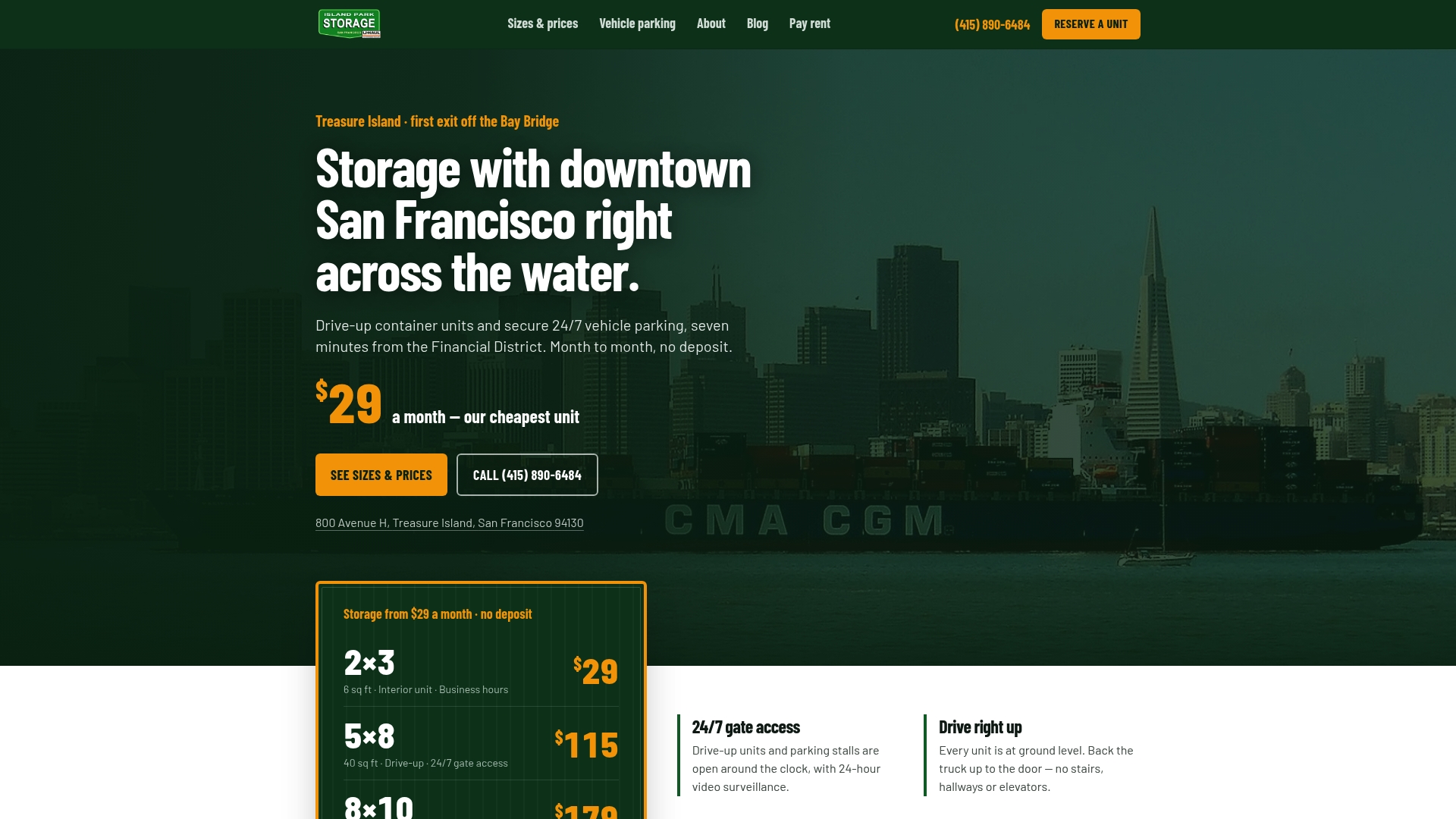
You get drive-up access at any hour, no deposit to start, and sizes built for boats, RVs, and trailers, including the 11×66 vehicle parking stall for larger rigs. If you need indoor space for gear, covers, or a smaller vessel instead, check the full range of unit sizes to see what fits. The facility is located near downtown San Francisco and has on-site staff available to assist customers. Check current availability and get your rate before the season books up.
Sources
- How to store your boat for the winter | BoatUS
- Boat storage guide: indoor boat storage, dry storage & outdoor | DiscoverBoating
FAQ
How Much Does It Typically Cost To Store A Boat?
Costs depend heavily on boat length, storage type, and region. Wet slips are usually billed by the foot with added utility and pump-out fees, while dry stack and indoor storage tend to charge flat monthly rates, according to DiscoverBoating. Trailer or home storage is generally the cheapest since you’re only paying for space, not services.
What Is The Cheapest Way To Store Your Boat?
Trailer or home storage is usually the least expensive option, since you avoid slip fees, launch charges, and per-foot marina rates entirely. If you don’t have driveway space, a municipal storage lot or a facility like Island Park Storage’s vehicle parking can offer month-to-month rates without a seasonal contract.
What Are The Different Types Of Boat Storage?
The main categories are dry stack (rack storage in a warehouse), wet slip or berth (docked in water), trailer or home storage, indoor or covered storage, and lifts. Each balances protection, access, and cost differently, so the right choice depends on how often you use your boat and where you live.
How Much Does It Cost To Store A 12-Foot Boat?
A boat that size usually qualifies for the smallest and cheapest storage tiers at most facilities, whether that’s a trailer pad, a small dry-stack slot, or a compact vehicle parking stall. For an exact rate, check a facility’s current pricing directly. Island Park Storage lists its vehicle parking sizes and rates on its site.